Well, this explains so many things: Anthony de Padua is the patron saint of the insane.
Now the Dia de Locos — or Convite de Locos — isn’t so crazy after all.
Well, yes, it is. Crazy, I mean. Very very crazy. In so many delightful ways.
What better way to honor the patron saint of people who have lost their minds than to assemble thousands of people in costumes that suggest they, too, have indeed lost their minds?
“Everything is made out of magic, leaves and trees, flowers and birds, badgers and foxes and squirrels and people. So it must be all around us. In this garden — in all the places.” — The Secret Garden, by Frances Hodgson Burnett.
It is easy to get lost in a garden,
No matter how small it might be.
There you are, sitting in full possession of your mind
Ready to conjure great things that will soon become
The locos danced through the afternoon under a hot and humid sun, made more challenging by the layers of costuming and bulky headpieces. After hours of parading and trance-like dance, catharsis must come, a cleansing, a purifying, exhaustion.
I don’t know how they do it.
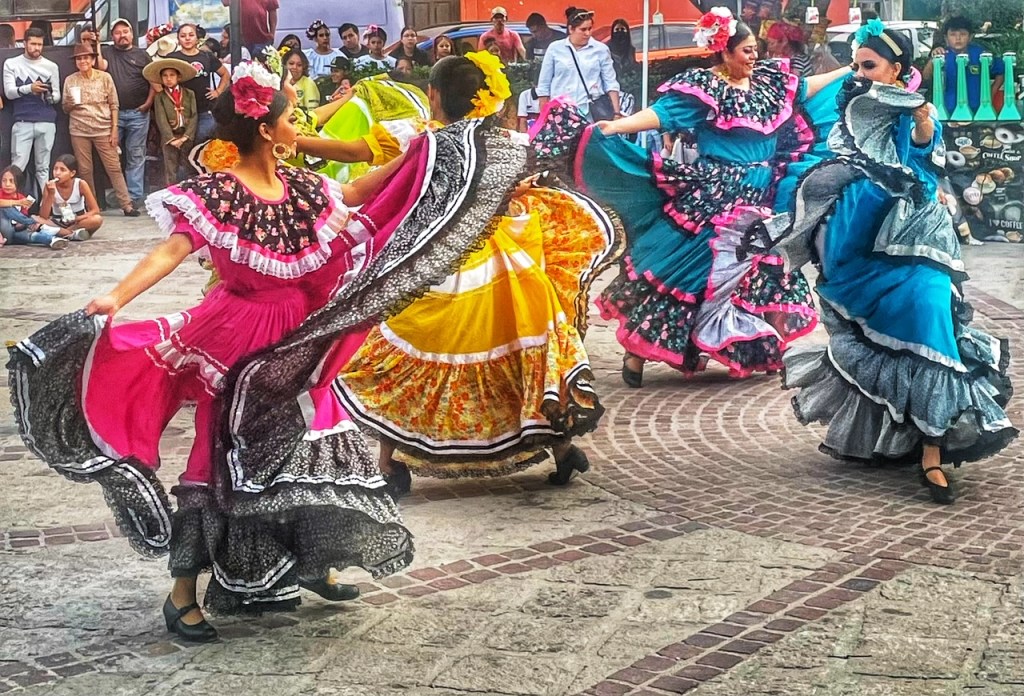
Still, as the sun began to dip behind the San Antonio church, the locos gave way to the folkloricos.
What’s a Sunday morning without a few crazies parading through the neighborhood?
Empty indeed.
We got our share today. The first of three parades around San Miguel de Allende began at the Parroquia an Antonio de Padua around 10 a.m. and danced down Callejohn San Antonio before hanging a left on the Ancha and heading for Centro.
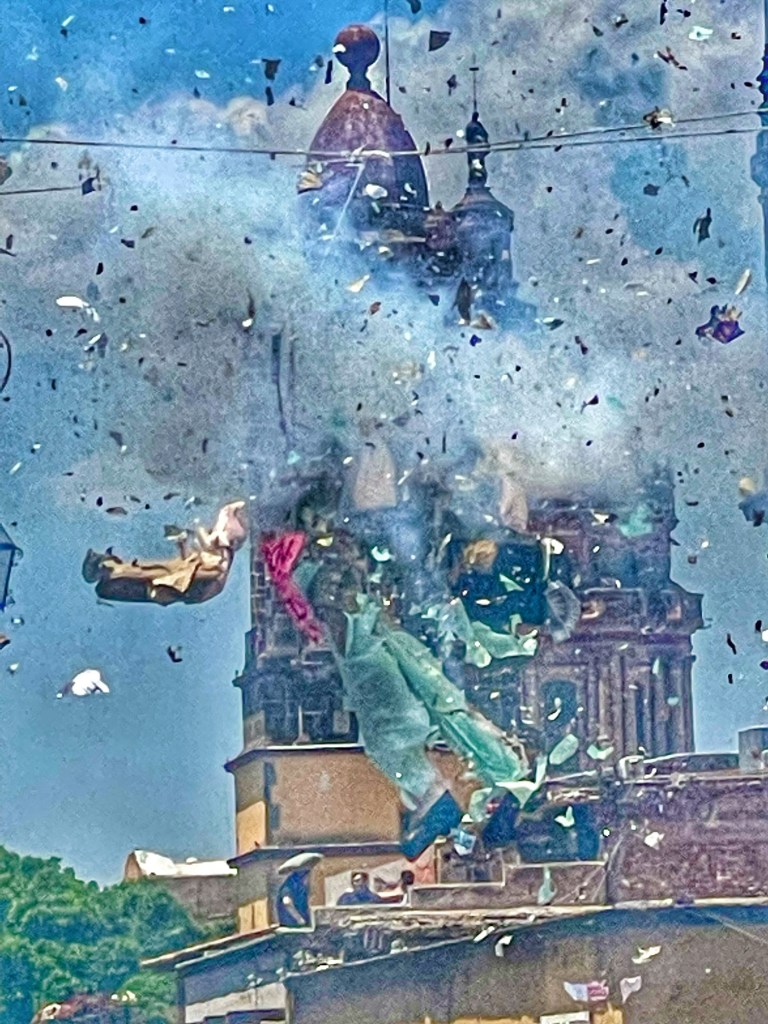
Maybe if every place had a day when you could blow up life-size papier-mâché effigies of bad people, the world would be a happier place.
I was definitely in a happier place after watching San Miguelians blow up about two-dozen effigies on Easter Sunday. They call them Judases.
I know, not your typical Easter Sunday celebration. Just roll with it and enjoy.
All week San Miguel de Allende has been observing the tragic (or glorious) end of Jesus Christ, reliving his life and death in an almost real-time series of processions and pageantry. By Easter Sunday, the story is largely played out.
The Frida Kahlo Museum in Mexico City ought to start with the collection of medical harnesses and contraptions that the artist used to alleviate the pain, to stand upright, to obtain a modicum of normality in her life.
Instead, the very devices that she so cleverly hid beneath her layered dresses and shawls come at the end of the journey. They are shocking, horrifying.
They make you, finally, grasp the essence of the pain which dictated and influenced so much of her life and art.
It is only at the end that the courage, the determination, the resilience, the bravery of Frida Kahlo come into the clearest focus.
Founder and executive director of the San Miguel Writers Conference & Literary Festival Susan Page steps down this year.
It seems hard to imagine, but there was a time when writers in San Miguel de Allende had no platform on which to read their works and no outlet to sell their books.
The “dark ages” were barely two decades ago.
Two women – one who is strong on organizing and one who has the vision – noticed the void and decided to do something about it.
And so, in 2004, Susan Page and Jody Feagan (now of Santa Fe) organized a modest literary sala where local writers could come and read from their works and talk about their craft.






 Musings, Magic, San Miguel and More