Maríela López González and her first mural in San Miguel de Allende, titled “El nacimiento del Sol y la Luna”.
You set out to get a quiet cup of coffee in the morning and by noon you are sitting down with two incredibly talented artists, discussing their work, their dreams, their ambitions.
That, my friends, is the magic of San Miguel de Allende.
That cup of coffee turned out to be not so quiet as I ended up at an outdoor cafe table with some of my Golosos pals — Efrain, Robert, Ben, Scott, and Colin. They’d been booted out of their regular haunt — guilty of possession of a couple of yipping dogs.
The proprietor told them that animals were now forbidden in food establishments by the city.
Fields of mustard seed brighten the walk to the Presa along Camino a San Miguel Viejo.
Sometimes you just have to get out there and walk. Anywhere will do. Just walk.
Most mornings, that’s me walking Moppit, struggling for control over the master/pet dynamic with a willful and intelligent opponent.
I want to go left, she wants to go right. We both freeze in our tracks and engage in a game of blink, staring into each other’s eyes with fiercely competitive stares. It is Moppit who decides when she’s had enough of this walking nonsense and communicates her desire by sitting firmly on her tush. It is Moppit who sets the pace, decides what needs to be sniffed or peed upon. For my every step forward, she executes a complex zigzag pattern worthy of her genetic heritage.
She is a sniffer, a searcher, a chaser, a marker of vast territory.
When I walk the cobblestone streets of San Miguel de Allende, usually early mornings with Moppit the philosopher dog, I find things.
It is not that I am scouring between the cracks and crannies. It is just that cobblestones can be treacherous and if you are not attentive to your footsteps, well, you can fall.
There is a joke about the number of ex-pats who walk around this hilly town with canes — but I forget how it goes.
Cobblestone streets are the tide pools of very old cities. They tend to trap small and delicate things in the spaces between rocks, much the same way that tide pools trap small fish, snails, squid and pirates’s treasure. Especially after it rains.
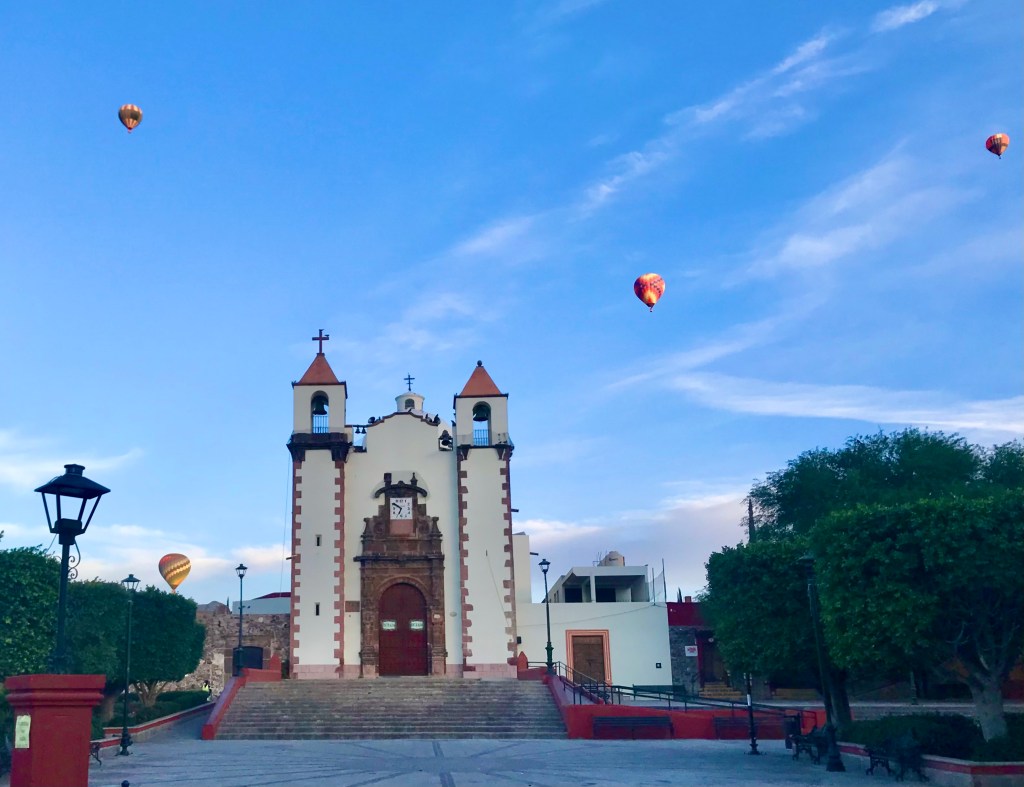
Sure sign that tourism is back — hot-air balloons dot the early morning sky in Colonia San Antonio, San Miguel de Allende, Mexico.
So here we are now at 6,200 feet enjoying incredibly mild weather yearlong, a severe drought and growing water shortage, unrestrained development, and a once-exuberant city that has almost withered away under the relentless grind of Covid restrictions.
Signs of life are returning to San Miguel de Allende.
Interesting question raised by a former newspaper colleague and a Poynter institute column: “Should journalists play a role in identifying rioters?”
That’s the headline and based on it alone, the answer is, of course. Media goes after the facts and a big chunk of the facts from last week’s Washington riot answers the question: Who the hell were these people?
The more-specific and thornier question is: “Should the media turn over unpublished documentation, especially photographs, to law enforcement upon request?”
Well, thank god that’s over. The year, I mean. 2020.
I’ve had just about enough of it and I suspect you have too. Not that 2021 will start off so terribly different. Well, there is the regime change, an inauguration, and the eradication of four years of shitty people running the country.
It will take time, lots of vaccinations, still more wine than we should be consuming, and a Democratic majority in Congress — up to you, Georgia.
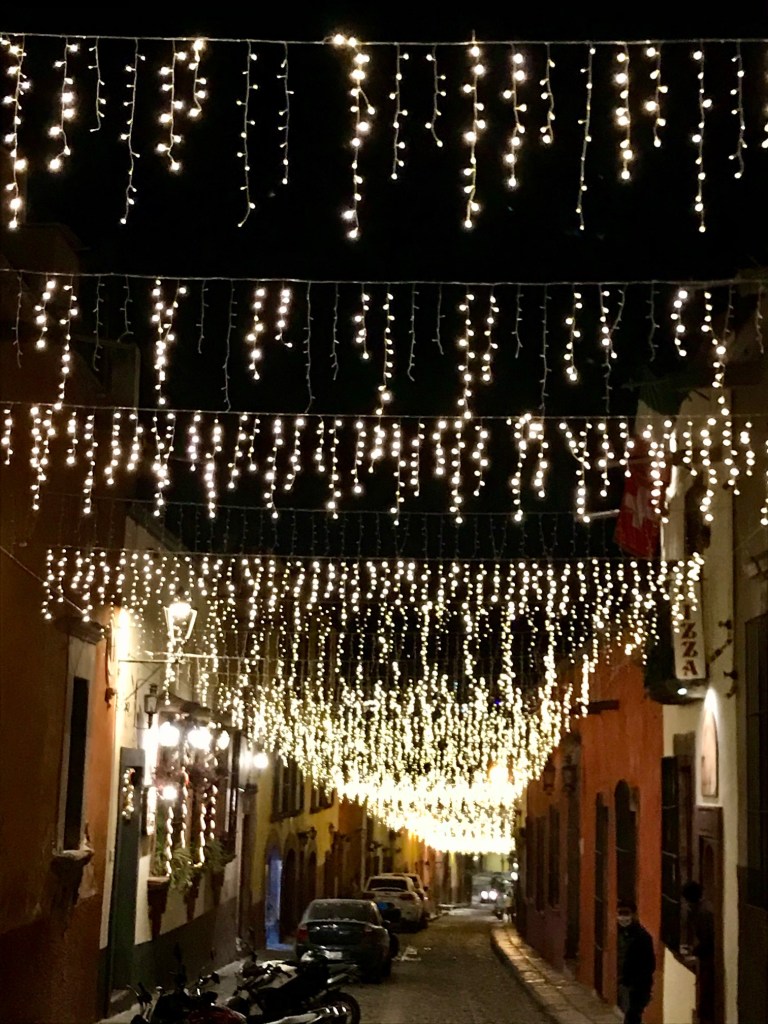
Merry Christmas from beautiful San Miguel de Allende, a city that is no more beautiful than on Christmas Eve.
The city has been decorated for weeks but we waited until this evening to walk through historic Centro. A perfect night for it — the temperature dropped suddenly, the wind picked up slightly, and there were ever so few people out and about.
This is just a brisk tour through the center of this magical city. I took some photos while Rose handed out tangerines and caps that she’d knitted to a few people. Moppit just sniffed the curbs and wondered why we kept stopping to take in the beauty of it all.
The authors reach some conclusions that are bound to hurt dedicated, hard-working crime-beat reporters and their editors:
“This should be the year where we finally abolish the crime beat. Study after study shows how the media’s overemphasis on crime makes people feel less safe than they really are and negatively shapes public policy around the criminal–legal system. And study after study shows that it’s racist and inhumane.”
It is clear to me that the single greatest invention of our civilization has been the wooden toast tongs.
Since the time of Medieval toasters, this device has safely extracted piping hot slabs of bread. Perhaps even earlier, if certain Egyptian hieroglyphics are to be interpreted correctly.
Suspected fact: Leonardo da Vinci may have invented the wooden toast tongs before there were electric toasters, once again anticipating the needs and aspirations of future generations.
Toast tongs made it possible for countless writers and poets through time to sit at their humble desks and create, undistracted by the burning sensation on their fingertips that a tong-less household brings.
In better times, Prose Cafe is a gathering of writers and others (mostly other writers, I think) in the beautiful Belles Artes. Three or four writers would each read something and take questions. I always found the cafe sessions inspirational. I imagined myself — some day, not right away — being just like them, having something of worth to share with other writers.
These days, Prose Cafe and its sister gathering, Poetry Cafe, are ZOOM affairs. They are both the offspring of the San Miguel Literary Sala whose wonderful Writers Conference is currently underway — on ZOOM, of course.
I shared the ZOOM space on Thursday, Dec. 3 with two accomplished authors, Molly Giles and Fredrika Sprengle. Both have published works — award-winning books, short stories. I have nearly four decades of newspaper clippings. A good mix, as it turned out. We all leaven our prose (and pain?) with humor.
What follows is the story that I read. As I told the ZOOM audience, this is a work of fiction, except for the parts that are true. (You figure it out).
It is one of a number of short stories in the file marked “Seminary Life” that may yet grow into a full-sized novel.
Declaring war on … well, everybody
It was the beginning of the end — the end of my days as a Catholic seminarian. It came the moment I picked up that heavy metal bucket full of dirty water and heaved it out the third floor window. Sending a loud and long string of curses cascading after it.





 Musings, Magic, San Miguel and More