Ireland, Memoirs -- fact and fiction, photography, Uncategorized, Writings

Walking Ireland

On the road to Fanore from Doolin on the Wild Atlantic Way, County Clare.

A walking vacation in Ireland was supposed to be a birthday present from Rose Alcantara to me a couple of years ago. We both thought that the idea of a 70-year-old man walking around the Emerald Isle was perfectly sound and a touch romantic.

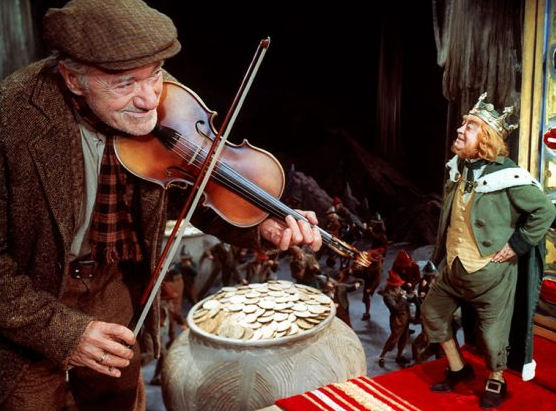
Albert Sharpe (left) as Darby O’Gill and Jimmy O’Dea at the Leprechaun King — this is the image I was working with as I envisioned walking around Ireland.

You know: a shaggy old gent dressed in tweeds, canvas spats, a carved walking stick, one of those adorable wool caps the sheepherders wear, a small daypack with wine, cheese, and brown bread. Maybe a pipe.

I envisioned gentle green-carpeted trails beside burbling brooks from which I could snag a trout on a fly rod for dinner back at the lodge. There would be castle ruins, steaming beef stew, leprechauns, sheep a plenty, and fey red-headed colleens waving from windows as I walked through quaint and ancient hamlets.

You know what happened. Because it happened to you as much as it happened to us. And it wasn’t banshees, laddie.

Continue reading
Standard
Memoirs -- fact and fiction, Rants and raves, San Miguel de Allende, Uncategorized, Writings

Welcome to my very first ever New Yorker subscription existential crisis

I have a subscription to The New Yorker, the print edition. It is the one magazine that I like holding in my hands while reading.

Circling unfamiliar, fanciful, and inventive words is part of my reading habit. Circling whole paragraphs. Underlining brilliant turns of phrase. Highlighting exciting writing. This magazine feeds that habit well. The writing is occasionally above my fighting weight, and I appreciate that.

Every time I read The New Yorker, I come away feeling a little smarter, a little more informed, and definitely motivated to keep writing.

Living in Mexico, the New Yorker can arrive two or three weeks later than it should. More often than not, it is the only thing in my mailbox. Late delivery didn’t matter when the content was less topical. Good writing is good writing and it is timeless. I always valued the New Yorker more for its literary content than for its news.

Even the front-of-the-book calendar on events happening in New York City is entertaining, even when those events occurred several weeks ago. New Yorker writers are like the city — bright, challenging, acerbic, engaging, chatty, witty, savvy and, above all, never dull.

The New Yorker is trying to be more timely and that works against my cross-border mail delivery universe. It is still some of the best writing around but by the time the magazine reaches my hands, the rest of the world has moved on. Now, when I pick up a copy, I find that I’ve read most of the stories online.

I also have a large stack of old New Yorkers that I am reluctant to throw out. It feels like hoarding.

So, I thought, time to switch to an online subscription.

Imagine my surprise, then,  when I went online and found that my print subscription expired March 1, 2015.

Is that even possible?

For years, the New Yorker has been arriving faithfully, sometimes two at a time after especially long delivery droughts. And I’ve never once paid my subscription?

For once, I am moved to use two words I despise to describe this moment: existential crisis.

My prized subscription, my only subscription to a printed thing – and I’m what? A glitch in the operation? A bug in the system? A ghost in the machine?

This is a computerized universe. We are a data-driven society. Marketers can tell when your stomach is growling or when you are leaning more Democrat — and swiftly rectify the course of things with ads uniquely chosen for your predicament. To say we are living our authentic lives today means that we are jogging beside a digital stream that knows our every need, predicts our every whim — and responds accordingly.

Usually, an alert arrives well before a subscription expires. Most offer automatic renewal if you choose to take no further action. My online newspaper subscriptions work like that. Convenient, timely, and seamless.

I am not the most conscientious bookkeeper when it comes to my bank accounts. Most times I don’t even think about it. The pension and Social Security come in and the bills get paid. If there is anything left, that is gravy.

I don’t recall an expiration or renewal notice from the New Yorker‘s data grinders. That would have gotten my attention.

Recently, The New Yorker did send me a rejection letter for an essay that I wrote for the magazine’s Shouts & Murmurs section. I sent it in about six months ago and they did warn me that the backlog was horrific. (Ie: “Don’t hold your breath.”) 

It was my first New Yorker rejection and didn’t hurt nearly as much as I thought it might. It wasn’t even an, um, existential crisis.

(Here is a copy of the essay: That time Guy Raz interviewed Satan on the NPR podcast “How I Built This.” Look, I know it is not New Yorker material. A guy’s gotta dream though, huh?)

I actually felt at the time that the humor in my essay was more topically in tune with David Egger’s McSweeney’s magazine. I had a momentary dream of submitting to both, having both simultaneously accept the article, setting off a fierce bidding war that resulted in publicity to all the right people and a three-book publishing contract with an embarrassingly frothy advance.

Instead, I thought, let’s give the New Yorker a chance. It was, after all, my first love, in a literary sense.

So, months after submitting, and forgetting like a furtive one-night stand, I found out that I wasn’t ghosted. I was rejected.

In fact, it felt pretty good. How many people can say they got turned down by The New Yorker

Real answer: Lots. And often. 

Getting published follows the same rules as winning the lottery. You have to buy a ticket to win. And most likely, you’ll need to buy lots and lots of tickets before you get a winner. 

Many writers are rejected dozens of times before a submission is accepted for publication. The magazine is that good. Cartoonists have it even worse. They can be rejected 30 or 50 times before making it into the magazine, although I believe the cartoon department is set up to more quickly reject a submission than other sections of the magazine.

I don’t really think I’m New Yorker material as a writer but you never know.

The trouble is, I’m in the Grandma Moses phase of my literary life. (Look it up, kids.) I don’t know how much is left in the tank and how much of it is worthy of rejection by prestige publications.

By now you might be thinking, “This is all well and good, Bob, but I think you are avoiding the existential crisis that initiated this essay.”

And you are right.

And I don’t know what to do.

I feel like I should submit this to “The Ethicist” column in the Sunday New York Times.

But wait. I’d better check and see if my NYT subscription is up to date.

Standard
Writings

Essay: That time Guy Raz interviewed Satan on the NPR podcast “How I Built This”

But first, my May 11, 2021 rejection letter (OK, e-mail) from The New Yorker for an essay that I submitted on Nov. 6, 2021. I am glad they fixed the issue.

Dear Submitter, 

We’re sorry to say that your piece wasn’t right for us. Thank you for allowing us to consider your work. Apologies for the delay in response. We fixed the issue and will respond to submissions more quickly moving forward.Best regards,
The Shouts Dept.
The New Yorker

The rejection-worthy essay:

That time Guy Raz interviewed Satan on the NPR podcast “How I Built This”

Guy Raz: He survived a hellish childhood — no mother, no father, kicked out of the only home he’d known at a tender age. As a teenager, he wanted to be a rock star, like the Beatles, but he lacked the essential good looks and talent.

An accidental career in high-tech inspired him to create the first app –but it failed miserably. Nonetheless, components of it made possible the creation of several of the biggest giants in technology today. Not only did our guest invent technology, he invested cash in the industry and has become one of the wealthiest tech entrepreneurs in the world.

He learned early on that falls from great heights can lead to greater things, if you stay with it long enough.

Our guest on NPR’s “How I Built This” today is Satan. Welcome to the program, Satan. Is that your full name or do you prefer another these days?

Satan: Thank you, Guy. It is a pleasure to be here. I am known by many names but Satan is the one most people seem to remember. I’m good with that.

And by the way, it’s the wealthiest tech entrepreneur in the world, not “one of.”

Guy Raz: So noted. I know that is a big thing among you guys at the top. So, in the mid-1960s you decided to go corporeal. Was that part of a greater plan?

Satan: I’ll be honest, Guy, I just wanted to meet girls. One of the benefits and challenges of being a fallen angel is that you are no longer an asexual creature of God. The upside is, you can play the field. The downside is, there are few disembodied spirits of the opposite sex. In fact, none.

When I started seeing the kind of thing that four homely musicians were onto — girls throwing themselves at you, girls screaming and tearing your clothes well, I thought, that’s worth a try.

Guy Raz: Sadly though, it wouldn’t work out for you. Why is that?

Satan: Very true, Guy. This is around the time I learned a valuable entrepreneurial lesson about failing upward. My first pass-through at becoming corporeal was a disaster. I came back as a talentless, acned, dullard of a 16-year-old boy. 

Guy Raz: Be careful what you wish for, huh?

Satan: You bet. It would be years before I could come up with punk rock and even then, the kind of girls drawn to me weren’t what I was hoping for. Contrary to the stories, I have never been a fan of tattoos or tongue studs. Still, punk rock was a living. For a while.

Guy Raz: Around about that time, toward the end of your venture into punk rock, you stumbled across an incredible idea that sadly went nowhere. What was that?

Satan: So true, Guy. In the early 1980s — about the time Disco came into being, something I wanted to distance myself from, by the way  — I created the first-ever app for the iPhone. 

Mind you, it was a primitive thing. It told you the weather and it could sell you umbrellas, sunscreen, and down jackets — according to the current conditions. You could search for weather in other places. That was a neat feature. I was thinking of offering a line of beach novels that users could buy in the summertime, too. You could also rate the weather on a five-star system, from Not-so-hot to Hottest. Here’s the best part, every time you used it, your data was sent back to this massive mainframe computer, although I had no idea at the time what we’d do with it.

I thought it was useful and that people would like it and that girls would be attracted to geeky guys who invented such things.

Guy Raz: So in one app you had an information component, a search mechanism, a sales component, a method of rating things, and a data collection scheme. Pretty impressive for the time. But it failed. Why was that?

Satan: Well, as you and I both know now, the Internet as we know it, hadn’t been invented yet. Nor had iPhones. Also, people were pretty repulsed by the idea of down jackets back then — big ugly bulky things that made you sneeze and that only Chinese soldiers wore.

Guy Raz: But you didn’t give up, did you?

Satan: To be honest, I did for a while. That one really hurt and I was in for a lot of money. When I heard from an … let’s call it an investment angel … how long it would take until a viable Internet and cell phone would be on the market, I decided to go to college.

Guy Raz: And that was at …

Satan: Harvard. Why screw around, eh? When you’re an almighty being, even a fallen one, always travel first class.

Guy Raz: And when was that?

Satan: Let’s see … I started in 2006 as a Freshman, living in Kirkland House.

Guy Raz:That was a fortuitous time to enter Harvard. Want to tell us why?

Satan: Well, I got lucky, considering my recent past. I fell in with some pretty geeky guys who sat around talking about girls a lot. I mean a lot. They would spend hours ranking girls on paper, arguing about their rankings, then photocopy the results, and post them up on bulletin boards.

I felt I was getting a little too mature for this sophomoric behavior but there was something familiar about their process. So, I went up to the guy in the bunch who seemed to have the most on the ball and said, “You know, Mark, there’s a better way to do this.”

Guy Raz: And did he listen?

Satan: Seriously, Raz? Of course, I tailored my app to the existing Internet and pared it down to strictly the information and rating stuff and when I handed it off to him I said, “Try this Zuckerberg, but do no harm.” I think he stopped listening after he heard his own name. In fact, looking back today, I’m sure of it.

Guy Raz: But that phrase, “do no harm,” came in handy earlier, didn’t it? 

Satan: Yeah, it’s no secret that I’d been knocking around the West Coast tech scene since time immemorial. 

Guy Raz: In fact, that little piece of weather software was getting around, wasn’t it?

Satan: Yeah, it was a no-brainer. If your job is to sow chaos and foment change in the world, I couldn’t have asked for a better tool. In 1994, I gave Jeff the sales piece of the app up in Bellevue for a truckload of stock futures and …

Guy Raz: That’s Jeff Bezos. Is your hand visible in the designing of his rocket ships?

Satan: That’s right. Bezos. And, no, I don’t do rockets. Commercial ones anyway. I wish I could discuss North Korea’s rocket program but I signed an NDA — imagine that, tied up in a concept of my own invention.  All I can say is, that has been loads of fun.

Guy Raz: But you weren’t done, were you?

Satan: No. Cold and wet don’t do it for me. And Bellevue is the worst. Once I’d walked Jeff through the basics of selling online, I moved south. He’s a quick study and I was sure my investment was safe. Just before we parted ways, I turned to Bezos and said, “This thing will blow up big in the future — all you need is one good pandemic to keep everyone home — but do no harm.”

I don’t think he heard a thing I said after “pandemic.”

Guy Raz: But eventually your admonition to “do no harm” fell upon receptive ears.

Satan: Yeah, in a way. I said the same thing to Sergey and Larry in 1998 but I was feeling like a broken record. They heard it, made a big deal about it — turned it into a virtue-signaling marketing tool — but honestly, I don’t think they ever knew its true meaning.

Still, the return on investment has been phenomenal.

Guy Raz: So your real talent has been investing in promising startups, handing them divinely-inspired technology, and reaping the rewards down the road.

Satan: Yeah, you could say that.

Guy Raz: Which begs the question: Microsoft? Apple? Craigslist? Who else have you had a hand in developing? 

Satan: OK, great question. But let’s get one thing straight: I’m not the only fallen angel playing in this game. There were seven at the start. Now, I’m not saying that Moloch, Chemosh, Dagon, Belial, Beelzebub, and Lucifer are all in tech. There are other games out there — the stock market and finance, Hollywood and the record industry, Big Oil, Evangelical Christianity, and the offroad automobile industry just to name a few. 

It isn’t easy nurturing stability while sewing chaos. It is a big world. You’ve got to approach it from a lot of different angles. Or angels. Heh. Heh.

Guy Raz: Good one. So, here you are, as wealthy as Croesus …

Satan: Wealthier. He’s chump change in comparison.

Guy Raz: Ok, wealthier than Croesus. You don’t need to work now. I suspect that charity and good works aren’t your things. What does the future hold?

Satan: I’m keeping my hand in a few side-projects. Venture capital investment for one. We’ve done a good number on the newspaper industry but there are so many fields ripe for takeover and dismantling — Big Oil and Gas, for one, in about a decade. Maybe less.

I’m also working on a recording career. I still haven’t lost that original corporeal spark from the 1960s. I have an incredible band. It has a few names that will shock the living daylights out of you. People whose careers you thought were, well, were long dead. That’s all I can say about that.

Guy Raz: Well that’s an intriguing note to leave this interview on. However, I have to ask one more question: If you were a young man or woman with entrepreneurial ambitions today, in what direction would you go? 

Satan: Great question, Guy, but remember my original goal was to date girls, not sow the seeds for the future destruction of mankind. That has all just been gravy.

I guess you’d have to ask yourself, “Why are all the richest men building rocket ships to get off Earth? What do they know that I don’t?” Once you figure that one out, you’ll know. Follow the money. Even if it is into space.

Standard
photography, San Miguel de Allende, Uncategorized, Writings

Friday in the Park with Moppit

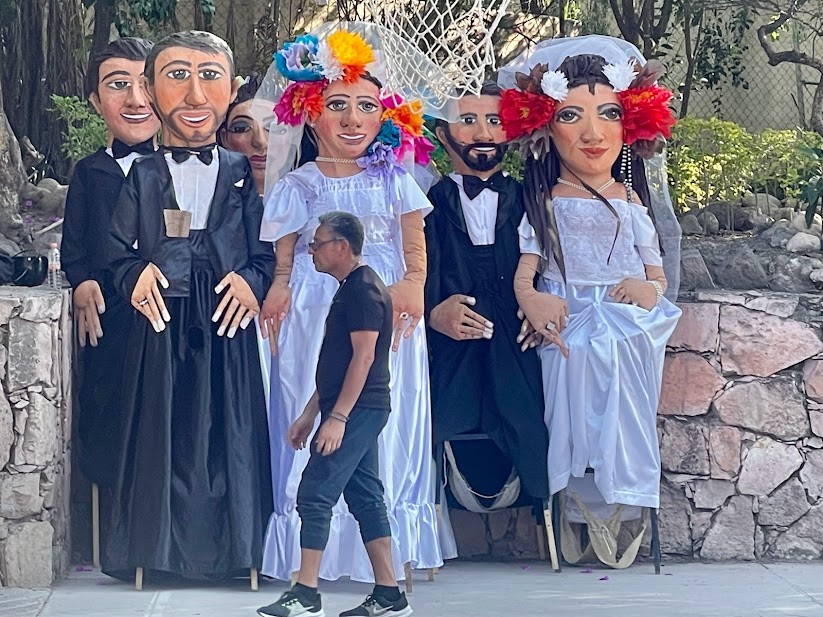
Hermes Arroyo walks past a collection of his mojigangas on the old basketball court, awaiting their chance to lead wedding parties through Parque Juarez on Friday evening.

Moppit the Philosopher Dog is pretty insistent that I take her for a walk, no more than 10 minutes after she finishes her 5 p.m. dinner. She is a creature of habit. Moppit starts a huff-snorting sound around my ankles if I’m not reaching for the leash, the kind of sound a woman makes when the husband comes home late smelling of booze and perfume and mumbles “biznish shmeeting.”

lately, it has been in the high 80s around 5 p.m. here in San Miguel de Allende, so I try to reason with her.

But a girl’s gotta do what a girl’s gotta do.

Continue reading
Standard
photography, San Miguel de Allende, Writings

Weddings and quinceañeras once again fill San Miguel de Allende with beauty, music, laughter, and dancing

The best days to walk around Centro in San Miguel de Allende have got to be Thursday through Saturday.

Thursdays seem to be when the girls celebrating their quinceañeras come to the Parroquia to pose in their lavish 15th birthday gowns. A charming sight to see. Tiaras on their head, sneakers beneath a billowed and sparkling gown. A furrowed brow as the photographer aligns the perfect shot erupts into a brilliant smile on command.

The young woman pictured here stands in the middle of Calle Aldama for a classic image with Parroquia de San Miguel Arcángel in the background.

Continue reading
Standard
photography, San Miguel de Allende, Writings

Midnight serenade in Colonia San Antonio

The sound penetrated a deep sleep and scattered dreams. A car radio? The cantina on the corner? A passing boom box?

No, no, and no.

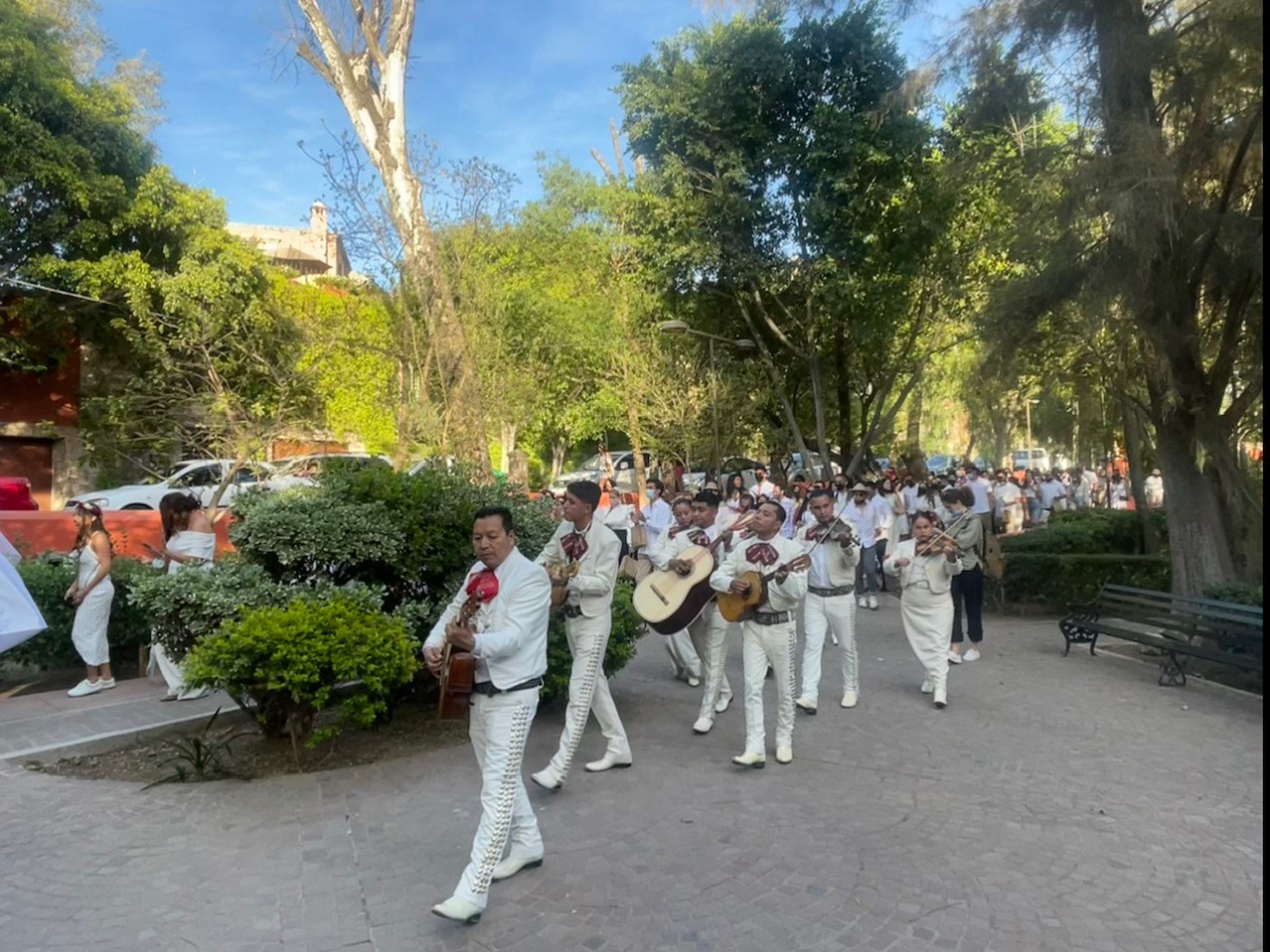
It was the real deal. At midnight a mariachi band was poised in a half-circle in front of our neighbor’s door serenading her in song here in Colonia San Antonio, San Miguel de Allende.

Continue reading
Standard
Memoirs -- fact and fiction, photography, San Miguel de Allende, Writings

What Hermann Hesse taught me

Street scene in San Miguel de Allende. The guitarist paused on his way to work to pick up a snack from the street merchant, who clearly has her hands full. This has nothing to do with my story, except that both occurred on the magical streets of San Miguel in the same week.

To the man whom I almost knocked over rounding the corner of Nemesio Diez and De Los Suspiros, thank you for reviving my interest in a novel that I put down many decades ago but never forgot its influence.

Early Tuesday evening, Moppit and I were walking on Nemesio Diez, past the public parking lot at the corner, heading for home at a brisk pace. Brisk for an old man and a dog with very short legs.

As we reached the corner of Suspiros, a man walking at about the same pace nearly collided with us. Or we nearly collided with him.

Continue reading
Standard
photography, Rants and raves, San Miguel de Allende, Writings

I love a parade … and a circus, and a rodeo, and a county fair, and a horse race … but mostly a parade

So sue me. I’m a sucker for a good parade.

Well, these days, I’ll take any parade — or a procession. You know, the kind we used to bump into on what felt like a daily basis back in the good old pre-Covid days.

Parades say “This is who we are. This is what we believe. This is the best of us, otherwise, why bother having a parade?” And, oh, we’ve had some wonderful parades in San Miguel de Allende.

Haven’t we?

Continue reading
Standard
Memoirs -- fact and fiction, Rants and raves, San Miguel de Allende, Writings

Thich Nhat Hanh was the right monk at the right time — then came 9/11

Tich Nhat Hanh

A good friend invited me to spend a Sunday in Balboa Park with a Buddhist monk named Thich Nhat Hanh. I knew very little of him but Sundays in September in San Diego can be glorious and there are few better places than the park for them.

I think it was promoted as a Day of Mindfulness, another subject about which I knew very little.

The day was pretty much a total immersion. We were blissfully adrift in a gentle sea of brown-robed Buddhist monks and nuns. There were dharma talks and long periods of meditation. Some were led by Thay in his soft, barely audible whisper of a voice. Some were led by his followers.

Continue reading
Standard
San Miguel de Allende, Writings

The pensive princess in the park

One shot. That’s all you get.

Magic abounds in San Miguel de Allende.

But it can be fleeting.

An open door.

A loving embrace.

A child’s smile.

A musician’s final note.

You are there. You happen upon the moment.

And you either lock it in your memory or …

… god forgive me, you pull out your camera.

The princess sat in Parque Juarez, near the gazebo.

Her face went to that place that princesses so often go to

When men dressed all in black with lights and baffles and screens

Scurry around her, trying to capture the fading light at dusk.

Her eyes turn inward, her thoughts go to … where?

A mantra? A shopping list? A party invite? A lover?

A magic spell to cast over her portraiture minions?

A first glimpse of her is through the vee

In this ancient split-trunk pine.

She could have been a woodland fairie,

Queen of the forest,

Mistress of the mystical realm.

Mab, Titania, Oonagh, Gloriana, Diana

The Queen of Elphame.

Meliae or Dryad, those Greecian nymphs of ashes and oaks.

But, more, a beautiful woman with sadness about her

As she waited for that special moment.

To come alive,

To conjure enchantment, and send it to the lens.

Immortalizing the fairie princess in her sylvan realm.

Real. Not real.

Magical, all the same.

Standard