I say it often, perhaps insufferably often for some people, but every day that I step out the front door in San Miguel de Allende, I expect a miracle to happen.
Oh, not a big miracle. Not always.
Just little miracles.
Like the smile on the face of a mother herding her three children toward the church.
Like the carpet of lavender jacaranda flowers worked into a patch of cobblestones.
Maybe if every place had a day when you could blow up life-size papier-mâché effigies of bad people, the world would be a happier place.
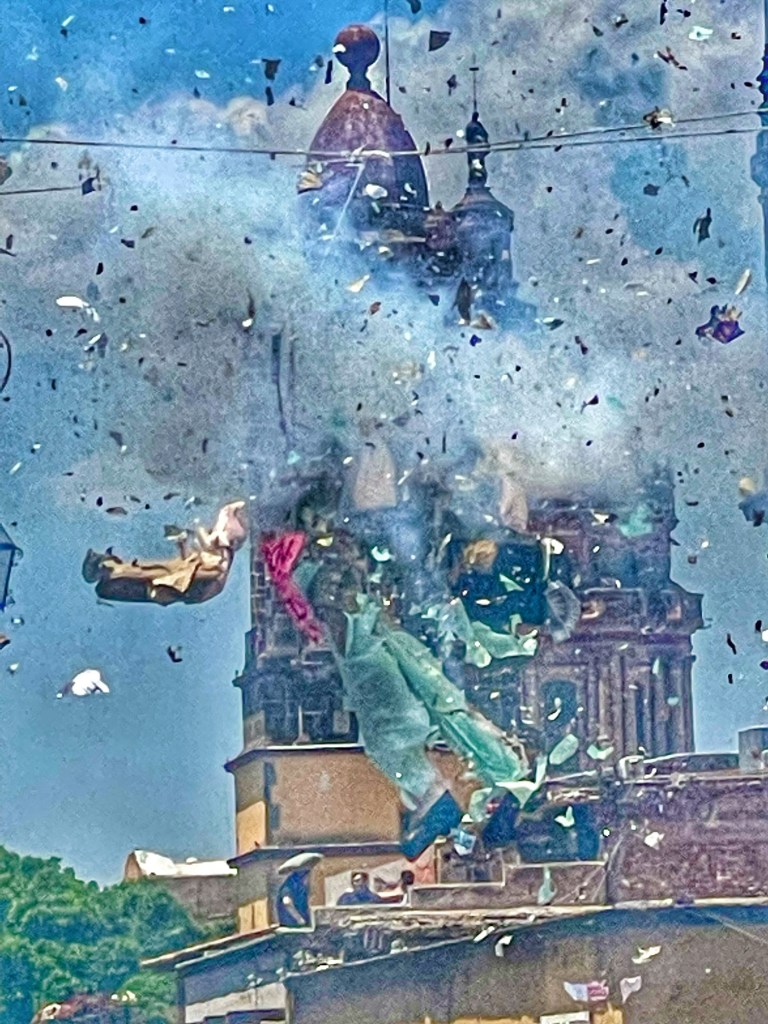
I was definitely in a happier place after watching San Miguelians blow up about two-dozen effigies on Easter Sunday. They call them Judases.
I know, not your typical Easter Sunday celebration. Just roll with it and enjoy.
All week San Miguel de Allende has been observing the tragic (or glorious) end of Jesus Christ, reliving his life and death in an almost real-time series of processions and pageantry. By Easter Sunday, the story is largely played out.
The Frida Kahlo Museum in Mexico City ought to start with the collection of medical harnesses and contraptions that the artist used to alleviate the pain, to stand upright, to obtain a modicum of normality in her life.
Instead, the very devices that she so cleverly hid beneath her layered dresses and shawls come at the end of the journey. They are shocking, horrifying.
They make you, finally, grasp the essence of the pain which dictated and influenced so much of her life and art.
It is only at the end that the courage, the determination, the resilience, the bravery of Frida Kahlo come into the clearest focus.
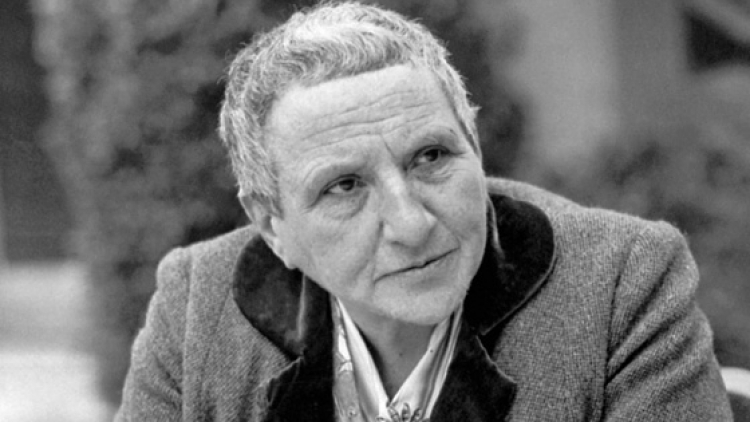
Gertrude Stein had a problem. She’d always had the problem but it was all the more acute in 1934 when she stood before 500 people and tried to speak.
She stuttered.
But that wasn’t the worst of it. Her stutter caused obvious discomfort among her adoring fans and that caused her to lose confidence and when Gertrude Stein lost confidence, she lost her line of thought. Which was not easy to follow to begin with.
The first couple of lectures on her long-awaited U.S. tour were described in the American press as disappointing and worse, confusing.
And this would never do, as she had six months of lectures across the United States lined up, each limited to 500 people maximum and each had been sold out months ago.
In a bit of a panic, Stein told an assistant to reach out to her good friend Mina Loy, a bohemian Everywoman sort, living in Paris. A feminist, painter, poet, playwright, novelist, designer — god knows, if it was about art, Mina had done it. If anyone could punch up a speech and clear up her, um, diction issues, Stein reasoned, it would be Mina.
Jay Leno autographs bags of chips in 1987 at his Beverly Hills home. I’m the terrorist-looking guy behind him. Photos by Jim Skovmand.
Recently, my old friend and colleague Jim Skovmand was searching for some papers on his computer when he came up with these photos, which he sent to me on Tuesday. What a great way to unlock a memory!
Jim and I joined the Copley Press organization around the same time, he in the photography pool and I with The (San Diego) Evening Tribune. The photo pool then was more like a deep lake – more than 50 photographers, editors, managers, and lab staff serving the Tribune and the rival morning paper, The San Diego Union.
As Jim recently pointed out, it took five years before we had an assignment together – that’s how big the new-gathering organization was in those days.
This was the assignment we shared and it was a doozie.
It doesn’t look like a funeral, does it? But it is.
Up ahead of all the wildly costumed dancers is a more somber scene — the black hearse, mourners dressed in white shirts and blouses, somber and agonized looks on their faces. They walk at a painfully slow pace down Calle Insurgentes. The pace only enhances the sadness of the moment. In the front row, one mourner carries a picture of an all-too-young man. Beside him, another carries a stone urn with smokey incense.
I do not know who they mourn. I wish I did. It was not my place to ask during such a moment. I only know he had been a member of the Krazy Boyz crew.
Those are the dancers who follow the funeral entourage. You’ve seen them in scores of San Miguel de Allende parades and processions and celebrations. And yes, now, even a funeral.
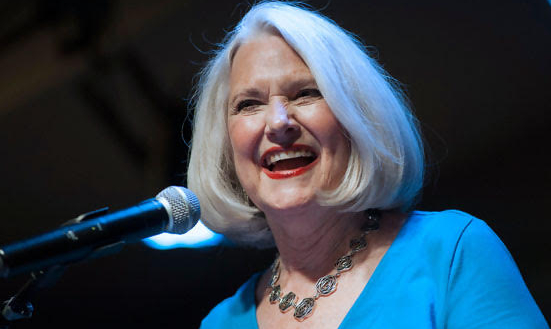
Founder and executive director of the San Miguel Writers Conference & Literary Festival Susan Page steps down this year.
It seems hard to imagine, but there was a time when writers in San Miguel de Allende had no platform on which to read their works and no outlet to sell their books.
The “dark ages” were barely two decades ago.
Two women – one who is strong on organizing and one who has the vision – noticed the void and decided to do something about it.
And so, in 2004, Susan Page and Jody Feagan (now of Santa Fe) organized a modest literary sala where local writers could come and read from their works and talk about their craft.
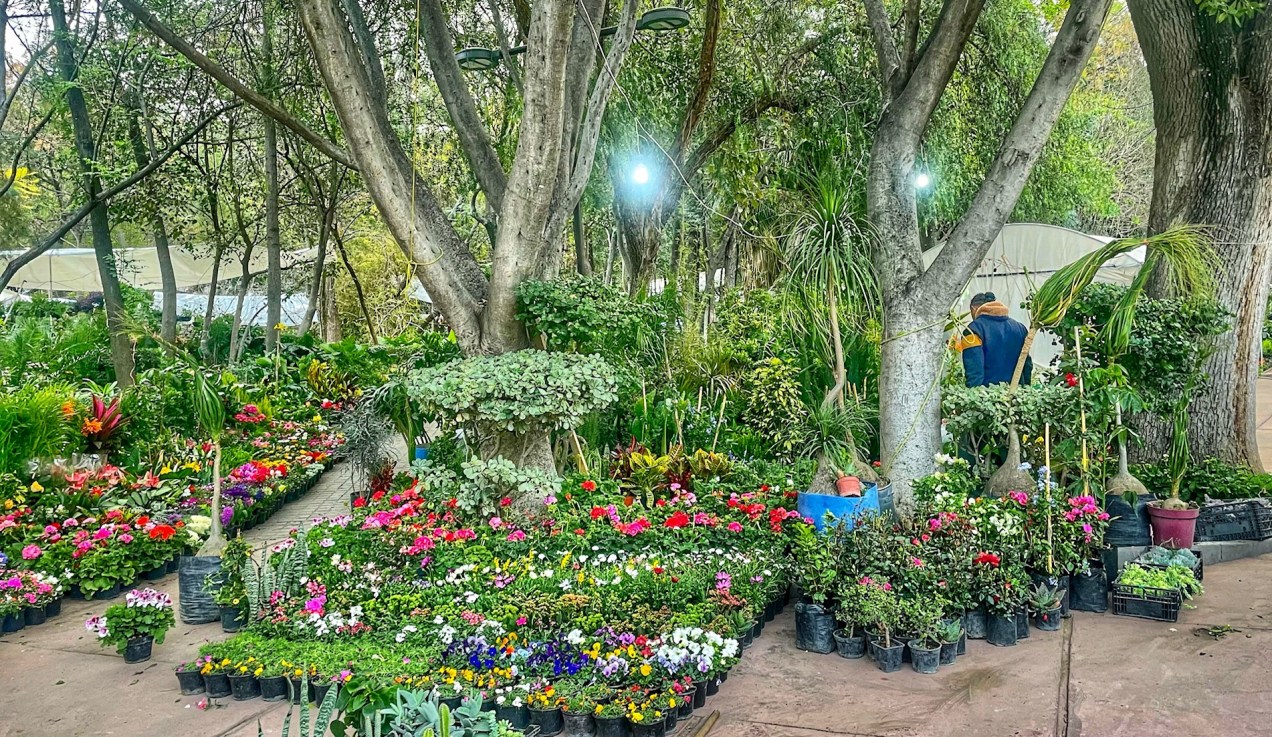
The 67th feast of flowers, new seeds, fertility, fertilizers, plants, and pots — La Feria de la Candelaria — has begun in Parque Juarez. The event continues through February 15.
A walk through the park this morning was truly transformative — for the park, and for me. How can you not be moved by the sheer enormity of gorgeous vegetation on display throughout every pathway, corner, and roundabout in the park?
While some of the 40-plus nursery exhibitors were still populating their corrals this morning, this is clearly the biggest Feria De La Candelaria to date.
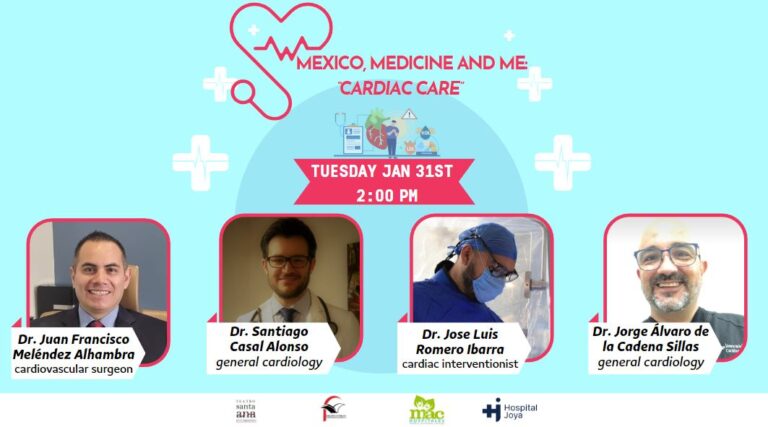
The Biblioteca resumes its series of medical discussions on Tuesday, January 31, with a topic that is near and dear to my heart:
My heart.
And I hope your heart, too.
No kidding, if it weren’t for one of these panelists, I would not be writing this today.
The 2 p.m. program in the Biblioteca Plaza is titled, “Mexico, Medicine, and Me: Cardiac Care.” And while it is free to the public, it is expected to be another full house, as we all hunger for the highest quality medical information we can find.
The panel consists of four local cardiac specialists Dr. Jorge Alvarez de la Cadena Sillas, a founding member of the Instituto de Corazon de Queretaro and in private practice here in San Miguel de Allende; Dr. Santiago Casal Alonso, with offices in MAC Hospital; Dr. Juan Francisco Melendez Alhambra, performed SMA’s first open heart surgery at MAC Hospital; and Dr. Jose Luis Romero Ibarra, a cardiac interventionist.
The moderator for the panel will be Dr. Grace Lim.
I am especially keen to have you attend, and here is why:
I was barely residing six months in San Miguel when my wife convinced me to meet with a cardiologist. I agreed although I couldn’t see the point. I was hitting the gym regularly, eating well, and feeling on top of my game physically. (As top as you can get at 66 years old.)
I did have one stent in my heart, inserted two years earlier. On a recommendation, I made an appointment with Dr. Jorge Alvarez, one of today’s panelists. We talked, a lot. He ran some in-office tests, then he convinced me to visit the Heart Institute in Queretaro for more testing.
Naturally, I thought this was all way too much attention to a guy who was feeling terrific,
Then I saw the images of my clogged-up left-ventricular artery (aka “The Widowmaker”). Even with the old stent, that thing was in bad shape. It took three more stents to re-open it. Thanks to my wife and Dr. Alvarez, I’m still around.
Yes, I was feeling just fine. Probably would have been out for a run or hiking in some canyon when the clogging hit 100 percent. Who knows?
What I know is that these folks will have some very important things to say about your hearts, and mine. Take an hour or so to go and listen. Don’t be like me and wait until everything turns critical.
Listen to your heart, but also listen to your head. If you think you ought to get a checkup … get a checkup.
The library’s first panel brought together four general practitioners, family doctors, and internists to talk about local medical care and preparations you can take ahead of an emergency. They offered some terrific advice. You can read about it here.







 Musings, Magic, San Miguel and More