
Tonight in the public park (The Jardine) there will be scores of kids in costume, each carrying a satchel or plastic pumpkin. Arrayed around the park will be ex-pats with bags full of candy.
The twain shall meet.
Halloween is becoming bigger every year, much to the consternation of the grumpiest among us. Perhaps rightly so, there is some concern that the holiday will dilute Mexico’s own customs.
The locals don’t seem that worried. I watched lots of elementary school kids walking to the nearby Catholic school with their parents and so many were in costumes. They seemed very happy!
The rise in Halloween could be attributed to the deportation of so many Mexicans from the US, those who grew up there as children with the holiday especially. And many learned of the holiday from American relatives.
It seems here to stay and will likely be added as yet another rich and joyous custom.
Speaking of which, Dia de Los Muertos or Dia de Muretos — there is some disagreement over this — arrives November 2.
Actually, it began last week with a day devoted to the memory of pets that people have lost. November 1st is all about remembering the children who have died. On Nov. 2nd we invite all who have left us to come back and celebrate for a day. Has anyone NOT seen “Coco”? It is pretty accurate.
The celebration has several components these days.
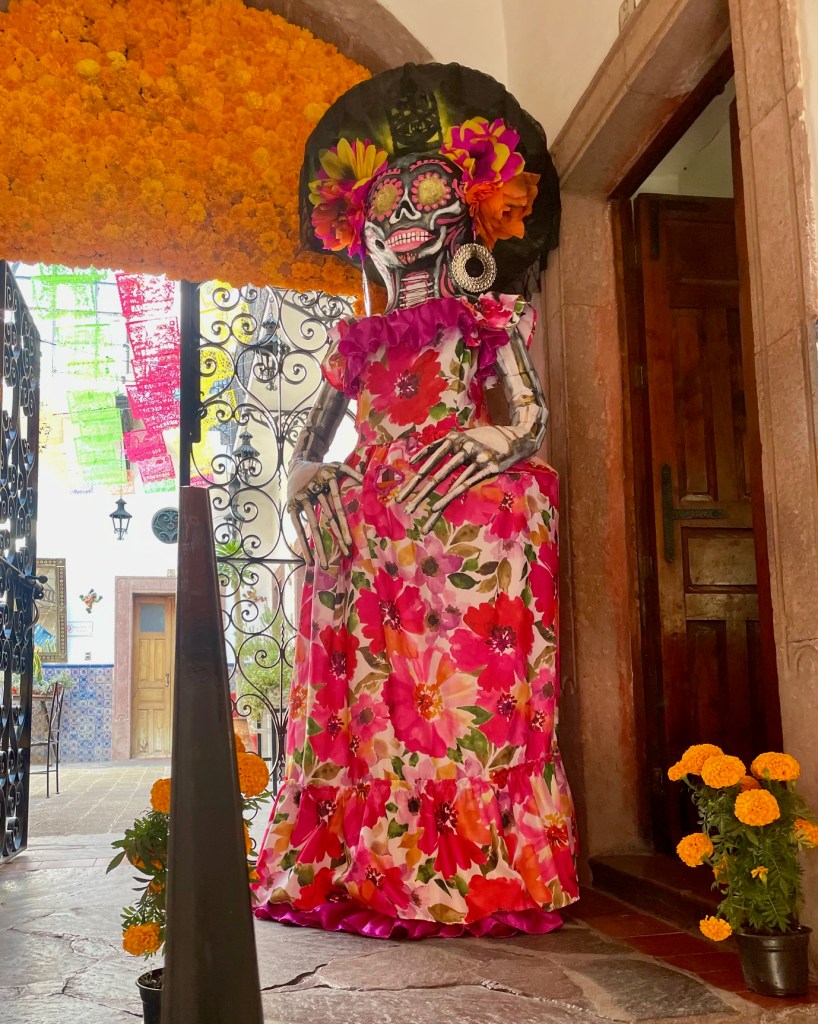
In San Miguel de Allende, homes, shops and restaurants have been decorating their doorways with the imagery of Dia de los Muertos — Catrinas, skeletons, orange marigolds, and skulls.
Our town has embraced decorated door frames in a big way. There are several holidays in which people go all out and a whole artistic door-frame industry has grown up around the quest for the most creative. (The fellow who seems to be leading the charge is named Victor Hugo.)
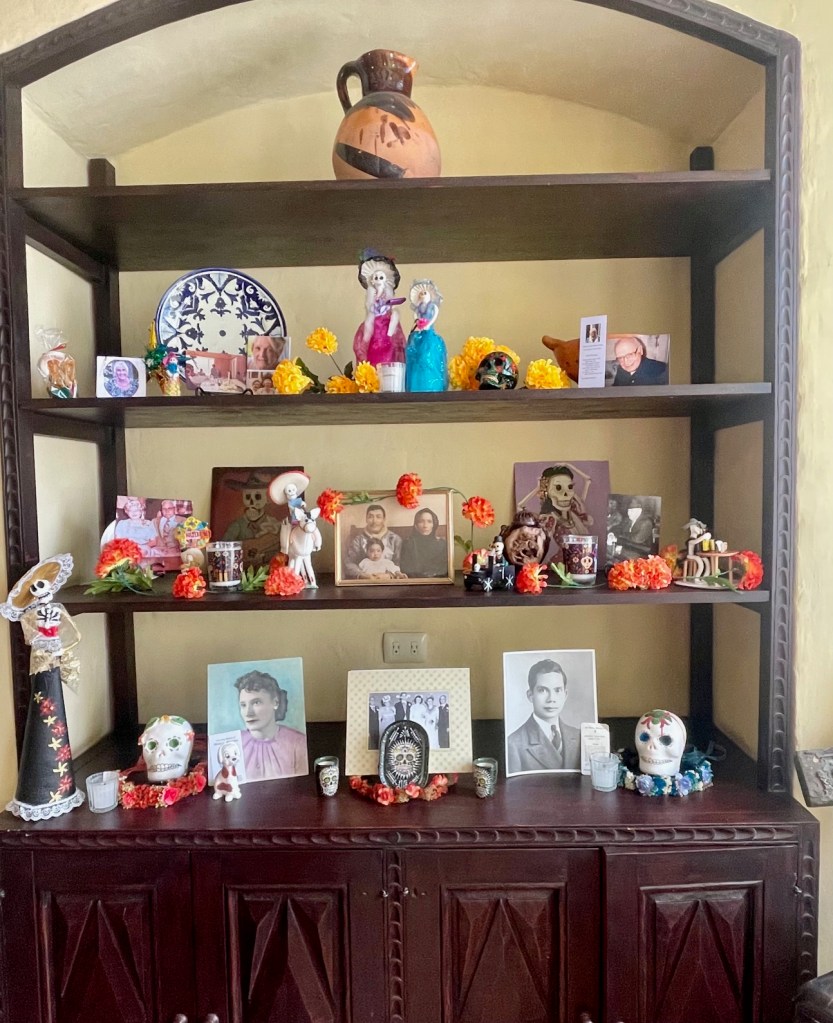
In one of these pictures, you can see the ofrenda that Rose has created, as she does every year. We try to include everyone who has passed from our lives. All over Mexico, people build ofrendas in memory of loved ones. It is a beautiful tradition. Through the altars, people invite the departed back for the night and there is much symbolism built into each altar. Favorite foods, water, tequila, salt, sugar skulls, and the marigolds which bring the dead back to us.
Local families will spend the night at the cemeteries where the graves of family members have been refurbished and decorated like ofrendas. They share food, drinks and smokes and memories of the departed. The dead come to life through the shared stories. Again, such a beautiful practice.
It is not unusual for families to invite complete strangers to join them for a while.
And finally, around 6 p.m. on Nov. 2, hundreds of people dressed in the skeleton costumes called Catrinas will gather not far from our house and parade to the center of town. The costumes range from kids in basic skeleton makeup to adults in pricey Victorian dress and professionally applied makeup.
(Over the next two days, dozens of artists and estheticians will have booths downtown where everyone can get skeleton makeup applied for a small fee.)
It is funny that the concept of the Catrinas began as a way to mock Mexico City’s growing Middle Class in the 1920s. The people were adopting the fashions of Europe and “putting on airs.” The skeleton in elaborate dress was meant to say “gaudy on the outside, hollow on the inside.”
There is no doubt that vanity is once again superseding artistry as wealthier Mexicans and gringos compete for the most elaborate costumery and best makeup. But they haven’t overshadowed the artists, not yet. You’ll see some amazingly imaginative interpretations of Dia de Muertos walking around.
For all of us, it is a good show.
 Musings, Magic, San Miguel and More