
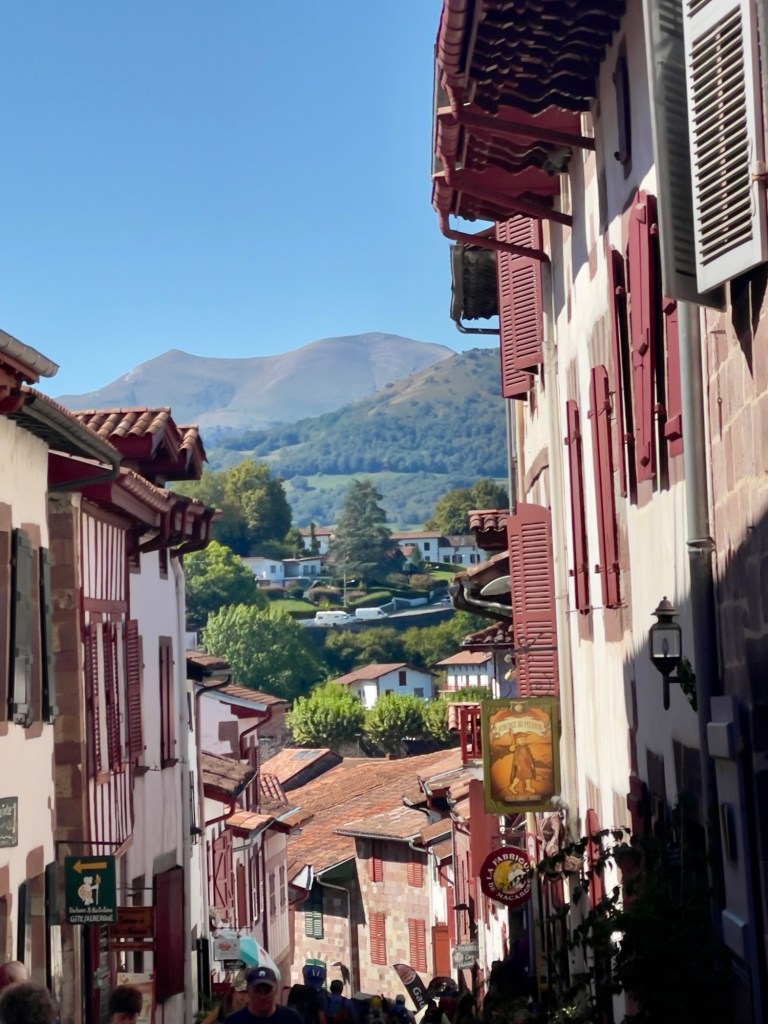
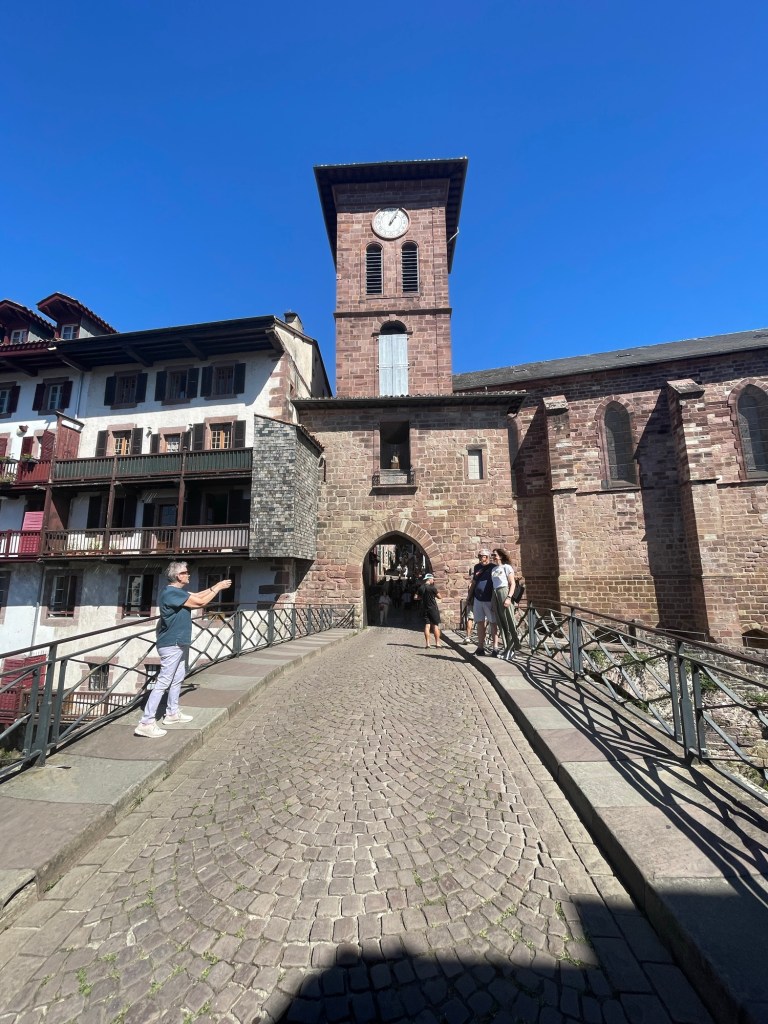
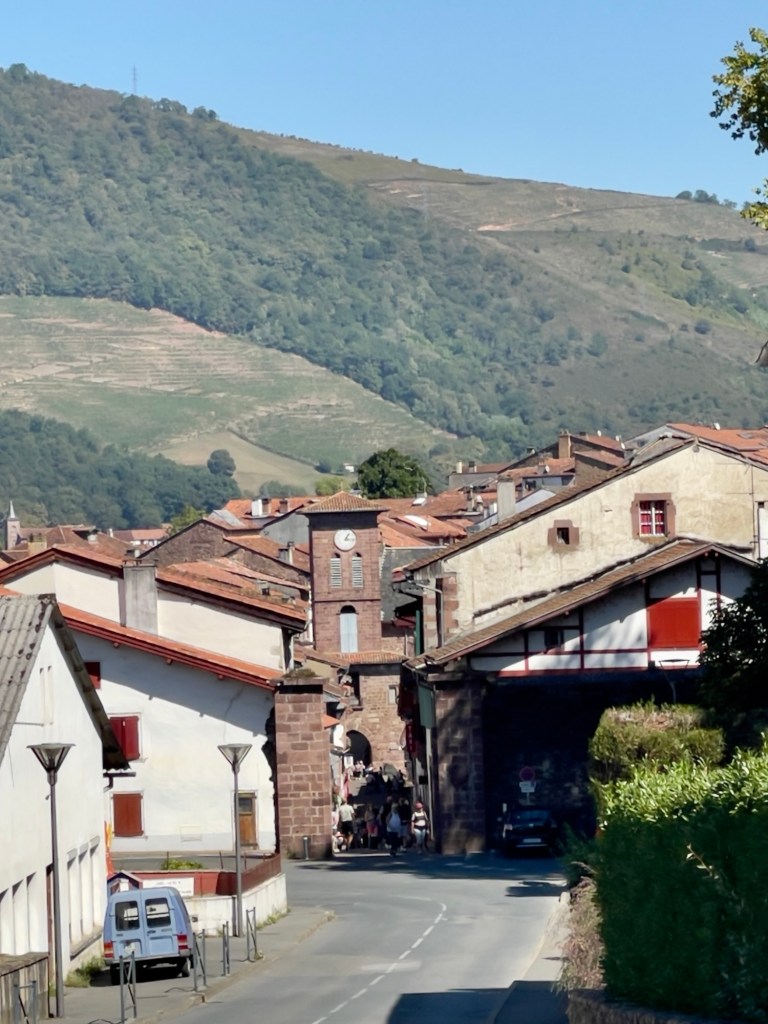
The energy on the street builds like a pressure cooker as pilgrims arrive from all directions, register for their Camino, hunt for food and drink, check into auberges for the night or trundle up the road to the Pyrenees.
At 10 am when our train arrived from Bayonne, St. Jean was oddly quiet.
“Where is everybody?” I asked a Dubliner named Guy in the Camino registration office.
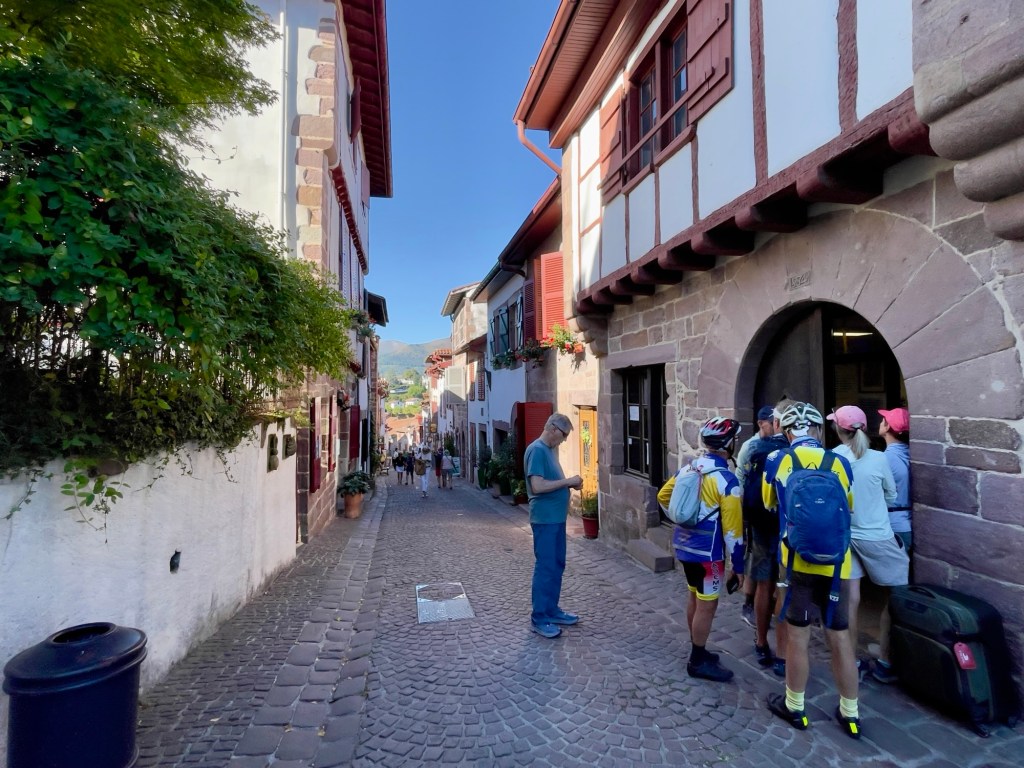
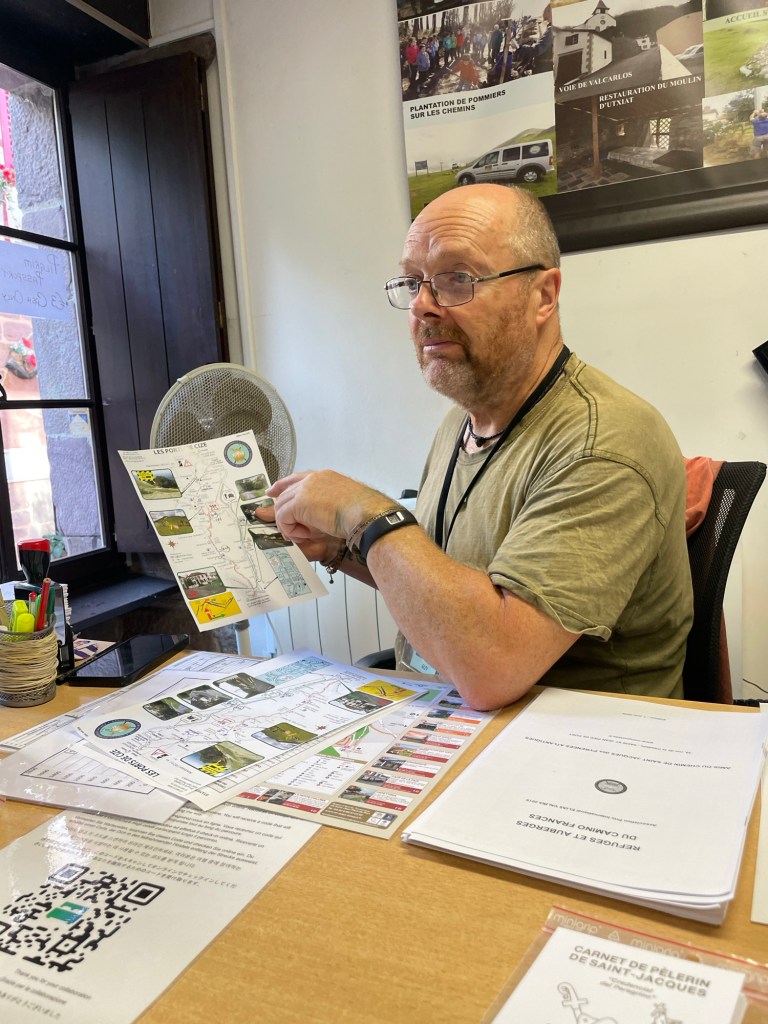
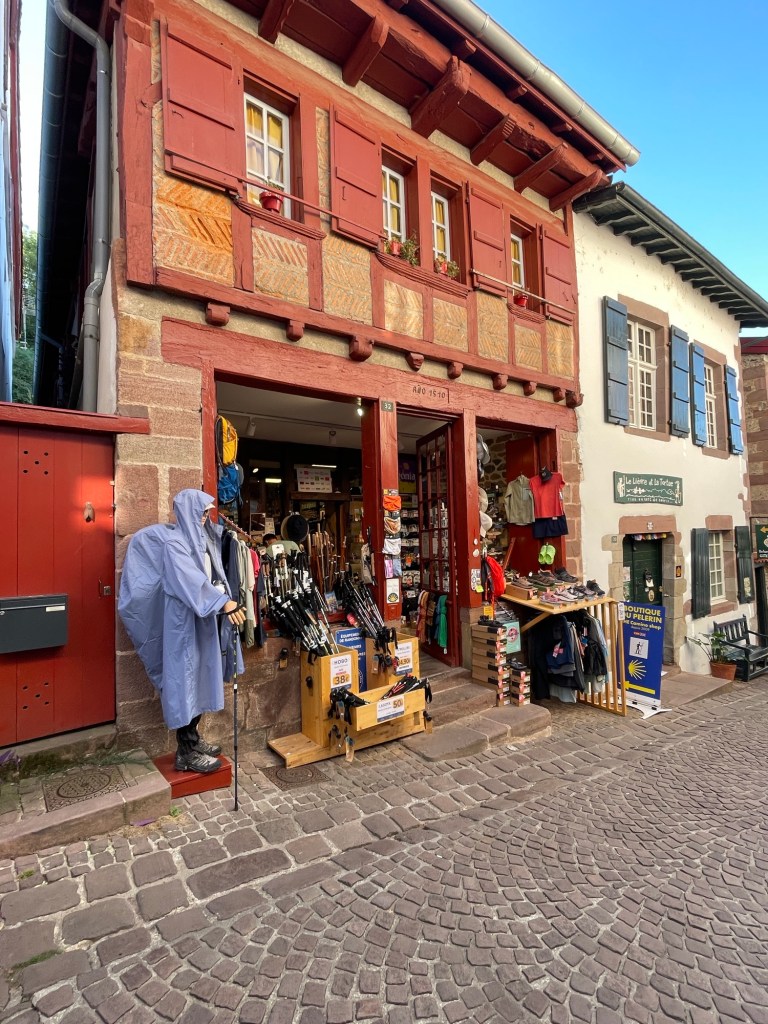
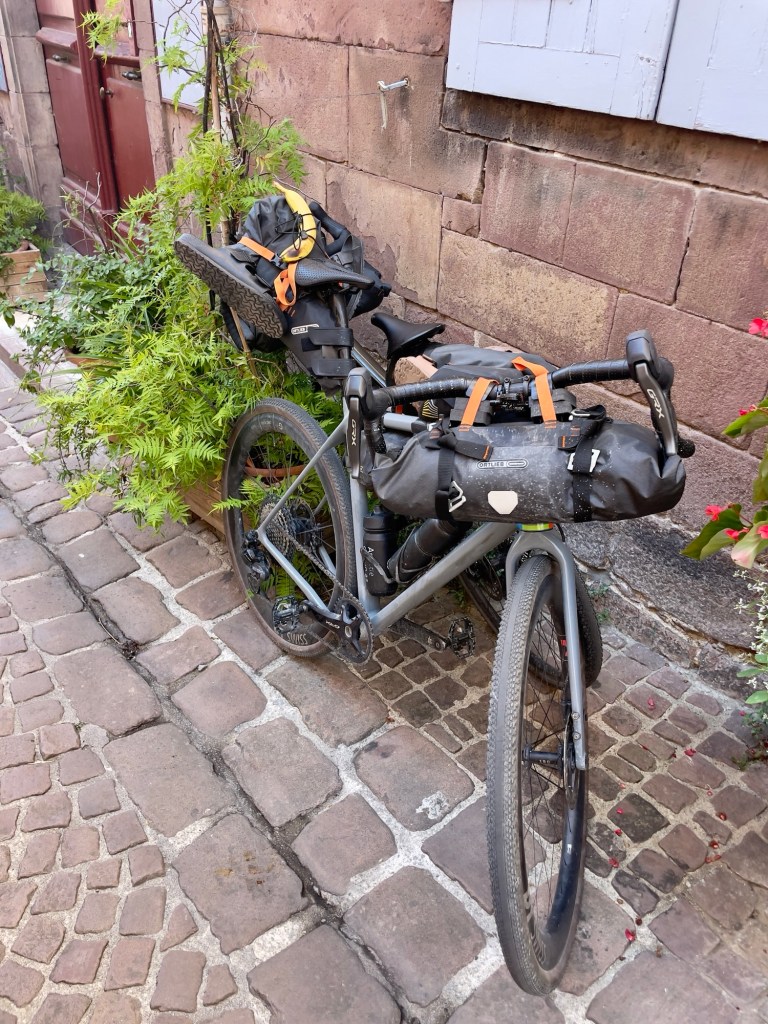
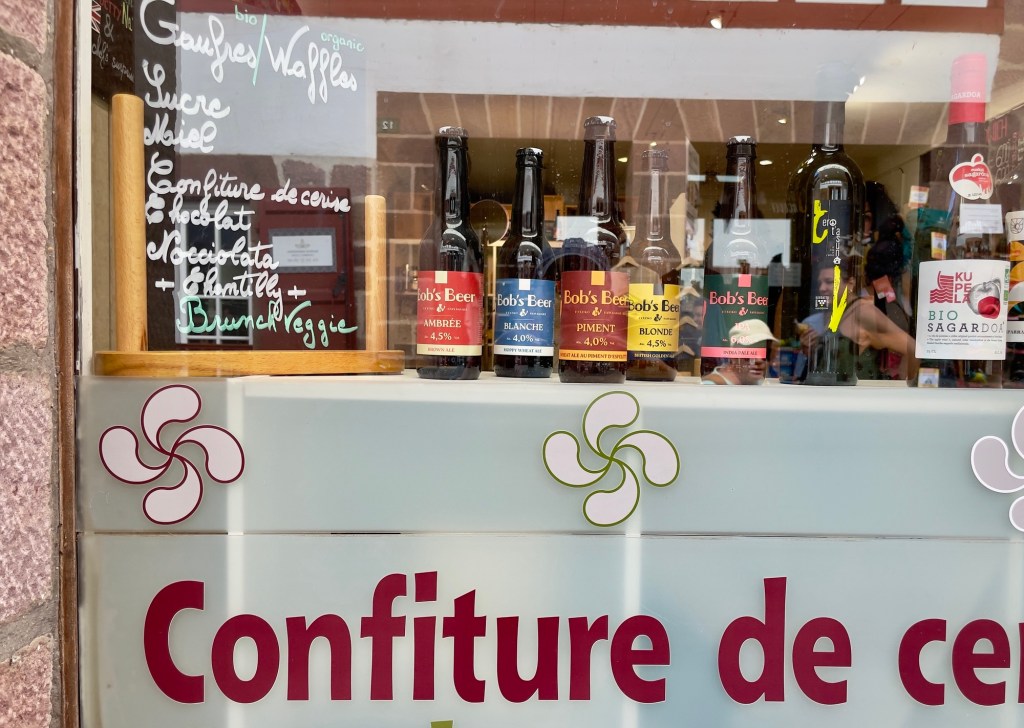
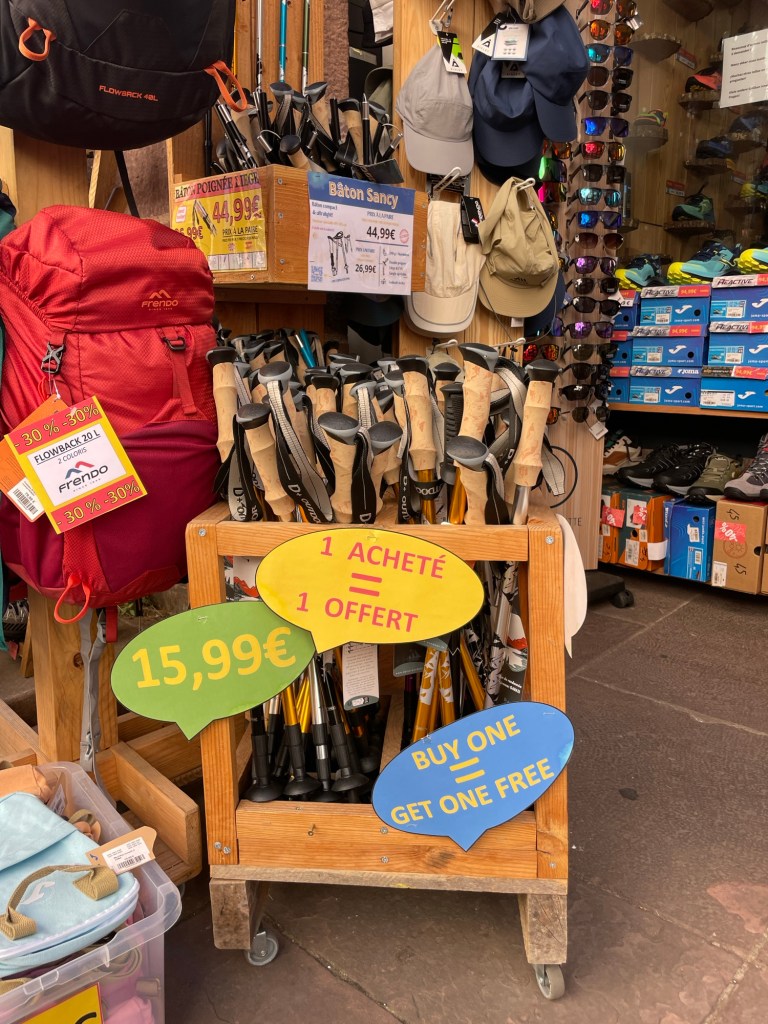
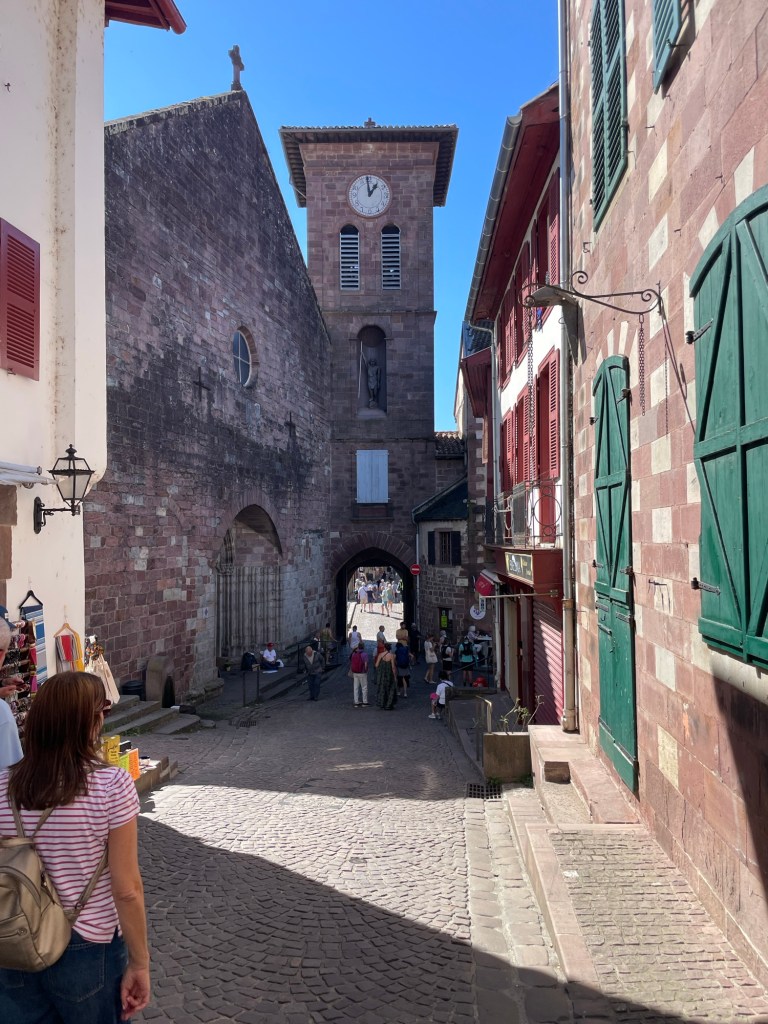
“In a couple of hours, this place will be jammed” he assured me. Quite rightly, it tuned out.
Starting around 6 a.m. St. Jean Pied de Port disgorges its temporary population of Peregrinos and awaits the arrival of a whole new wave during the day. It is a cycle that repeats every single day.
An early start is essential for pilgrims headed for Roncevalles, a six to eight hour walk up and over the Pyrenees mountains. You don’t want to get caught in the dark or the rain on the downhill side of the walk.
The discussion on the train was all about “should I stay or should I go?”
A man from Dallas was determined to leave as soon as he registered for his passport because rain is predicted for tomorrow and he has a bed reserved in Roncevalles for tonight.
A young woman next to us was planning the same thing.
Both later opted to stay in St. Jean tonight for a fresh start tomorrow.
Sara, a young woman from Geneva who is on break from university in London is on the same wavelength as me — start fresh tomorrow — so we shared coffee and croissants at one of many cafes on the main thoroughfare.
Her family if from Ukraine and she is studying environmental law and economics. She has not made any reservations, hoping to arrived in towns early enough to grab a bunk in the auberges that takes guests on a first come first served basis.
Me, I’ve booked several stops ahead, up to Pamplona. After that, I’m told, the crowd thins out and securing a bed becomes easier. On the fly.
Until you reach Saria, about 100 kilometers out from Santiago de Compostela. That marks the minimum amount of walking needed to officially complete a certified Camino.
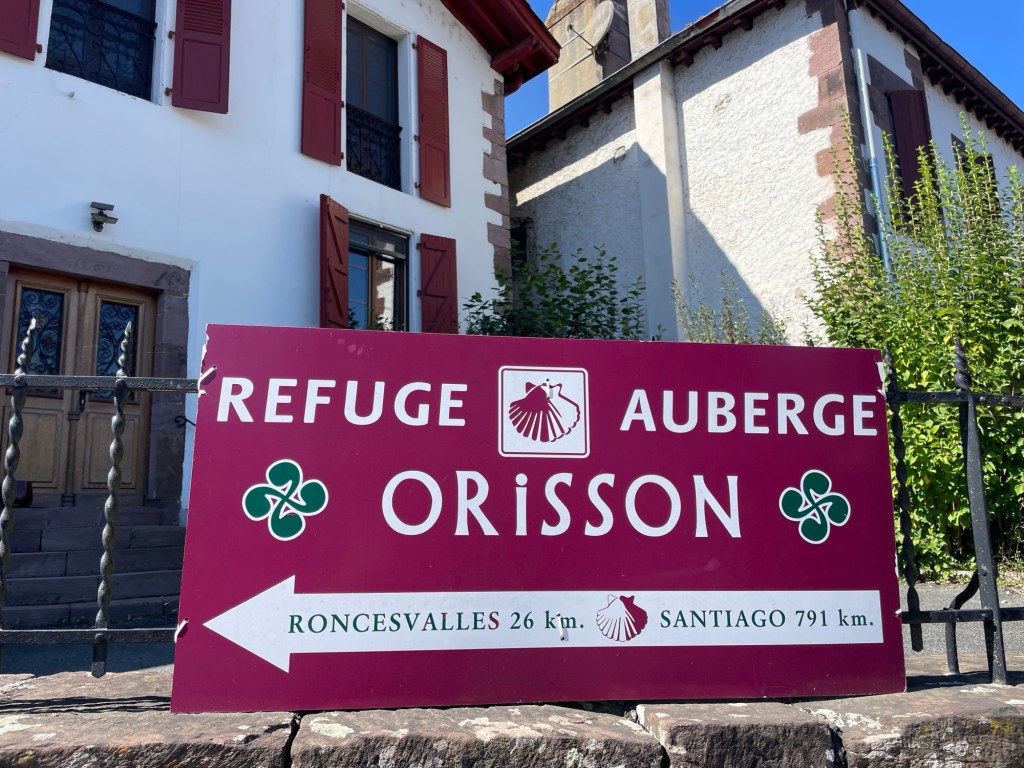
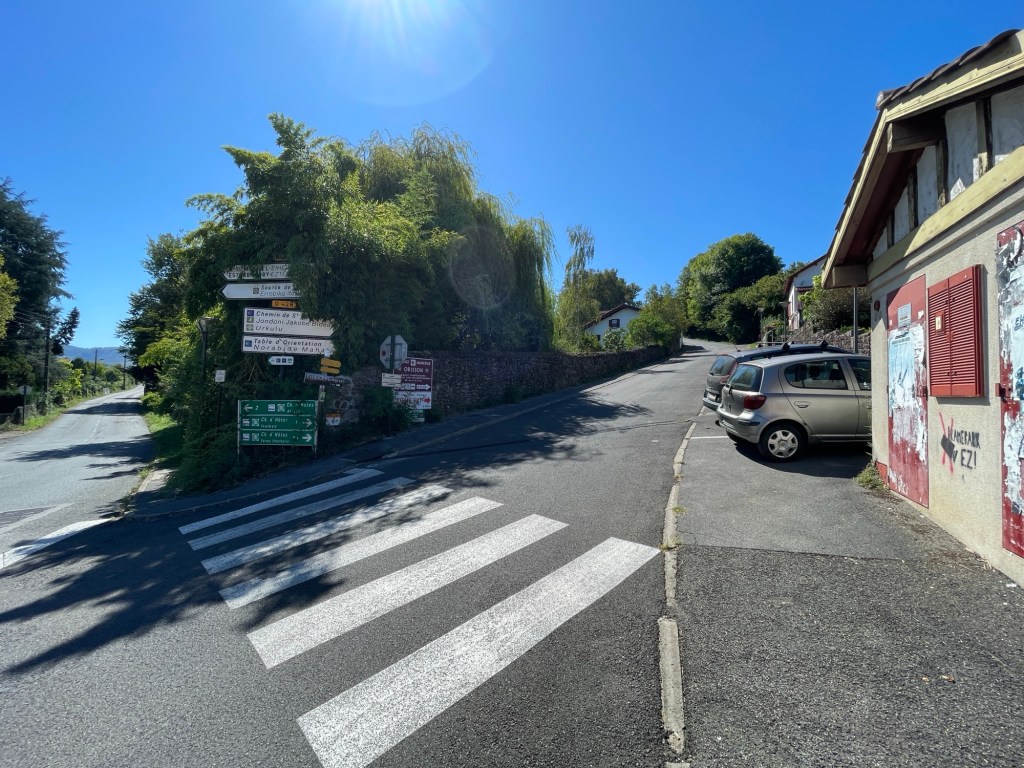
After breakfast, Sara went to claim a spot in line for the public auberges. Mine didn’t open until 3 pm so I walked out of town and up toward the Pyrenees.
The road just kept going up and up and up and my heart started pumping, not from exertion but from excitement.
I wanted to keep going.
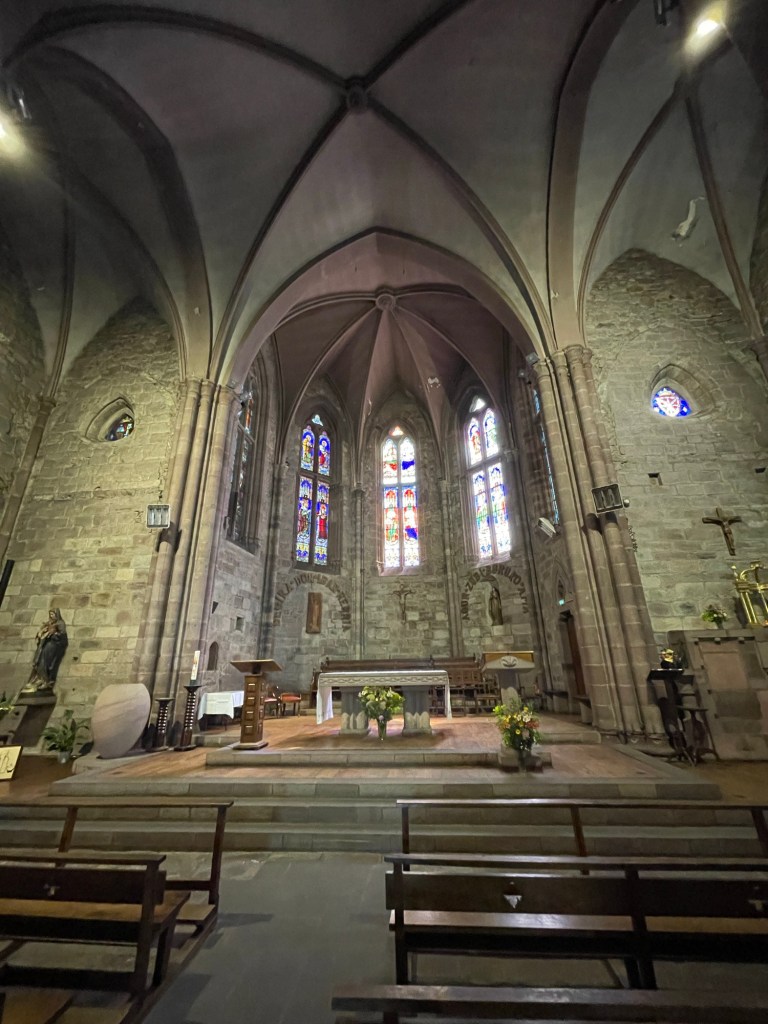
On the way back into town, l stopped into the local church, the first of hundreds along the way. I almost asked a man to remove his baseball cap inside the sanctuary but didn’t. I don’t want to be that guy.
Not like the random woman who was visibly and vocally upset because the growing line in front of the Camino office was sprawling across the road. She wanted it single file and neat. Like, now!
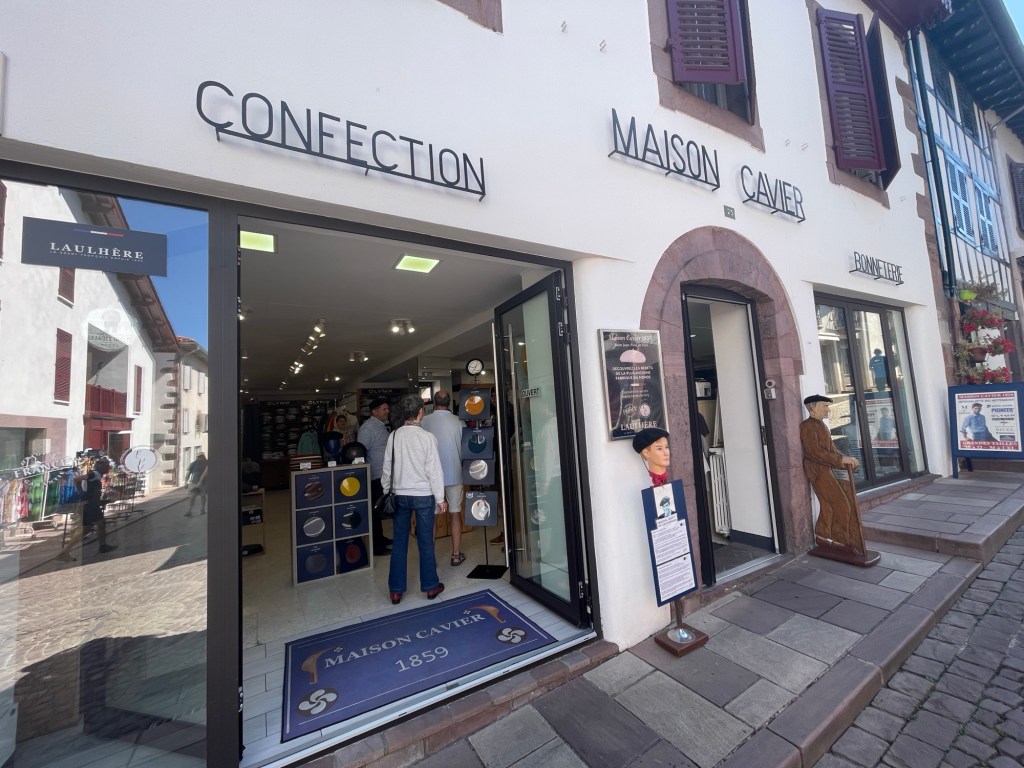
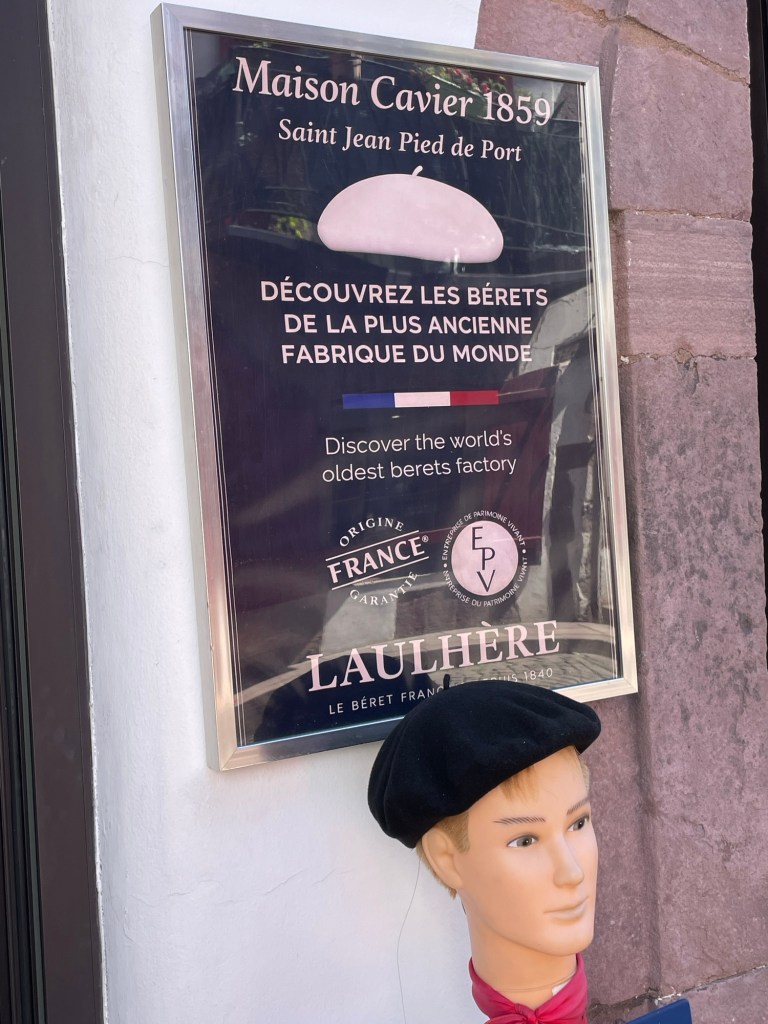
Maison Caviar is a haberdashery that specializes in Basque berets and has done so since the mid-1800s. I stopped in, not because I need another cap but because people being fitted for berets seemed to be having so much fun.
Juan and his father, Juan Sr., were selecting caps for customers like a solmonier might select a good wine for dinner.
Juan Jr. told me he is fifth generation Basque in the business. “My father was born right upstairs, and my grandfather as well,” he said.
When he learned that I live in Mexico he exclaimed, “Ah, Deus de Los Muertos! We learned about that in school!”
Actually, he traveled to Mexico City in the 1990’s to visit a friend who has an Argentinian restaurant there. He was impressed by the lingering evidence of the Great Earthquake.
“Still there,” I said. “But you need to revisit the city. Many amazing changes.”
Time to check into my hotel and forage for something else to eat.
And wait. Wait for the dawn.


Looks absolutely beautiful! 🙂 Jackie
LikeLike
So great to be able to join your adventure Bob! 🙂
LikeLike