

Sorry for the Dad Joke. It just came to me in the wee hours of Sunday morning. Turns out, the Cosmos is as corny as I am.
“Hey, shiny new Artificial Intelligence program: Write me a poem about walking through the Scottish Highlands and do it in the style of Henry Wadsworth Longfellow.”
OK, I didn’t do this. I may still do this — but I didn’t.
Not yet.
Recently, I re-read Longfellow’s “Song of Hiawatha” for the first time since my childhood.
Why? I don’t know.
That Cosmos we call the Internet thought it might interest me. So, it just sort of popped up on my screen.
(Thank you, mysterious algorithms.)

It felt as if Longfellow had drawn inspiration from the 96-mile West Highland Way (which I just hiked in September) and not the Upper Great Lakes in the United States.
At least in the first few chapters of the epic poem. That’s when the poet establishes the setting for his story of the Ojibwa people around Lake Superior.
That sounded like a very Highlands setting.
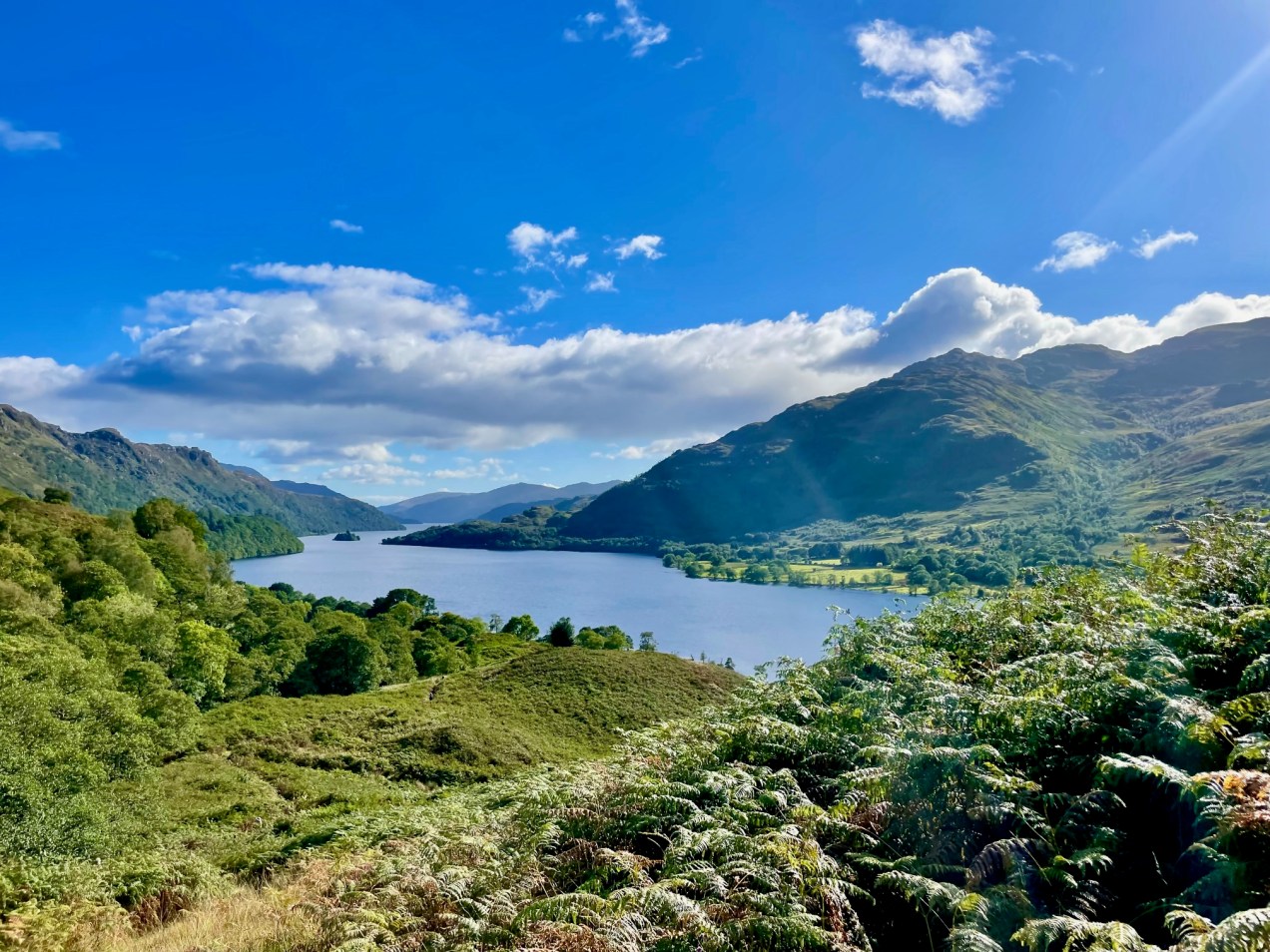
So much of the description of the landscape in this epic 1855 poem meshes beautifully with that which I experienced in Scotland. Walking along the shore of Loch Lomond, through the moors, over mounded hills, across the glens – it was as if it all were lifted from Longfellow’s poem.
Or were we walking side-by-side?
Mind you, Longfellow isn’t much in favor these days, not like he was in the 1800s.
Except with the literary class. Nothing breeds resentment like success.
The rap back in the day – his stuff was too popular with ordinary people and children. As the great philosopher Yogi Berra might have said, “Nobody reads Longfellow anymore; he’s too popular.
Especially critical was the poet and author Edgar Allen Poe, a fan who came to dislike Longfellow’s poetry. Poe described the man as “a determined imitator and a dexterous adapter of the ideas of other people.”
Ouch. Meow.
Poe unwittingly described what today we call Artificial Intelligence. What is AI but the mass harvesting of humanity’s creative output for dexterous adaptation to other purposes?
Fair enough.
So, I just did a very Artificial Intelligence thing – without the aid of AI. I lifted whole chunks of Longfellow’s “Song of Hiawatha” and recombined them into a “poem” about the West Highland Way.
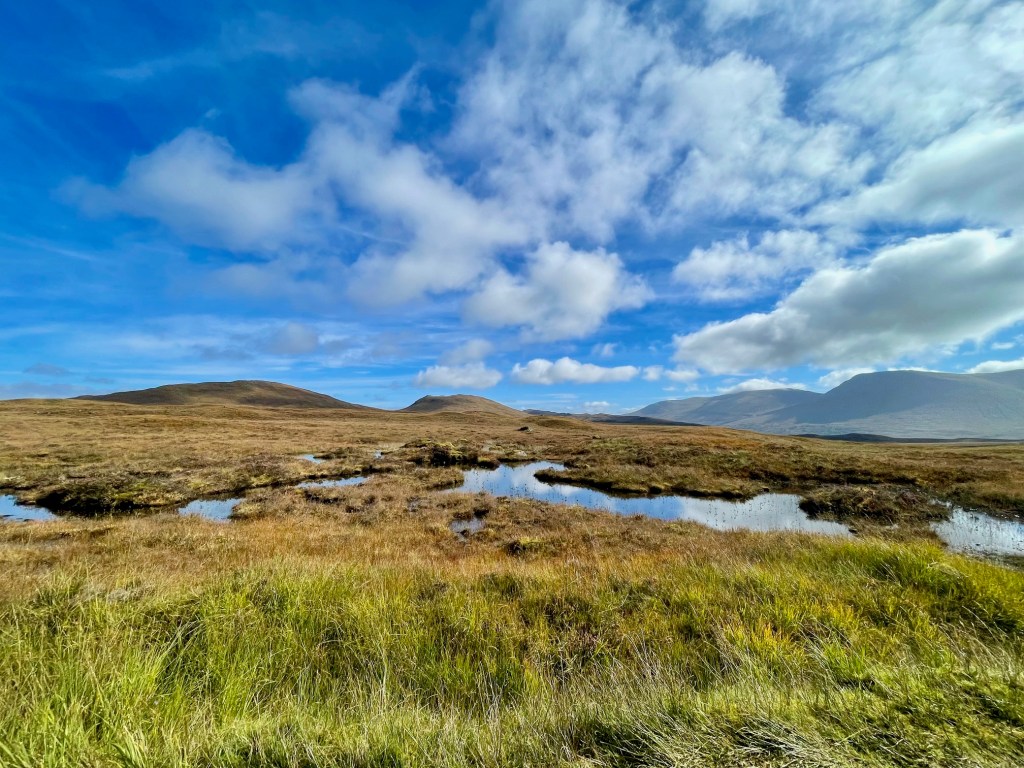
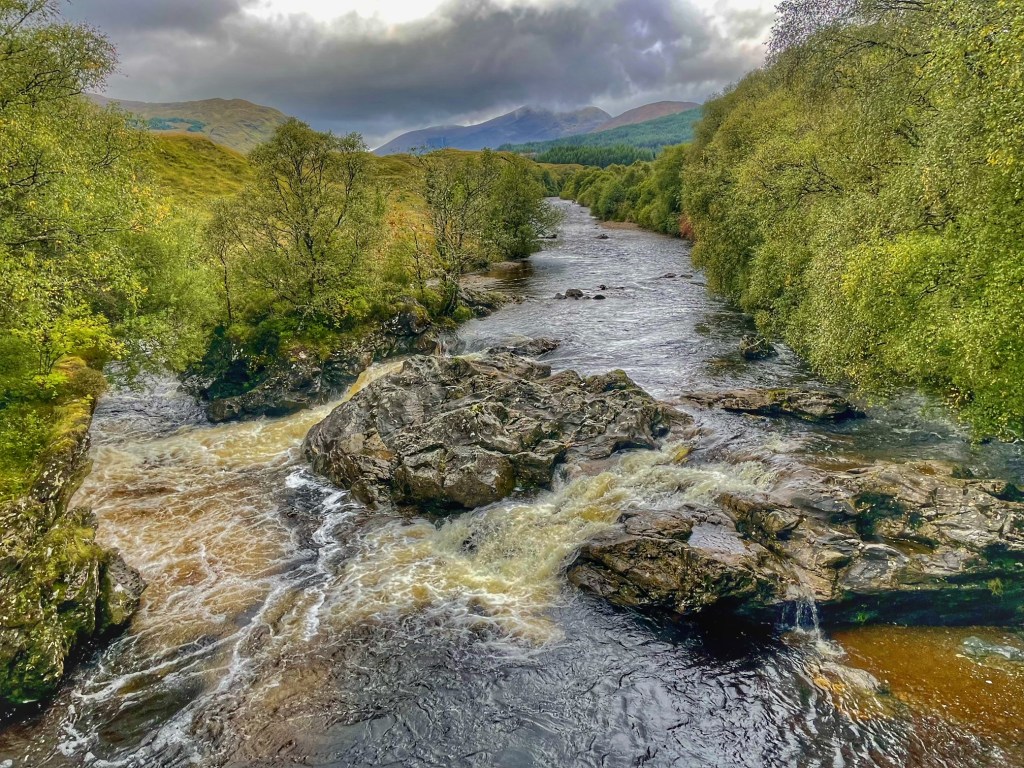
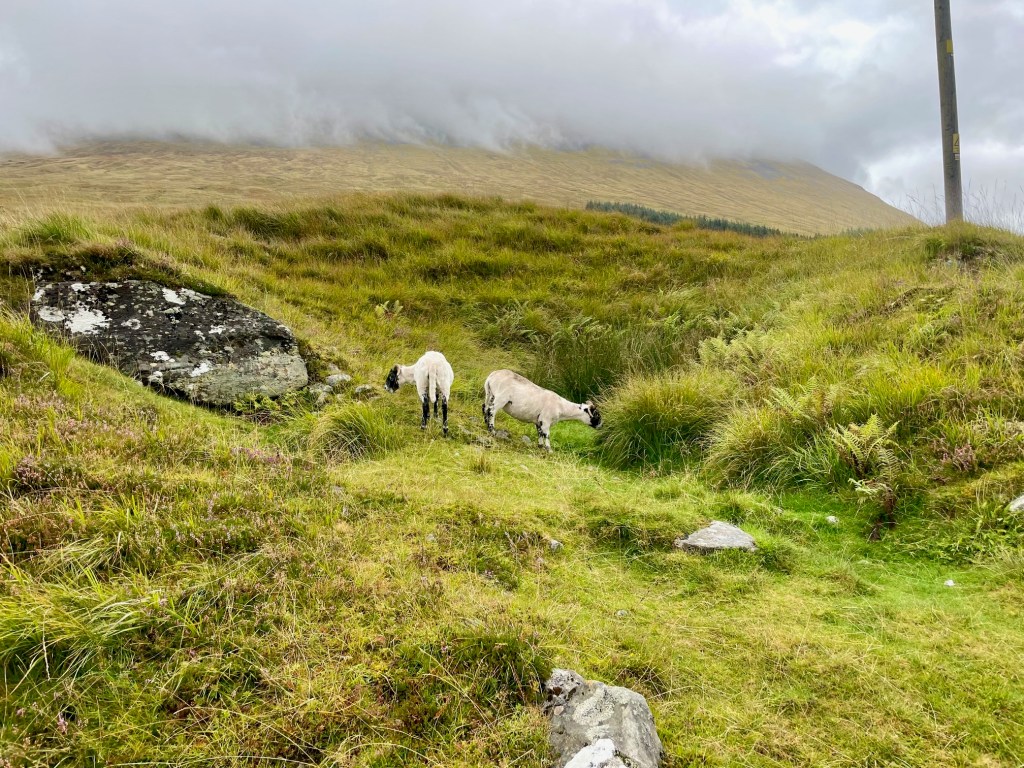
The pictures are my own. I hope they enhance the imagery.
Honestly, I did little more than cut and paste and add a transition here and there.
I think it works. At any rate, it spoke to me when I first picked it up last week. Still does.
And I hope it works at some level for you, too.

Longfellow’s Highland Trek
With the odors of the forest,
With the dew and damp of meadows,
With the rushing of great rivers,
With their frequent repetitions
And their wild reverberations
As of thunder in the mountains.

From the mountains, moors, and fen-lands
In the moorlands and fen-lands,
The melancholy marshes,
In the green and silent valley,
By the pleasant water courses,
Spread the meadows and the moors
And beyond them stood the forest,
Stood the groves of singing pine trees –
Green in summer, white in Winter,
Ever sighing, ever singing.

“And the pleasant water-courses,
You could trace them through the valley
By the rushing in Spring-time,
By the alders in Summer,
By the white fog in the Autumn,
By the black line in Winter.

In the green and silent valley,
Ye who love the haunts of Nature,
Love the sunshine of the meadow,
Love the shadow of the forest,
Love the wind among the branches,
And the rain-shower and the snow-storm,
And the rushing of great rivers
Through their palisades of pine trees,
And the thunder in the mountains,
Whose innumerable echoes
Flap like eagles in their eyries.
Ye, who sometimes, in your rambles
Through the green lanes of the country,

Where the tangled barberry bushes
Hang their tufts of crimson berries
Over stone walls gray with mosses.

Pause by some neglected graveyard
For a while to muse, and ponder.
On a half-effaced inscription,
Written with little skill of song-craft,
Homely phrases, but each letter
Full of hope and yet of heart-break,
Full of all the tender pathos
Of the Here and the Hereafter —
Stay and read this rude inscription.
From his footprints flowed a river,
Leaped into the light of morning,
O’er the precipice plunging downward.
Then a snow-white cloud unfolding,
Like the tree-tops of the forest.
Ever rising, rising, rising,
Till it touched the top of heaven,
Till it broke against the heaven,
And rolled outward all around it.
On the summit of the mountains,
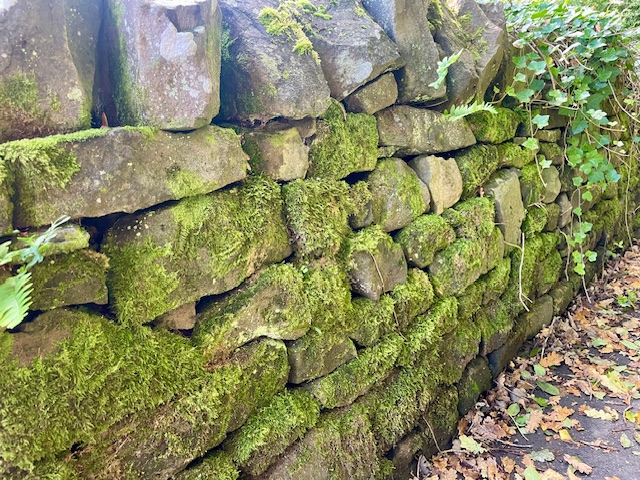
Like a rock with mosses on it,
Spotted brown and gray with mosses.
All the air was full of freshness,
All the earth was bright and joyous.

Level spread the (loch) before him;
From its bosom leaped the sturgeon,
Sparkling, flashing in the sunshine;
On its margin the great forest
Stood reflected in the water,
Every tree-top had its shadow,
Motionless beneath the water.
As the fog from off the water,
As the mist from off the meadow.
With a smile of joy and triumph,
With a look of exultation,
As of one who in a vision
Sees what is to be, but is not.
Heavy with the heat and silence
Grew the afternoon of Summer;
With a drowsy sound the forest
Whispered round the sultry lodge,
With a sound of sleep, the water
Rippled on the beach below it.

Dark behind it rose the forest,
Rose the black and gloomy pine trees,
Rose the firs with cones upon them;
Bright before it beat the water,
Beat the clear and sunny water,
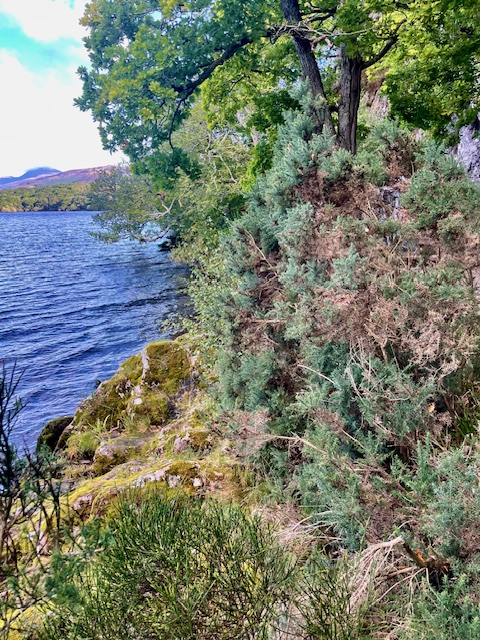
Beat the shining Big-Sea Water
Through the leafy woods he wandered;
Saw the deer start from the thicket,
Saw the rabbit in his burrow,
Heard the pheasant, Bena, drumming,
Heard the squirrel, Adjidaumo,
Rattling in his hoard of acorns,
Saw the pigeon, the Omeme,
Building nests among the pine trees,

And in flocks the wild-goose, Wawa,
Flying to the fen-lands northward,
Whirring, wailing far above him.
“Master of Life!” he cried, desponding,
“Must our lives depend on these things?”
Heard the rivulet rippling near him,

Talking to the darksome forest;
Heard the sighing of the branches,
As they lifted and subsided
At the passing of the night-wind,
Heard them, as one hears in slumber
Far-off murmurs, dreamy whispers.
 Musings, Magic, San Miguel and More
Wow. That was beautiful. It took me back to the time when Ted and I walked the West Highland Way. I will send you the song I wrote after the hike.
LikeLiked by 1 person