
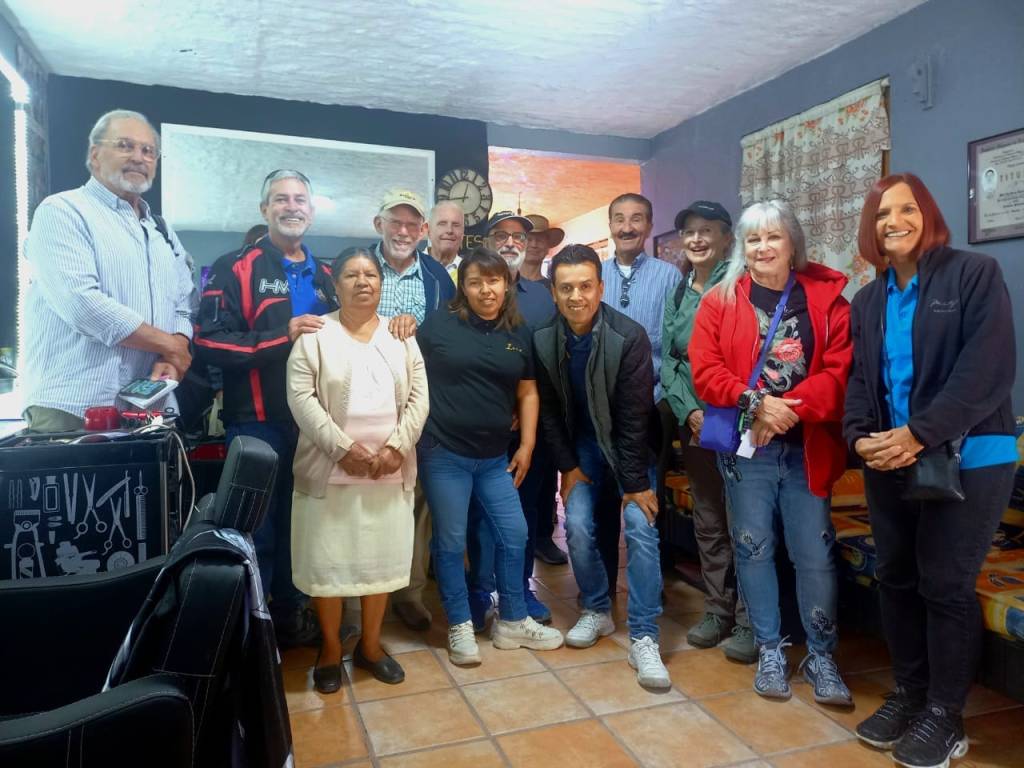
I just spent a half-day rambling around some dusty backroads in the regions around Antotonilco chasing hopes and dreams with a dozen other like-minded people.
Not our hopes and dreams.
No, we were in pursuit of the hopes and dreams of budding entrepreneurs – a beauty salon owner, the owner of a market stall in Antotonilco, the owner of a tiny produce and dry-goods tienda in an indigenous village, an Otomi women’s collective that makes herbal remedies and natural cosmetics, an Otomi embroidery business, and a woman who sells corn-on-the-cob at local football games on Sundays.
Two things that all of these enterprises have in common – their businesses provide for their families and each received a micro-financing loan and educational support from Apoyo a Gente Emprendedora A.C., an organization that has been providing – as its name states “Support for Entrepreneurial People” in San Miguel de Allende for 20 years.
According to founder and director Ezequiel Mojica Galvan, Apoyo has made small peso micro-loans to more than 600 people and businesses over the years. Of those, 86 percent have been to women entrepreneurs. Indicative of the support and close relationship his organization has with its clients, more than 90 percent completely repaid their loans.
Those repayments go back into the pool and are loaned out again to other clients, he said.
In the course of the afternoon, a tour organized with the San Miguel Mid-day Rotary Club (which is the major sponsor of the micro-lending program), Ezequiel’s passion for helping people shines through.
Don’t just look at the businesses, he says. Look at what the businesses do.
They keep families together. They put food on the table. They pay for their children’s educations. They encourage self-worth and confidence. They lift people from the lowest rungs of poverty and enable them to contribute to their communities by providing essential services.
Rotary began contributing two years ago to Apoyo’s $ 80,000-a-year micro-lending program. For many members, this was their first chance to see the impacts first-hand. (Apoyo offers many other services –from skill training to language classes, to finance and business training — and a number of other San Miguel organizations help sponsor these projects.)
According to Ezequiel, loans can range upward from $1,000 pesos and can be made for all sorts of reasons – for example, starting a business cold, expanding products, or supplementing equipment.
Each potential client is expected to go through classes in financial management and business practices before the loans are considered. Apoyo staff helps them with business plans and strategies and can suggest ways to improve their market share.


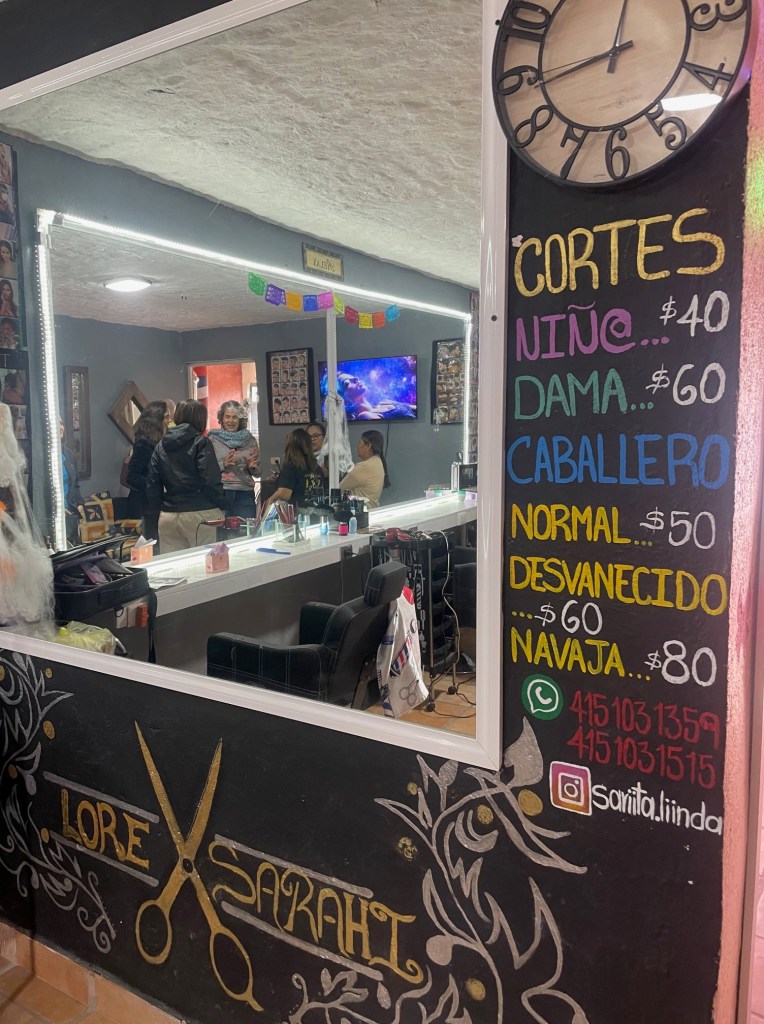
Lorena Tovias Navarro of Cienguita has a two-chair beauty salon, “Lare y Sariita,” in the front of her house. Becoming a hairstylist was her childhood dream and she spent two years taking courses while balancing the needs of a family that includes her mother, husband, and four children. She still takes classes to stay up on current trends and even teaches stylists from neighboring communities.
She was able to open her studio on her own but a $5,000 peso loan from Apoyo enabled her to buy equipment essential to expanding her offerings, she said. Lorena also benefitted from the business classes provided by Apoyo.
She now also provides makeup, coloring, massages, and during the upcoming festivities, Catrina costume makeup.
Her studio is a family business. Her oldest daughter works with her. Her mother cares for the younger children and a grandchild. Her husband works as a bricklayer.
“I grew up very poor,” says Lorena. “The drive is strong to do better for my family. I may be 45 years old but today I feel like I am 15!”
Adds Ezequiel, “These loans are all about creating healthy families … the loan itself is not the goal.”

Anyone who has driven through Antotonilco recognizes the marketplace feel of the downtown. Both sides of the street are lined with stalls selling gifts, trinkets, artisan goods, produce, food, and much much more.
Maria Jose Ramirez’s family has owned a stall for more than 10 years and it has been operated by three generations. Her grandmother passed away only hours before we arrived but Maria Jose felt it was important enough to get the story of their business out for others to hear.

The family business started behind the historic church where they sold religious articles like rosaries, prayer books, crucifixes, holy cards, and candles. At the time Antotonilco was a significant destination for pilgrimages.
In 2008, when the church was declared a UNESCO Heritage Site, the town suddenly became a major tourist destination and remains so to this day. Maria Jose said the family needed to suddenly broaden its array of merchandise beyond the religious artifacts.
A $1,000 peso loan from Apoyo enabled them to add local artisans’ works and souvenirs to their stall, which is now on the main street in the heart of the marketplace. They were also able to increase the security around their stall.
Maria Jose still takes advantage of the many classes offered at Apoyo. She is currently studying English.
To say that the indigenous village of Los Ricos is off the beaten path is putting it mildly. North of Antotonilco along the Laja River that often used to cut off the community from civilization during the rainy season, Los Ricos now has a sturdy bridge over the river and paved streets that no longer turn into rutted nightmares when it rains.
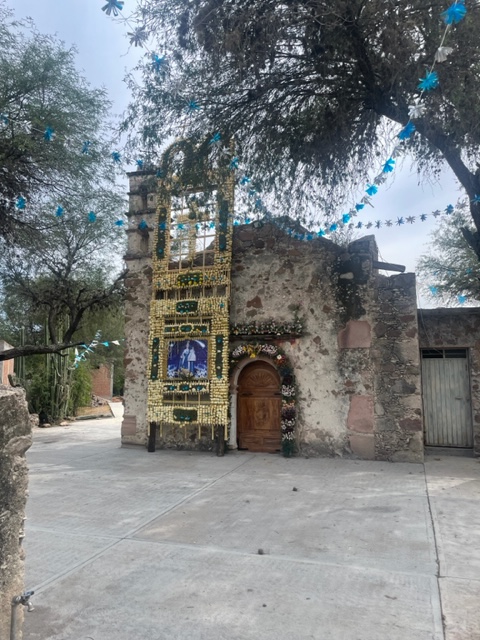
With one of the oldest churches in the region, it almost looks like a Hollywood movie set.
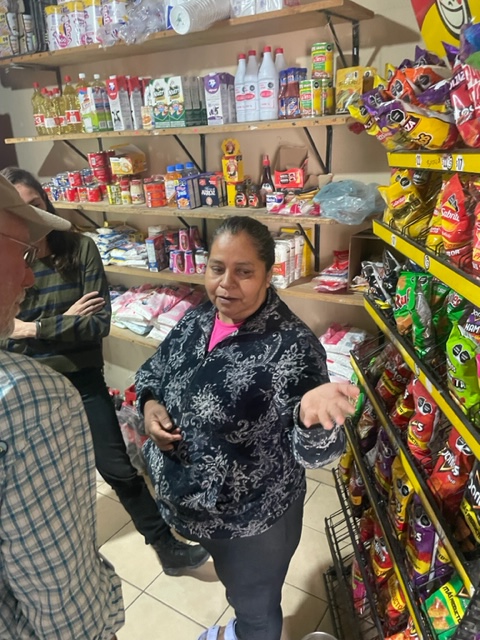
Maria Irma Hernandez Jacinto’s mother ran the community’s tienda for decades before her.
Maria started her own career modestly by selling churros in front of the local school.


When Maria’s husband died of cancer and left her with three small children and no income, she moved to New York City for eight months to work and save some money. She returned with enough to start building her home.
When her mother passed away, Maria moved the grocery store a block away into her own home.
When Maria approached Apoyo, she had plans to expand her business but no capital. With an $8,000 peso loan, she has been able to add a tortilla production machine, expand her line of goods, and will soon be moving the business out of the front of her home into its own space.
As the town grows, so does her business. With the help of another loan, she was able to open a stall in downtown Antotonilco on weekends. She sells traditional Mexican lunches and dinners there.
Being a successful entrepreneur has enabled her to keep her family together and her example has motivated her own children. Her son is now a practicing psychologist.
For the last stop of the day, we followed the Laja River north, past Chinaberry Farms and Timmyland (Rancho Cascabel) and the village of Bordo Colorado until we reached the Otomi village of Los Guerrero.
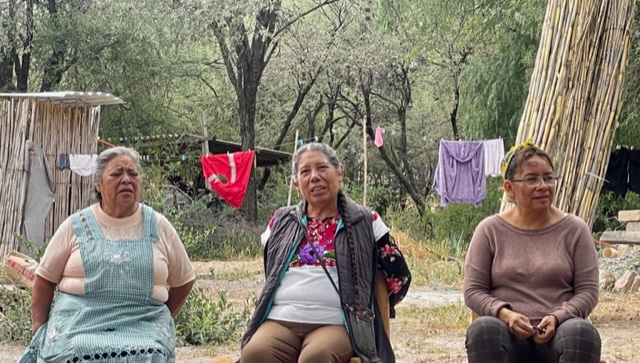
Waiting for us were the women of Ye Diga Hnahnu a collective of Otomi women who have built a thriving business in creating natural beauty products – soaps and shampoos – and traditional herbal remedies for an extensive list of everyday maladies – from muscle aches to menstrual cramps, to itchy skin, to headaches, to fatigue.
There were actually three businesses there, all benefiting from the support of Apoyo. Besides the collective, there was an embroidery business, and a woman who does a thriving business selling hot corn-on-the-cob at local sports events.


The women of the collective have their own building, and it is an impressive structure in the little community. It is both a headquarters and a production facility. They built it themselves, with their own hands.
They all grew up in the Otomi traditions. They knew which plants were good for which maladies and how to turn lavender into soaps and creams. What they did not know was how to produce and package these things for a bigger marketplace.
With guidance from Apoyo, they were able to turn to the State Department of Indigenous Peoples for help in creating formulations for the market.
At first, they bottled products in old Cocoa Cola bottles but now they have specific bottles designed for each product and professional and colorful labeling.
They still hike into the neighboring hills to gather the basic plants needed to create medicines. You can find their products at the store inside Charco Del Ingenio (the botanical gardens in San Miguel) and at Antotonilco’s Sunday marketplace.
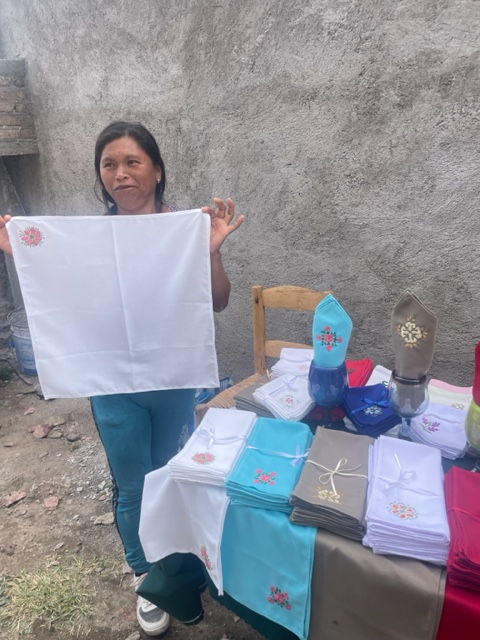
While Apoyo helped them with bottling and marketing, the embroidery business of a woman named Domitilla was similarly transformed. Originally she worked in the Otomi tradition with brightly colored linens, threads, and designs.
Apoyo was able to bring in help to research the market and come up with suggested colors and designs that might appeal to a touristy crowd.
And they did. Napkins that once went for $30 pesos now sell for $400 for a half-dozen. The colors are softer and more appealing and the stitching is first-rate. I know. I bought a half-dozen linen napkins. They were irresistible. You can find her handiwork at the TSOMA Saturday market.
Ezekiel didn’t get into how Apoyo helped Matilde with her hot-corn business but it is an excellent example of the fact that no entrepreneurial dream is too small. With an insulated cooler on wheels and a brilliant smile and a delicious product, Matilde is a hit at local soccer games.
Before we headed home I went over to the table of natural and herbal products and was overwhelmed by the variety and – thanks to my poor Spanish comprehension – the inscrutability of so many. No problem. My better-versed, bi-lingual Rotary companions were snapping up bottles of shampoo, vials of herbal treatments, aromatic soaps, and more by the bags full.
It is really clear that in 20 years, Apoyo had had a significant impact on so many San Miguelians, especially those on the lowest thresholds of poverty who come armed with a vision and a product or service and just need enough of a financial boost to turn their dreams into a viable business.
It is a formula that works all over the world. I’m pretty impressed by how well it works here.
 Musings, Magic, San Miguel and More
Hey, Roberto! I signed up for your newsletter but did not get it so might u pls sign me up w nonprofitrobin”icloud.com? Thx!
LikeLiked by 1 person
All set, Robin. Thanks!
LikeLike
A terrific article! Thank you very much, Peter. Also, I really enjoyed meeting you and your presence.
LikeLiked by 1 person
Likewise, Peter! Thank you. An inspiring day for all.
LikeLike
Dear Robert,
Thanks so much for capturing the mood of the day as we visited the entrepreneurs in the campo! It was so great to see the pride in their business and to share the day with them and you.
LikeLiked by 1 person
Robert this is a very uplifting story. Shows the good side of humanity. Thanks for sharing it.
LikeLiked by 1 person