
Walking the Camino Frances requires an endless number of choices that must be made every day.
They start with:
How long will I walk tomorrow?
How early should I get up?
How much food and water should I bring?
How warmly should I dress?
Where can I find a bed for the night?
Should I eat breakfast at the auberge or take my chances on the road?
The first stretch of road as dawn was breaking:
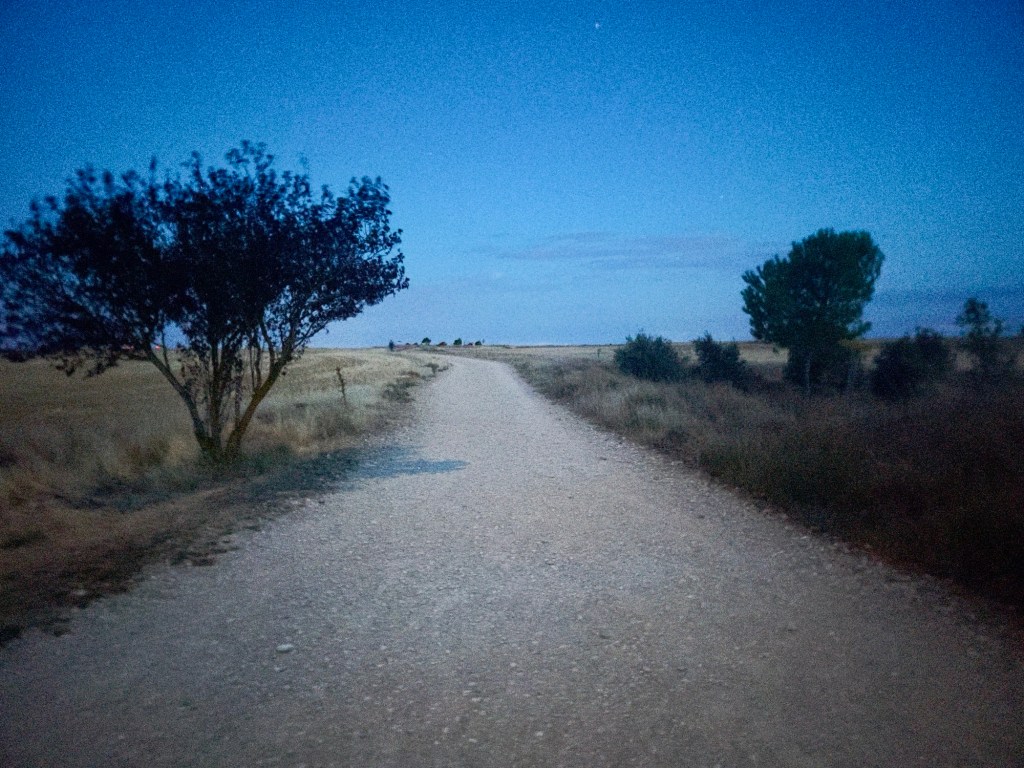
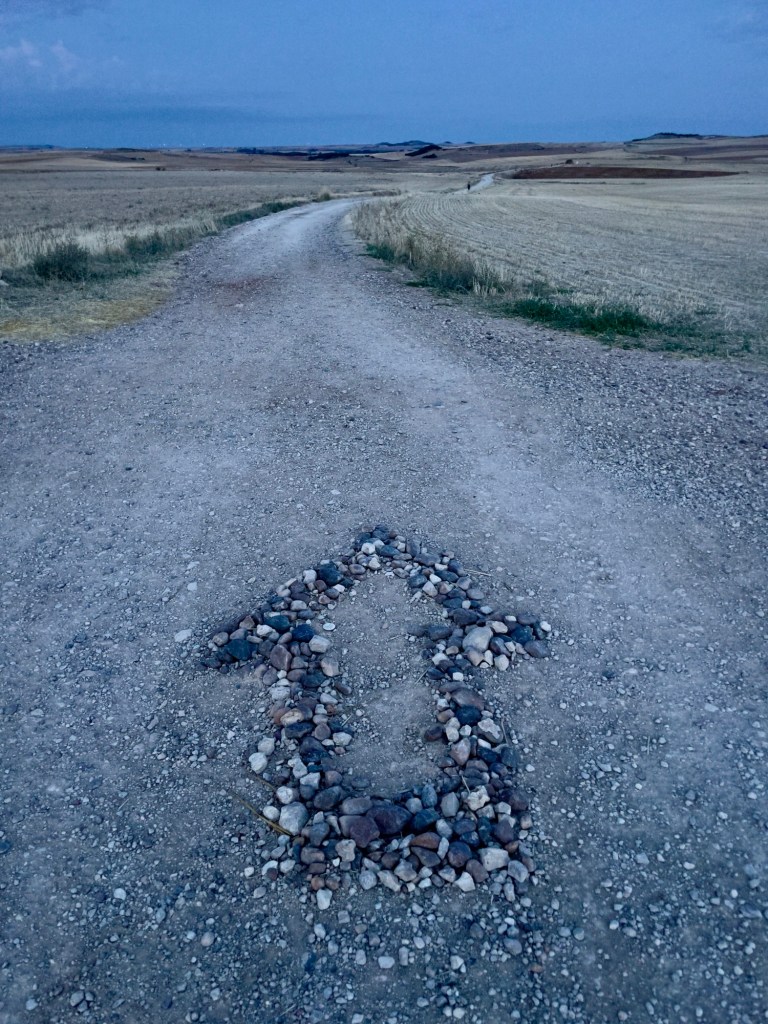
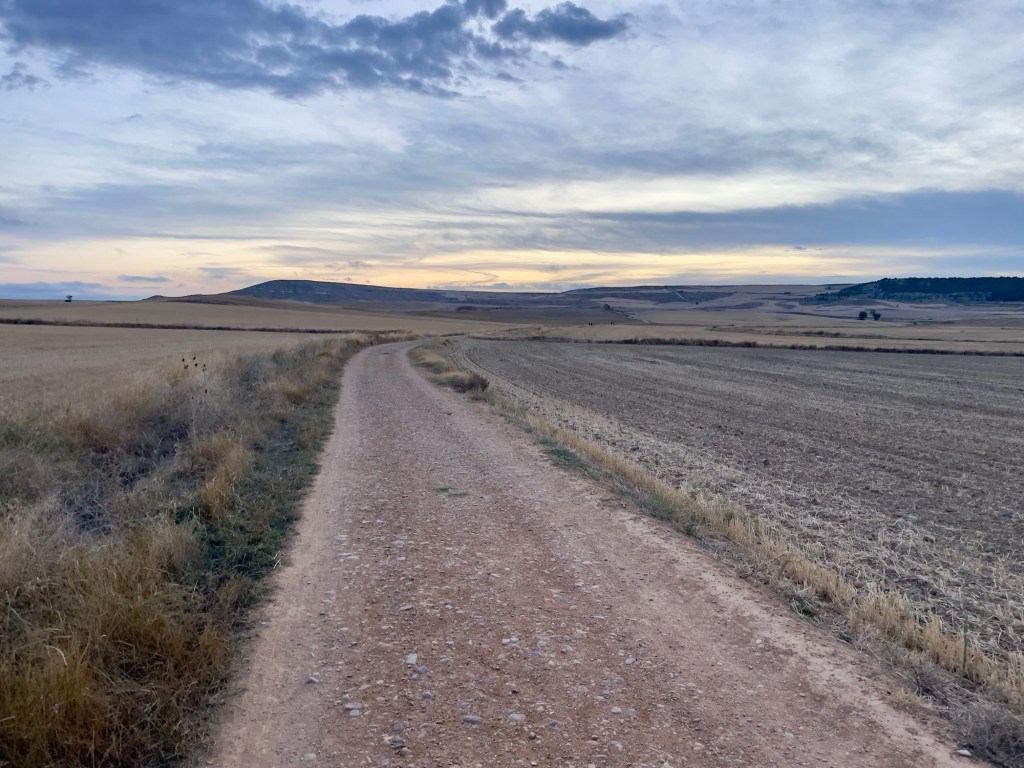
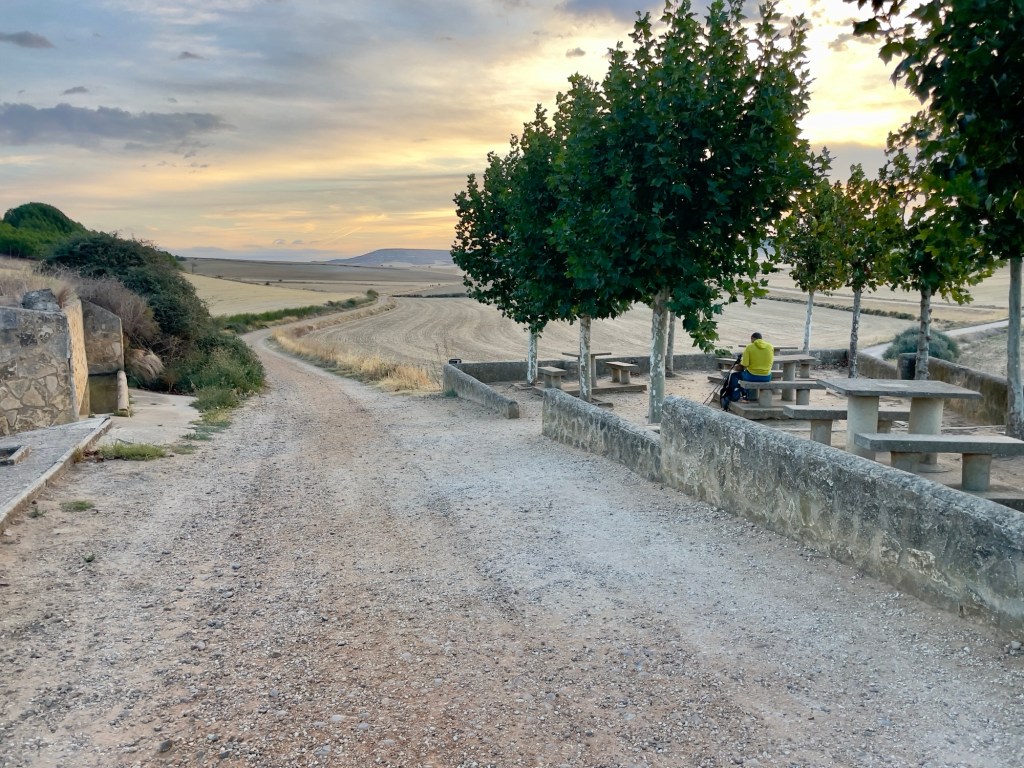
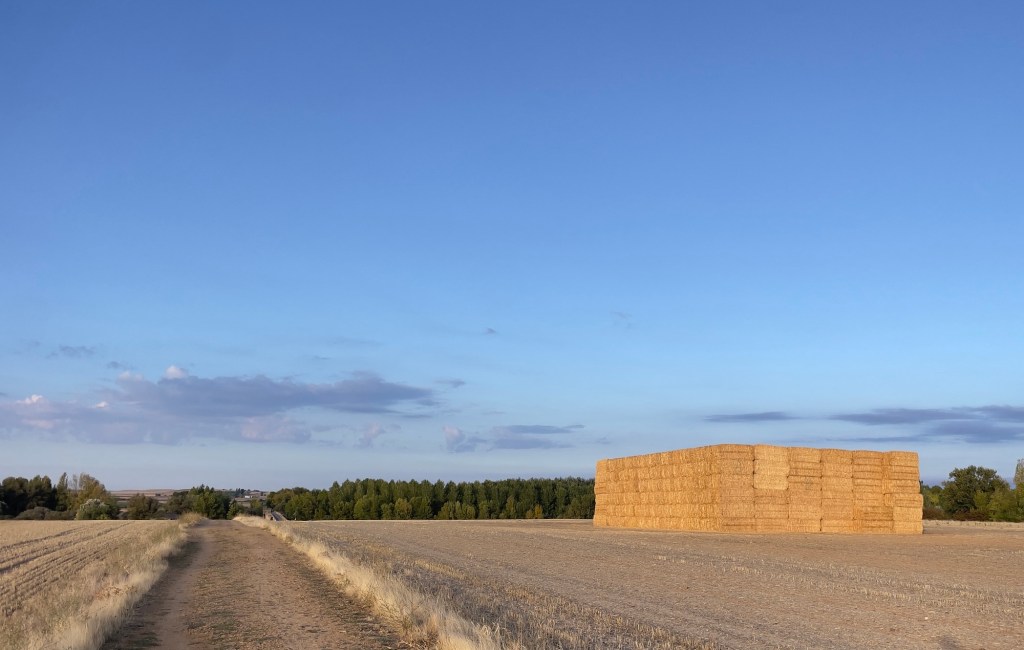
Today, I decided to walk almost 17 miles to Fromista from Castrojeriz, even though many were stopping for the day at 12 miles in Biadilla Del Camino.
After back-to-back 12-mile days carrying the full pack, it just seemed right to cover some ground.
I also decided to leave early, even though I had a reserved bed in an auberge. (For many, it is a race to the first-come first-served municipal auberges and some monasteries.)
So, before 6 am, I strapped on my backpack and headed out the door into the darkness. (So many people were up around 5 am that sleeping later would have been futile.)
Ten minutes later, I was back at the auberge, where I’d forgotten my hiking poles.
Getting out of Castrojeriz in the dark isn’t easy. Even with a headlamp and a Camino app, I made two wrong turns and had to backtrack.
I finally found the old Roman road the rises above a dry marsh and marches straight to the base of a mountain.
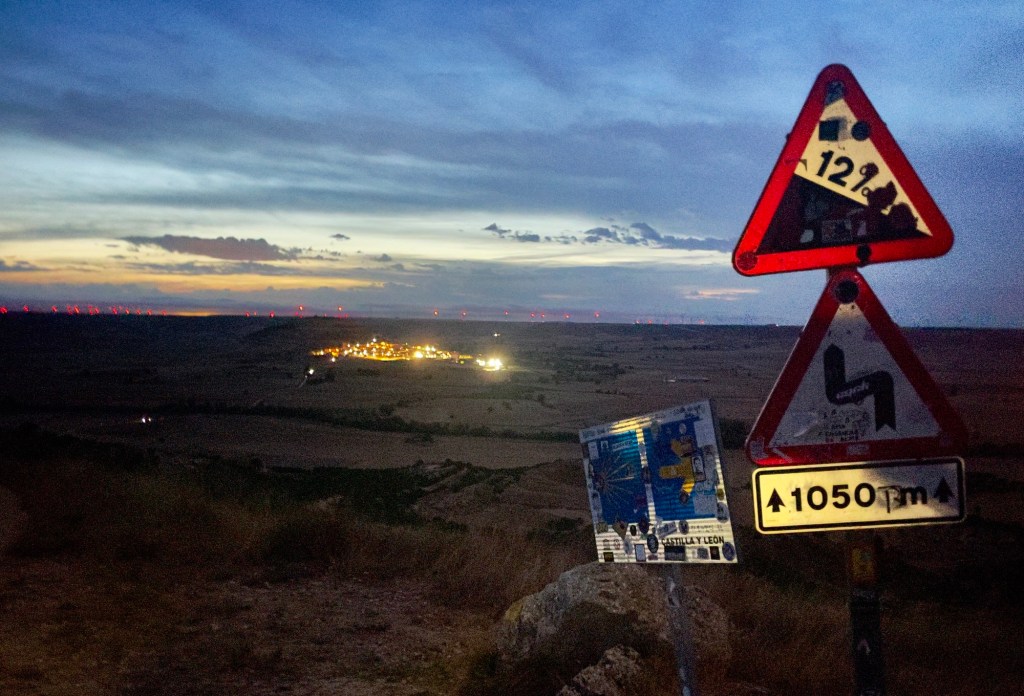
I don’t know why I was in such a rush. In front of me was a 12 percent grade mountain climb, up 1,080 meters to the top.
In the darkness, it wasn’t bad. I couldn’t see in front of me, so I had no idea how far I had to go. In fact, it was pretty exhilarating on any empty stomach. I’d say it was a three-cups-of-black-coffee rush at the top.
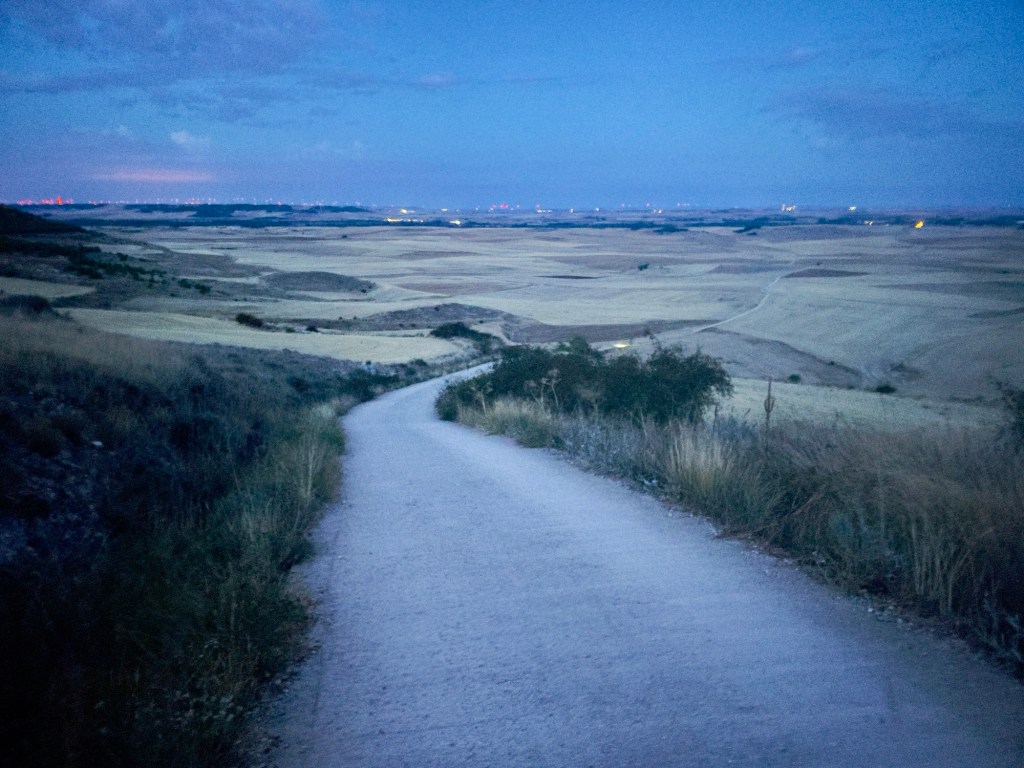
On the other side of the crest was a vast cinematic sweeping landscape of hills, harvested fields, copses, and criss-crossed country roads. All drenched in the gray patina of early dawn.
As I stood up there, taking it all in and calculating the risk of the steep descent, a shooting star cut across the sky from west to east.
Yep. Headed toward Santiago de Compostela.
Now if that didn’t lift me still higher. By the time the sun finally started doing its job, I’d found a food truck parked in the middle of nowhere. My fingers were so cold — 51 degrees with a cold western wind — I could barely hold the hot coffee.
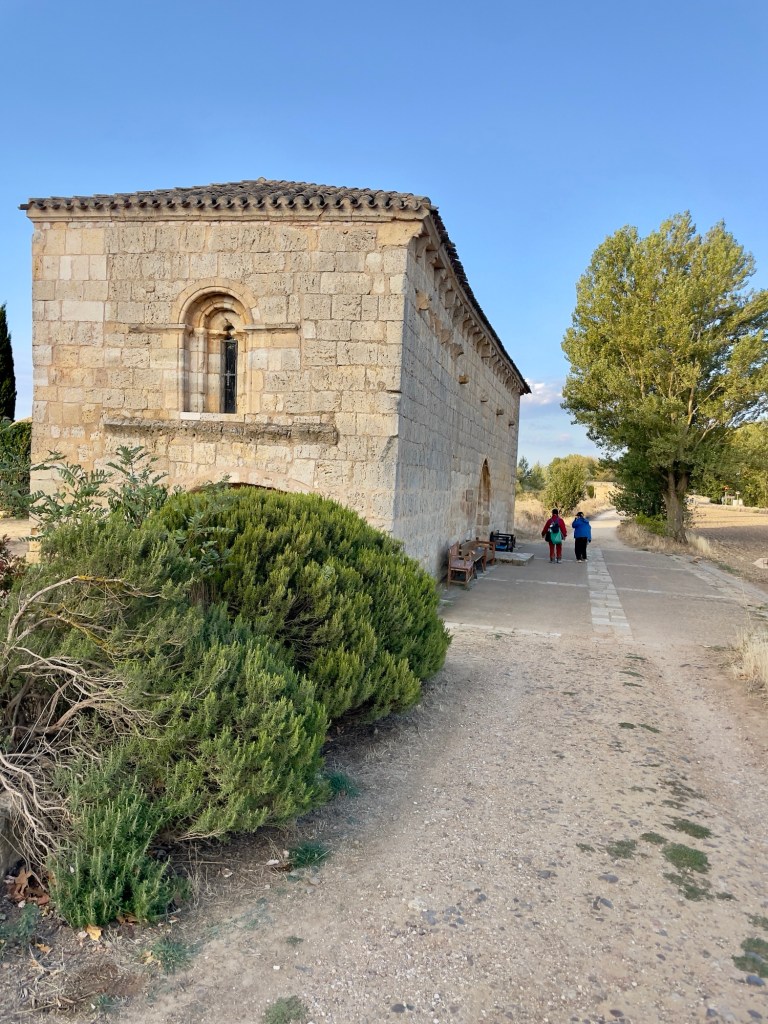
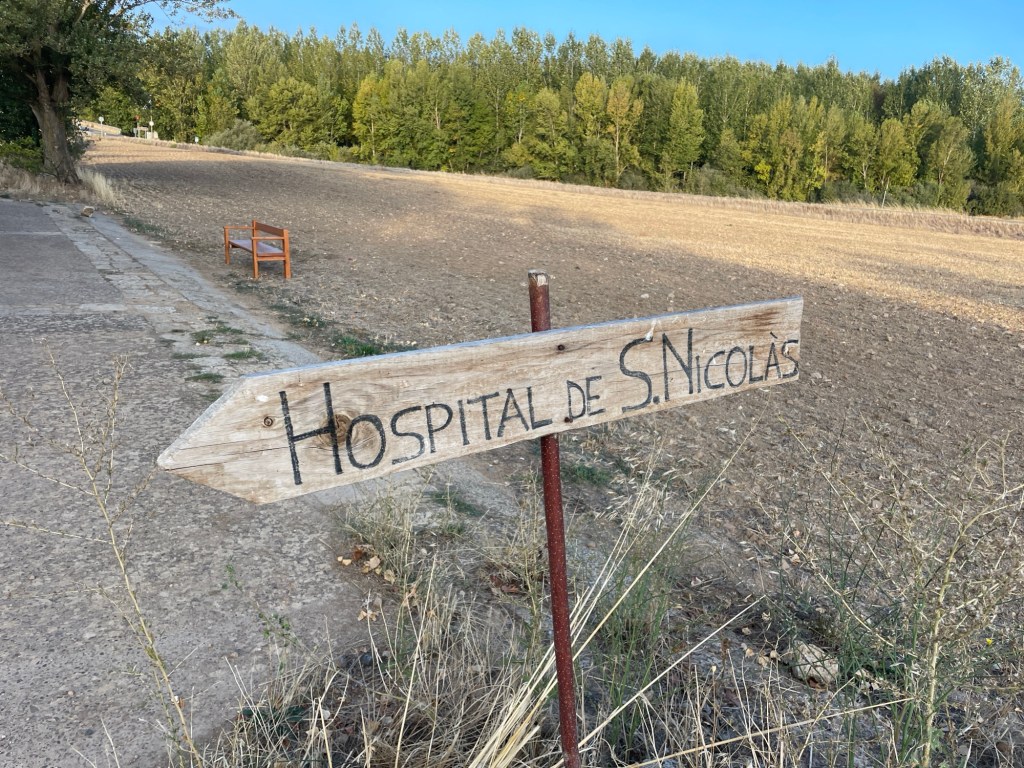
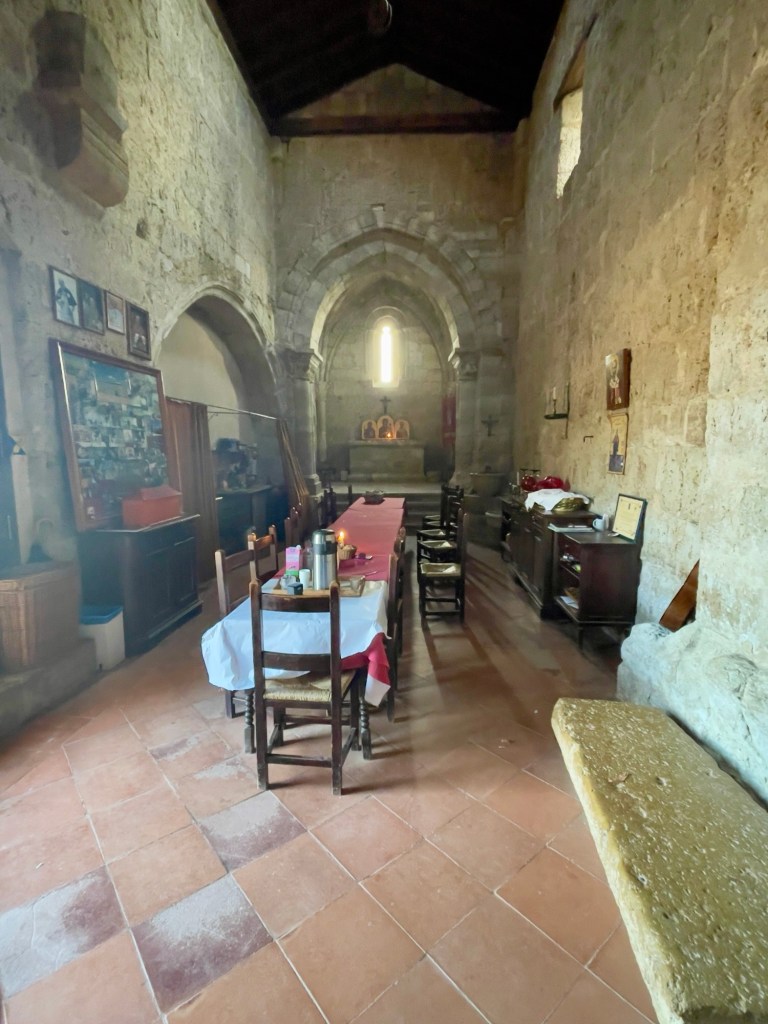
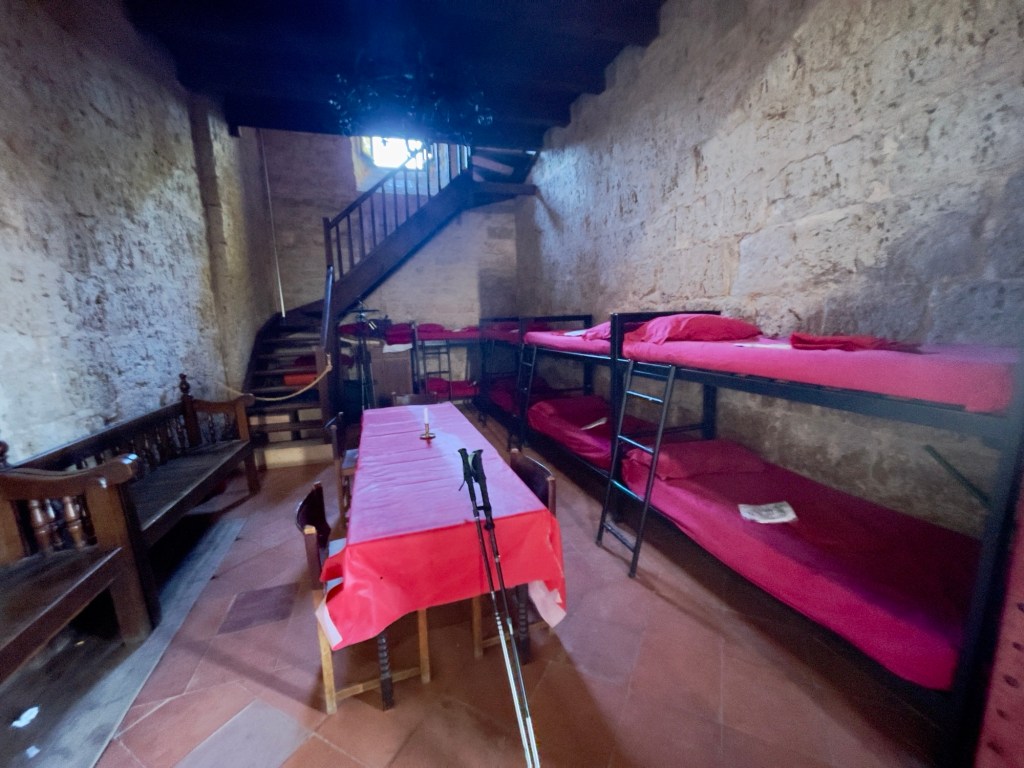
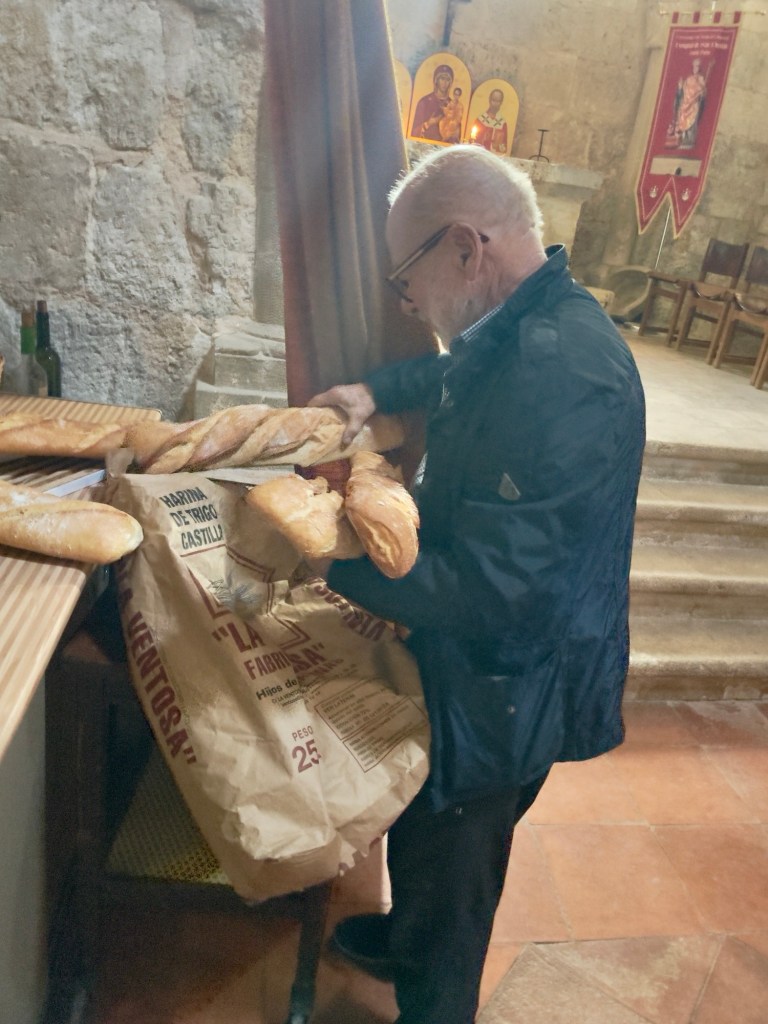
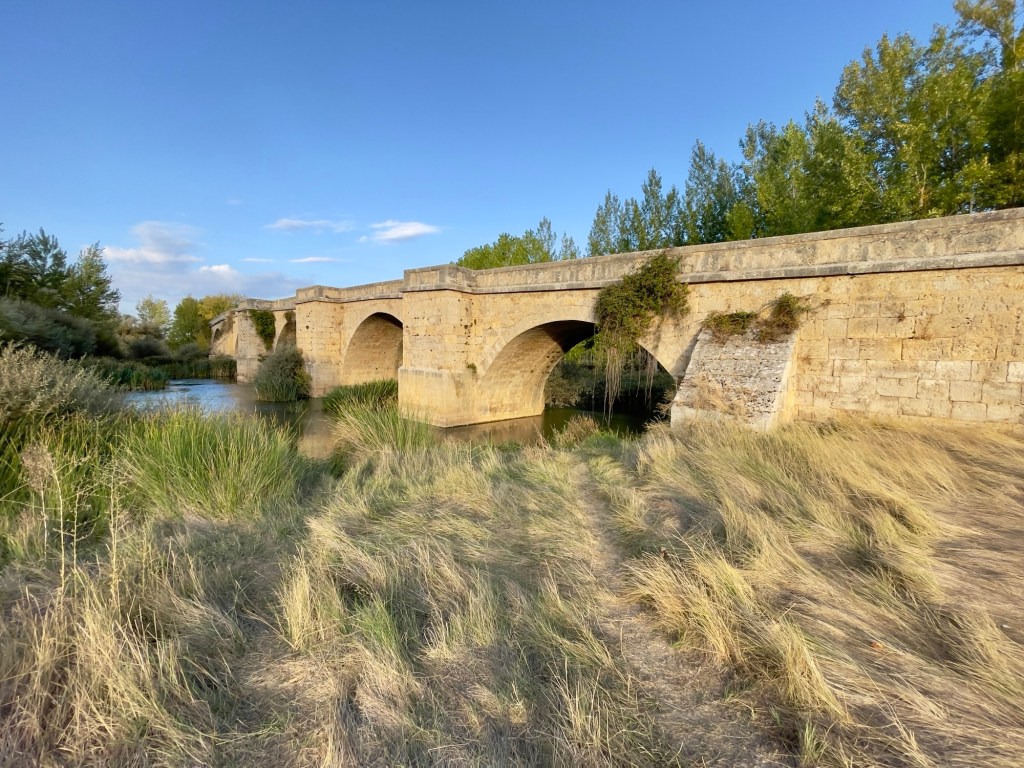
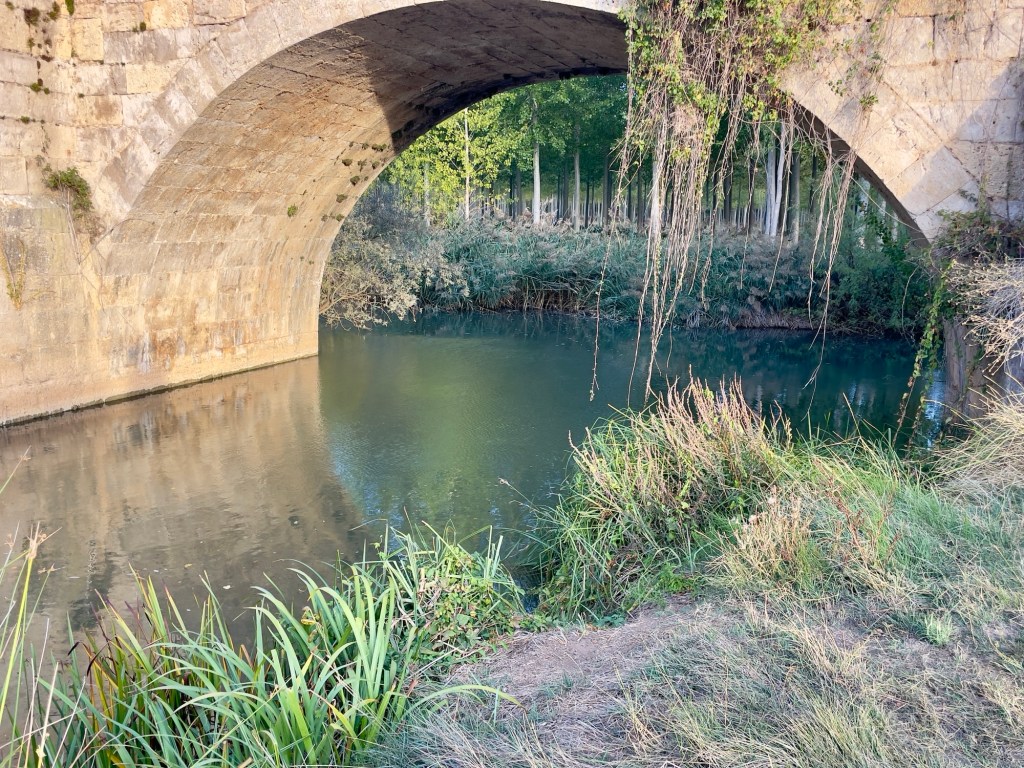
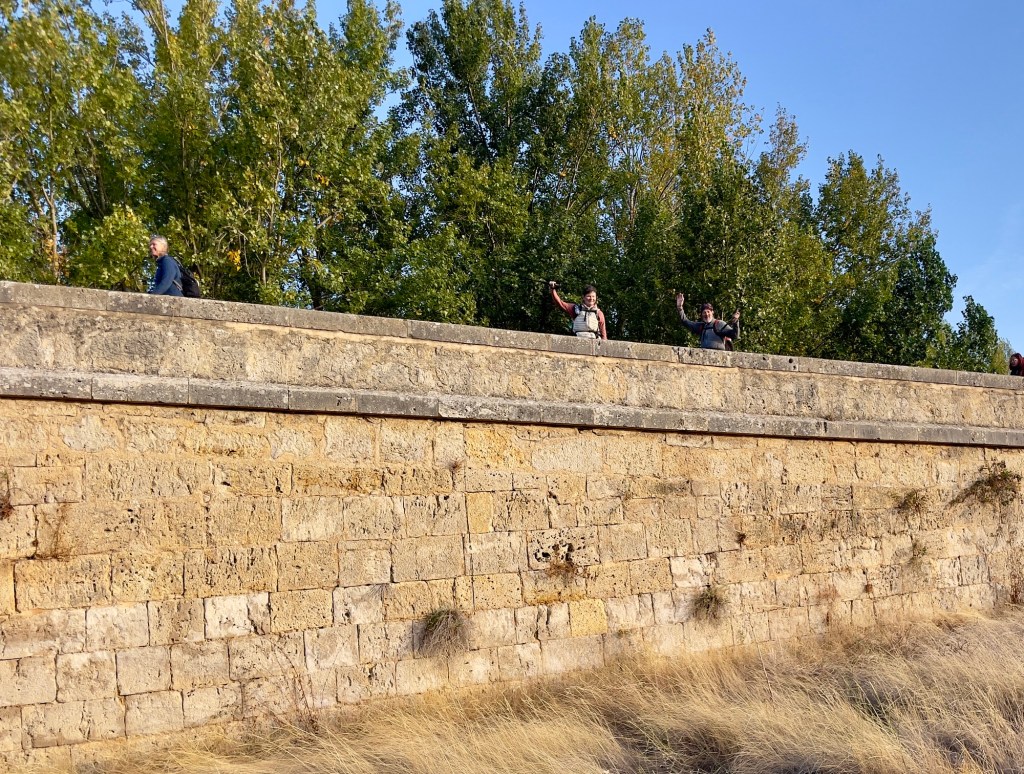
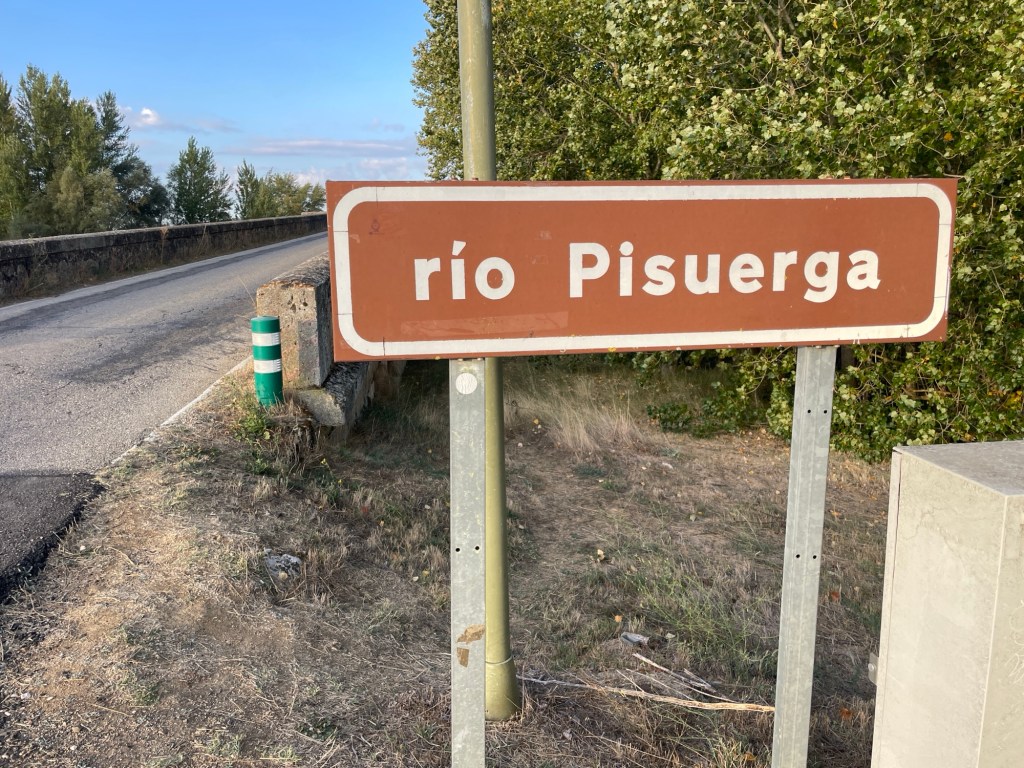
On the way into Intero de la Vega and a breakfast stop. The 13th Century San Nicolas Hospital offers coffee, bread, a place to sleep, and bathrooms all for a donation. The bridge and forest gave off mystical vibes:
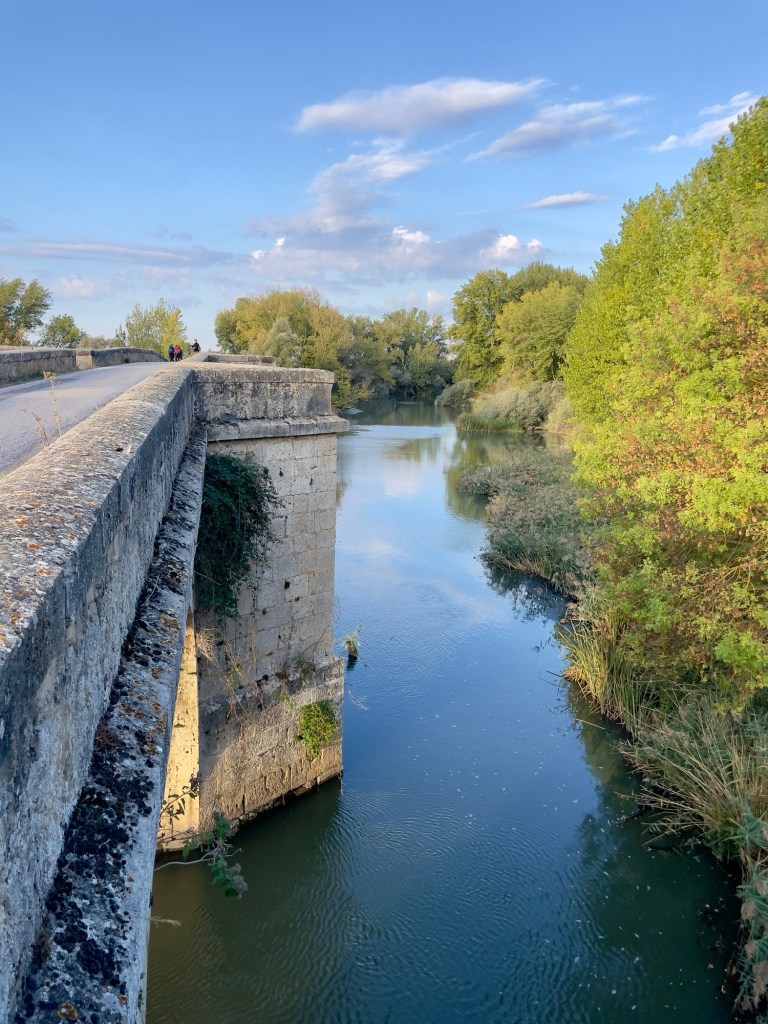
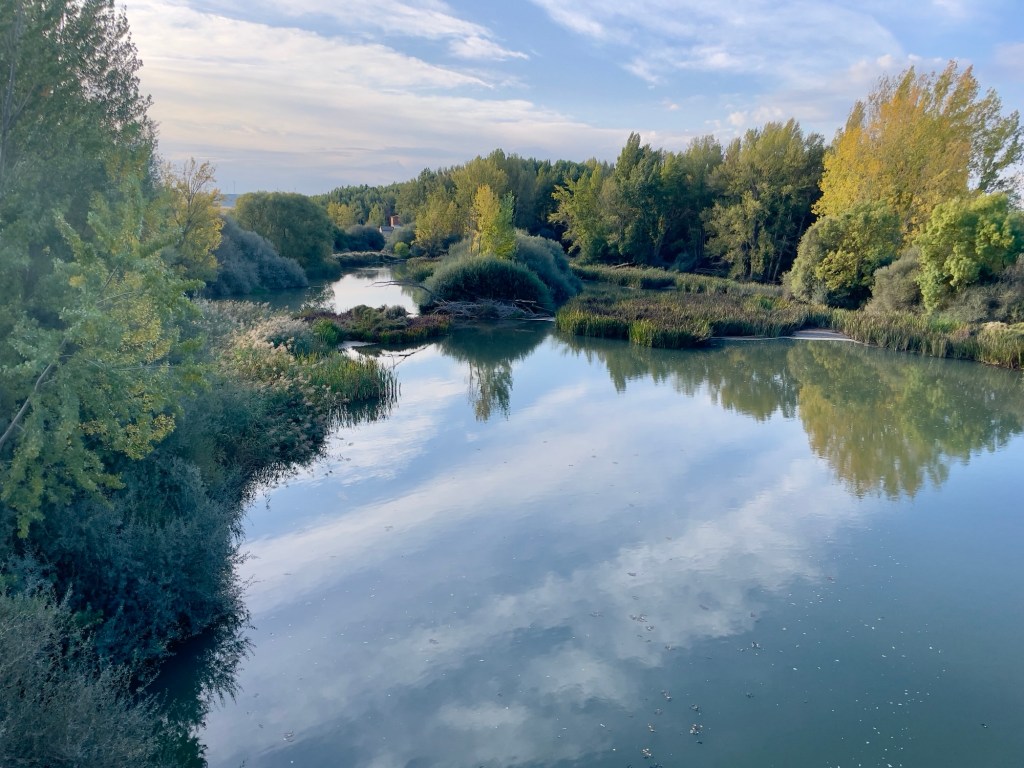
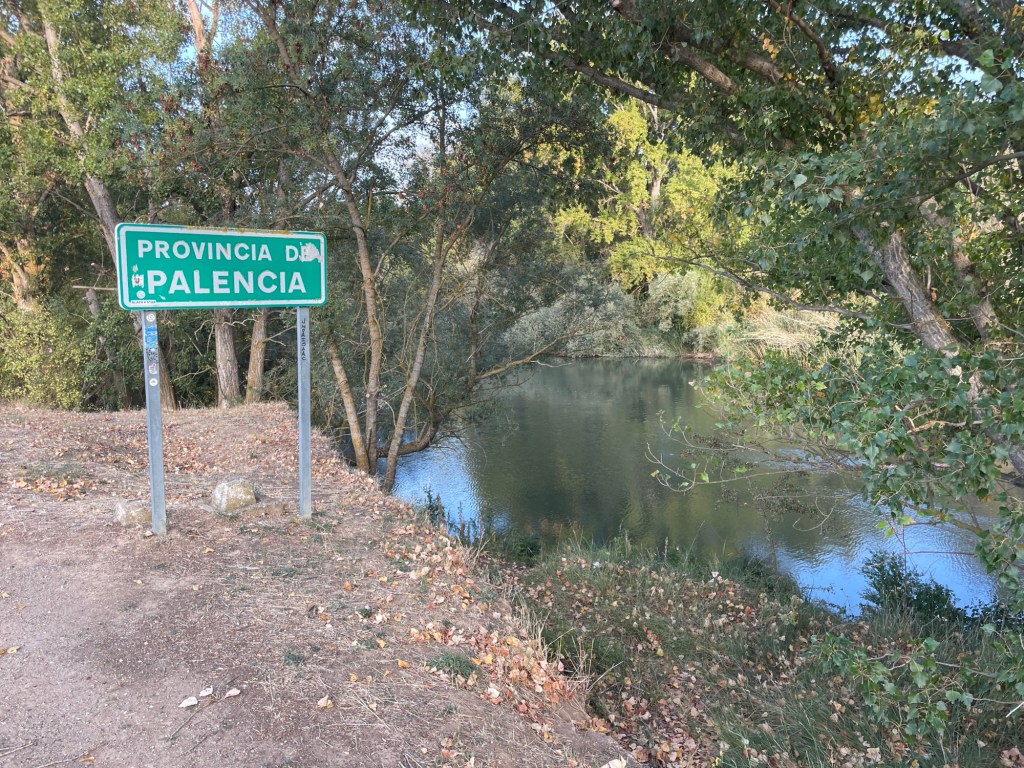
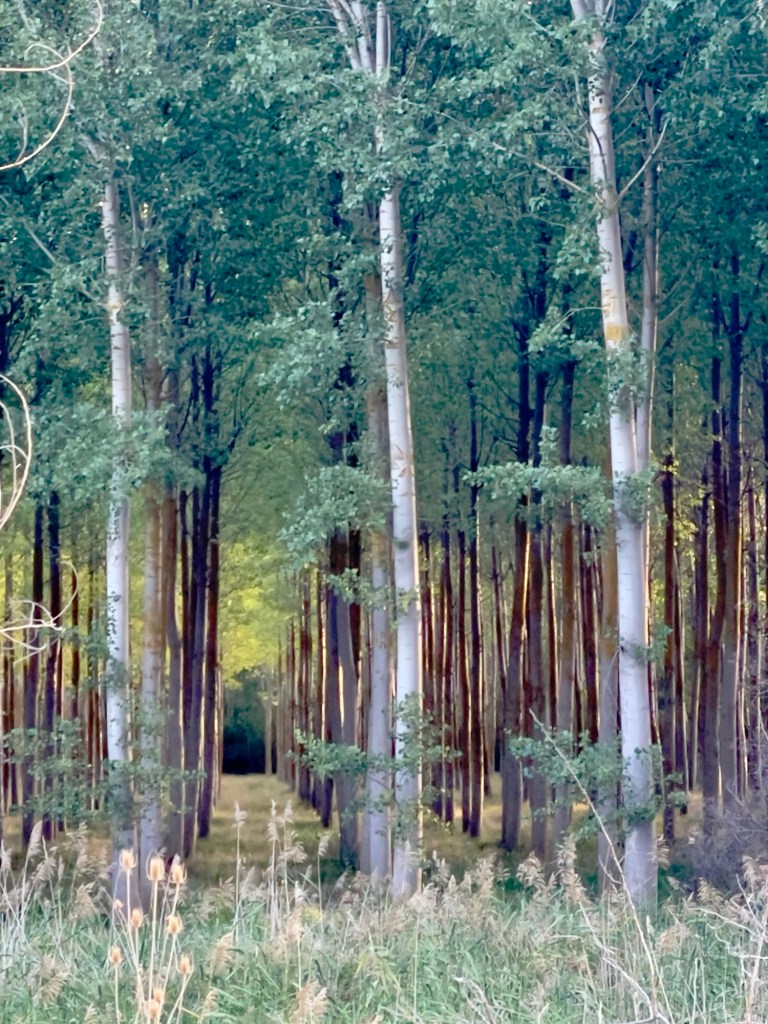
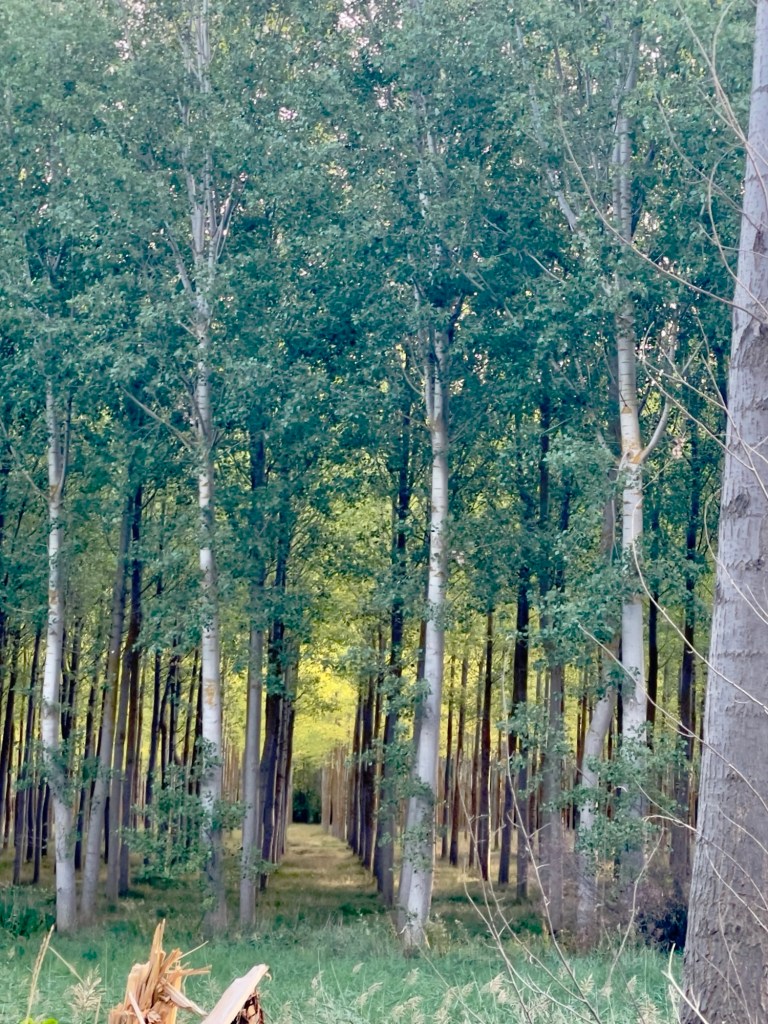
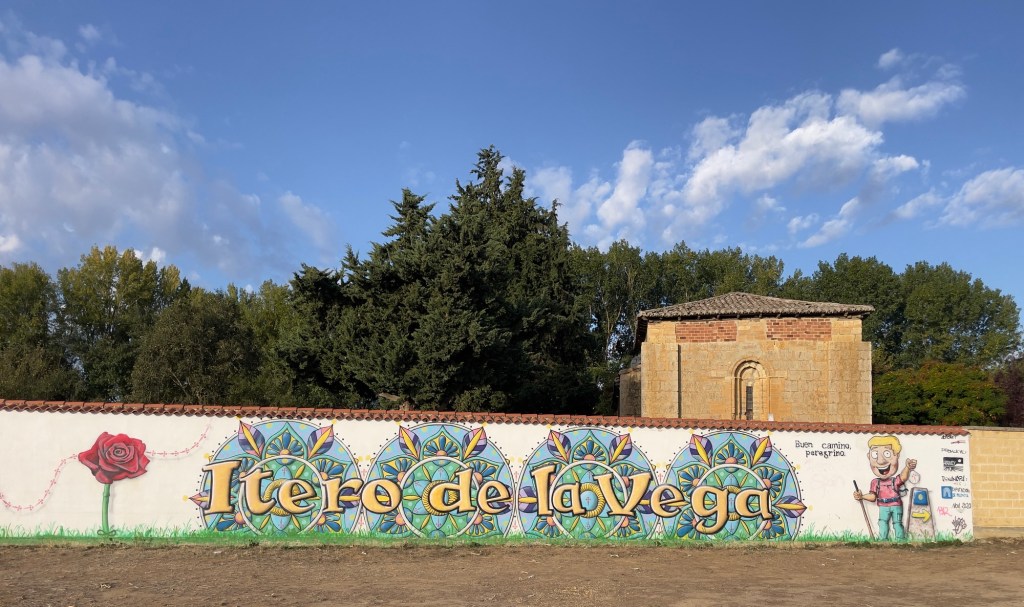
We’re in the Meseta. People and books have given it an awful reputation — boring, vast emptiness, unchallenging terrain. And worse.
Maybe it feels like that in the under the summer’s broiling sun. There isn’t any cover when walking through the vast ag fields.
The walk after Itero. Maybe it was the comfortably warm sun and cool breeze, or the steady conversation, but this part was a delight:
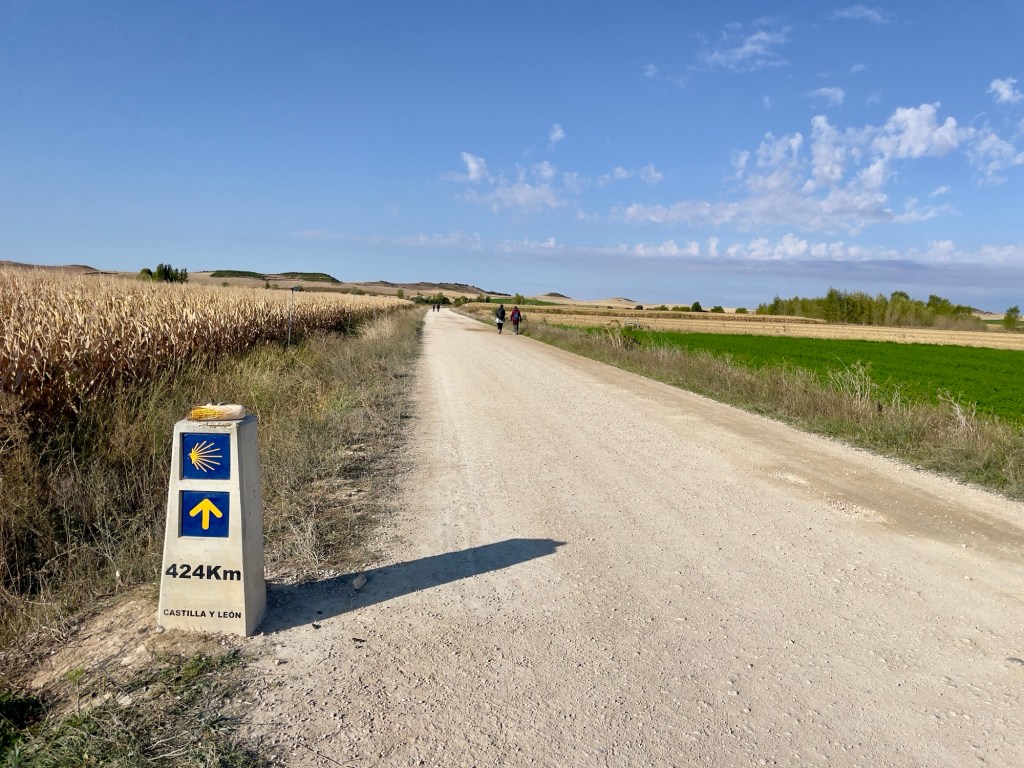
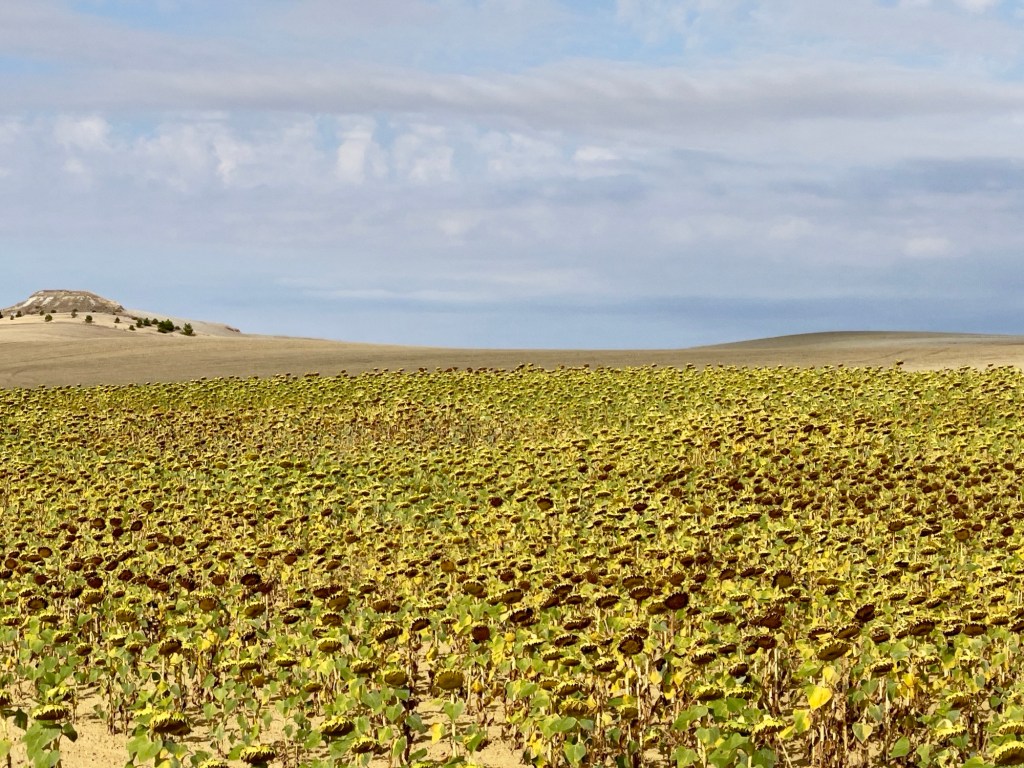
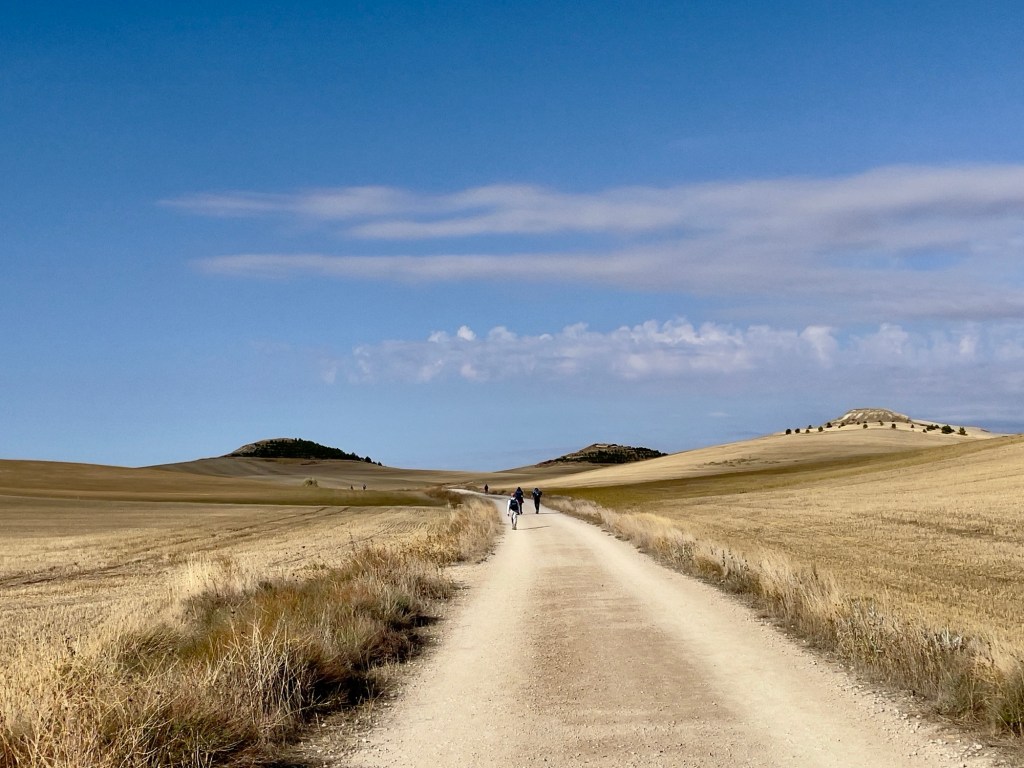
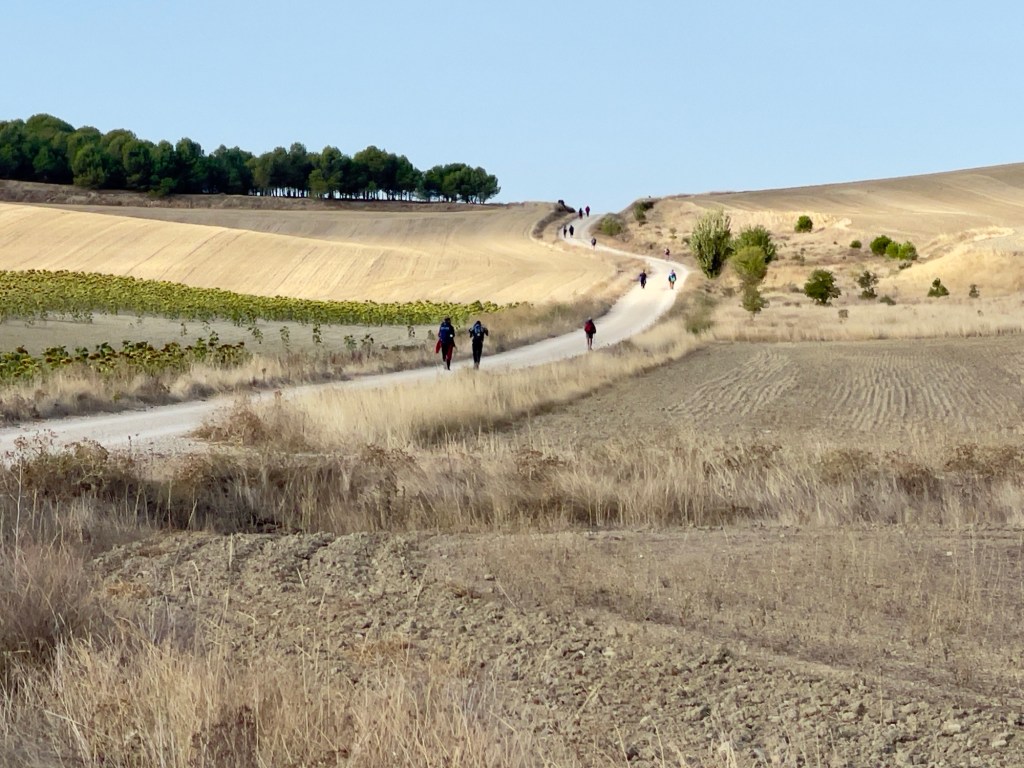
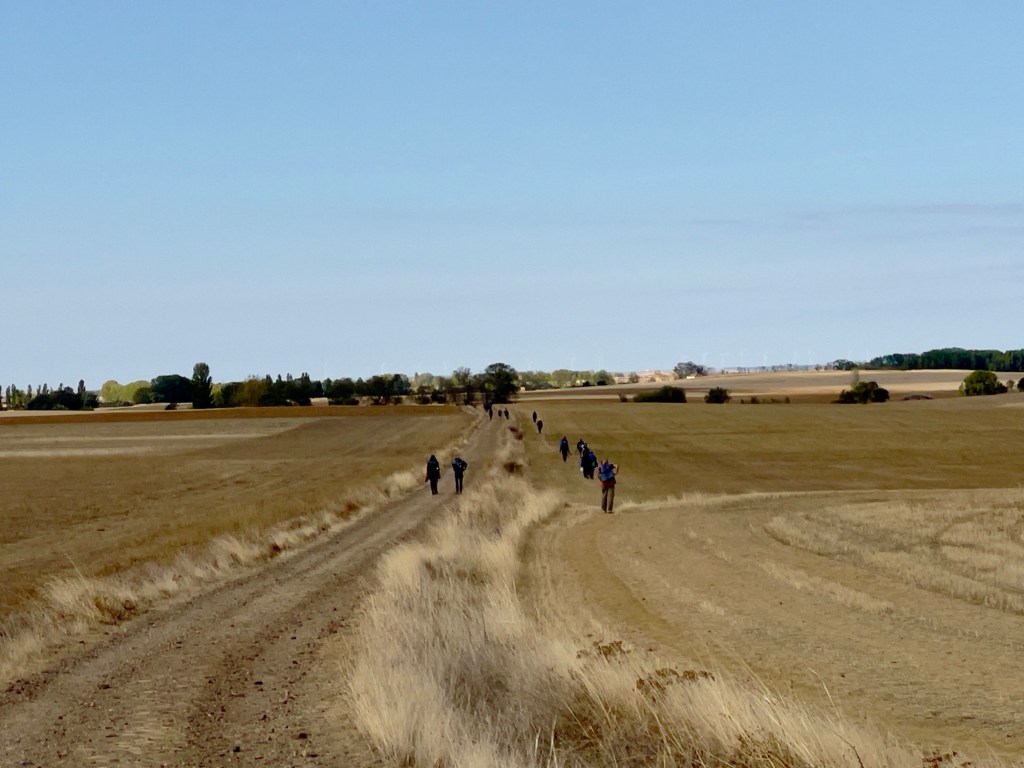
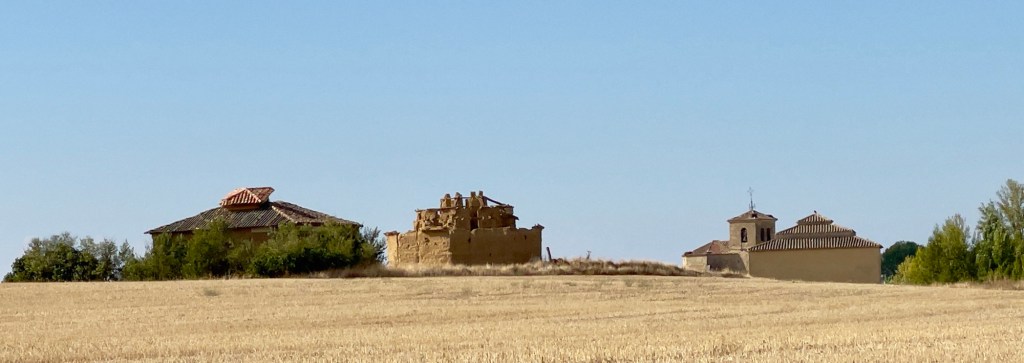
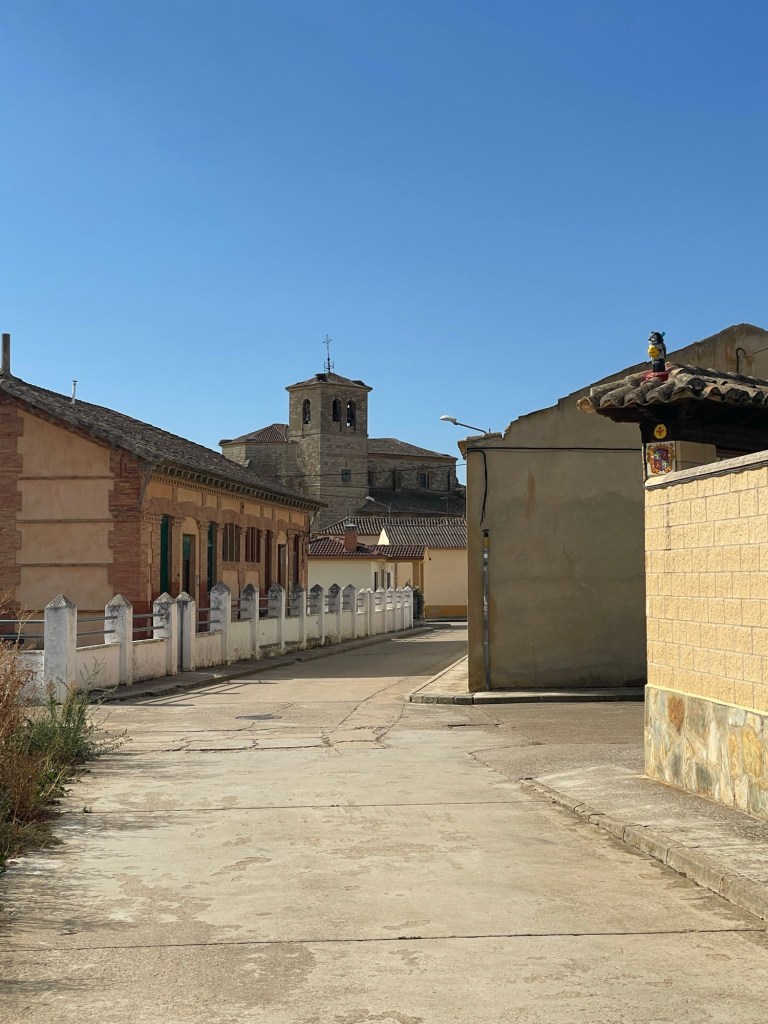
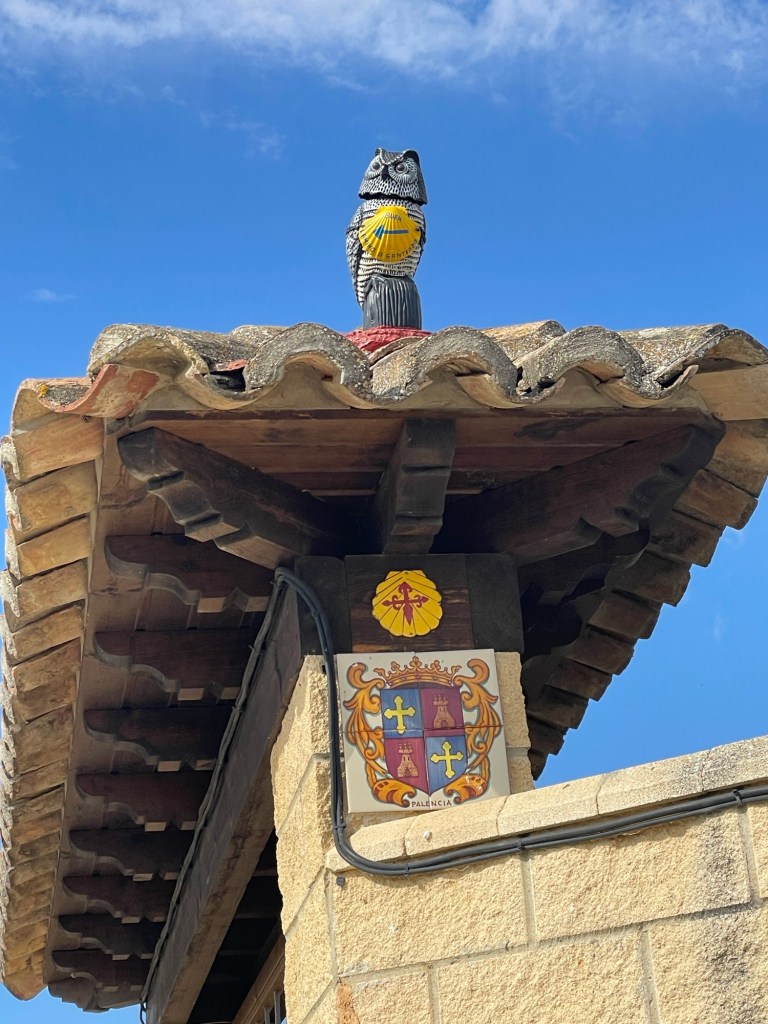
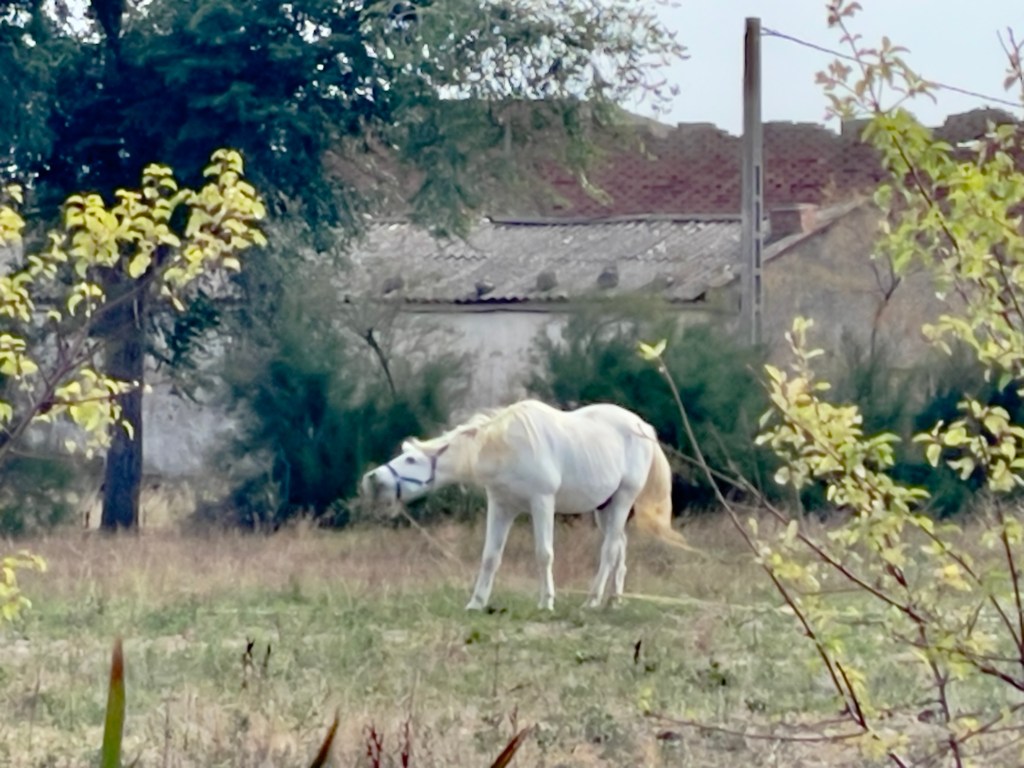
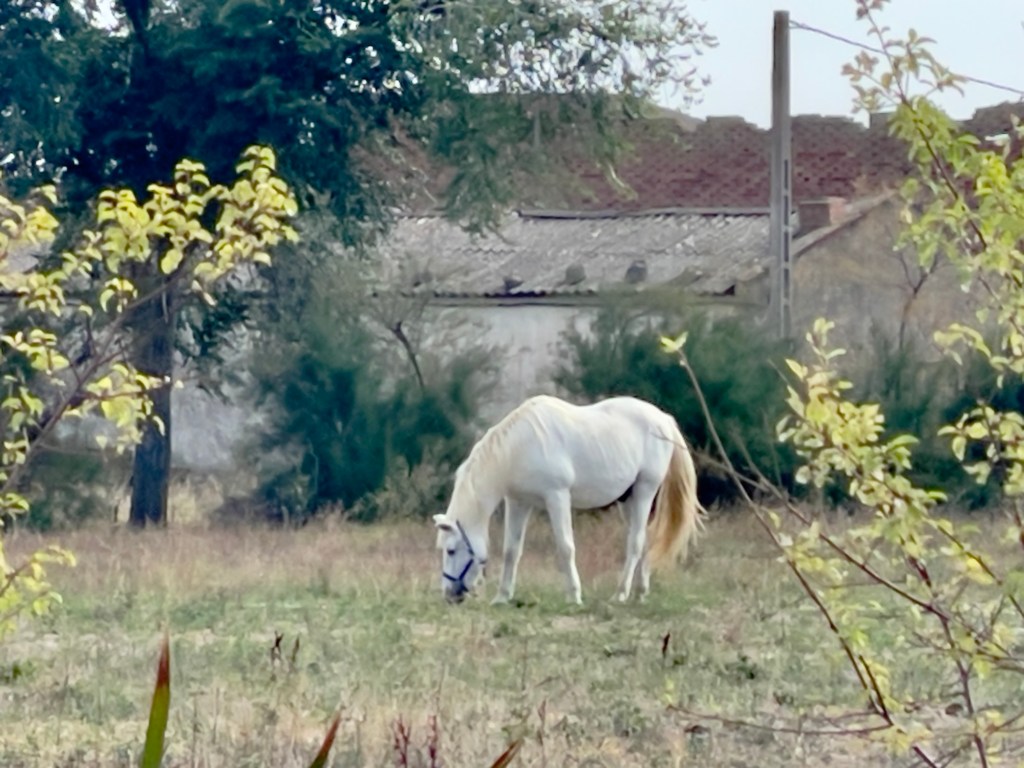
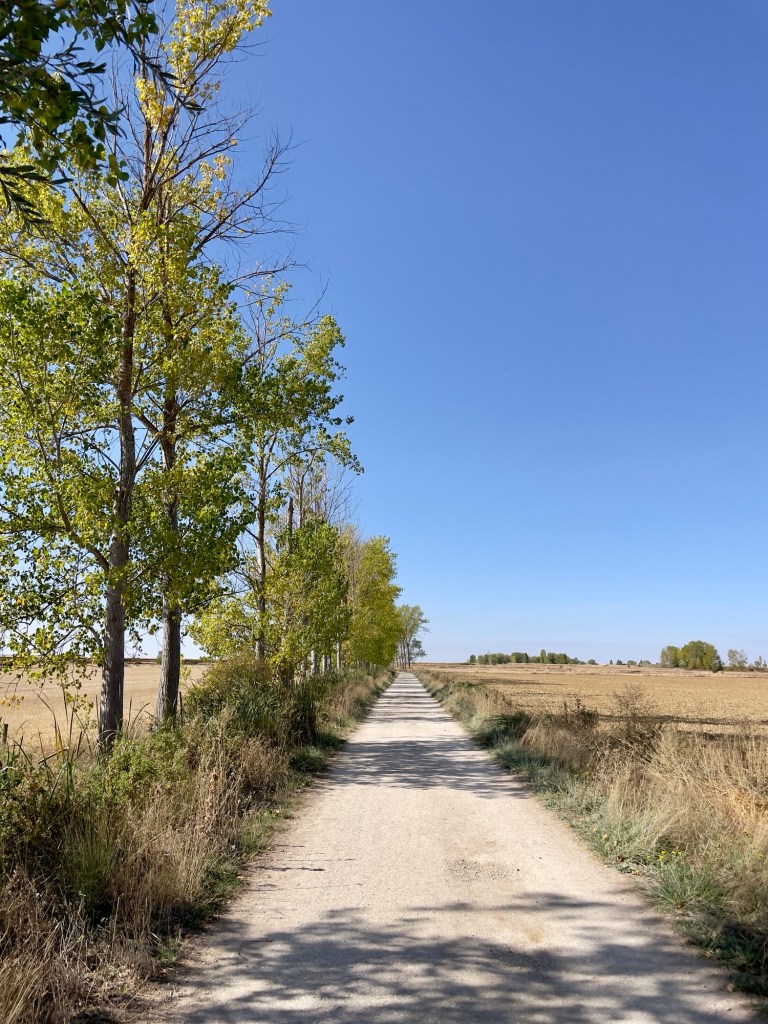
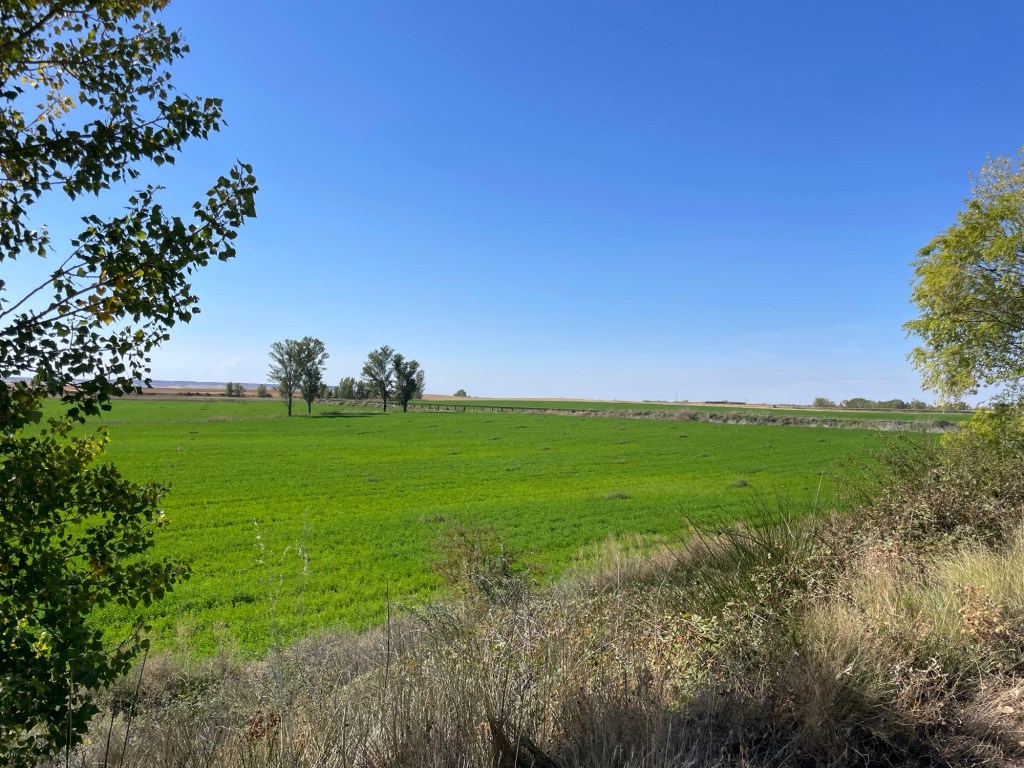
But today, people were in wonderment. We passed through sleepy villages, across a magical bridge, past the first fowls of sunflowers that hadn’t turned black.
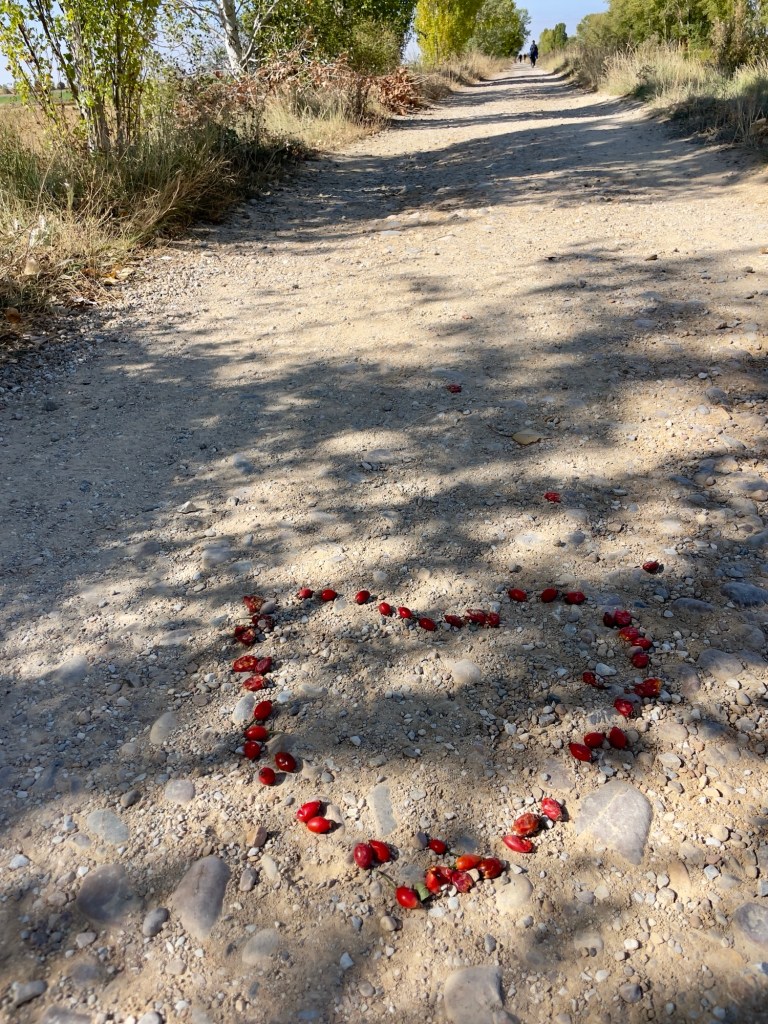
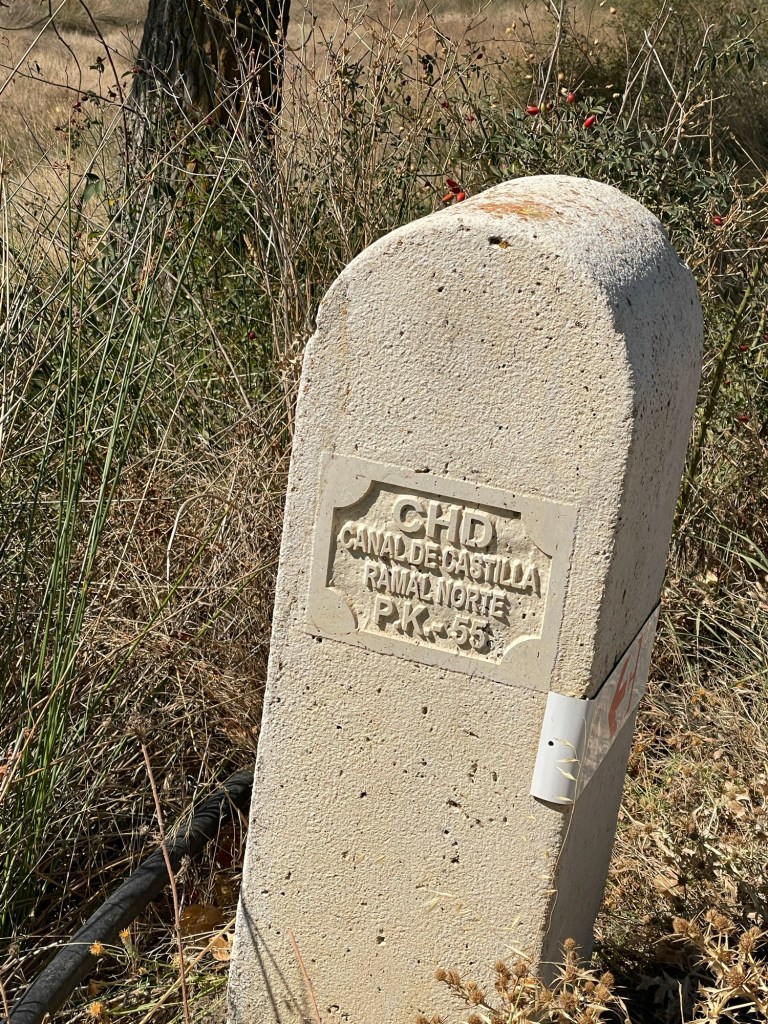
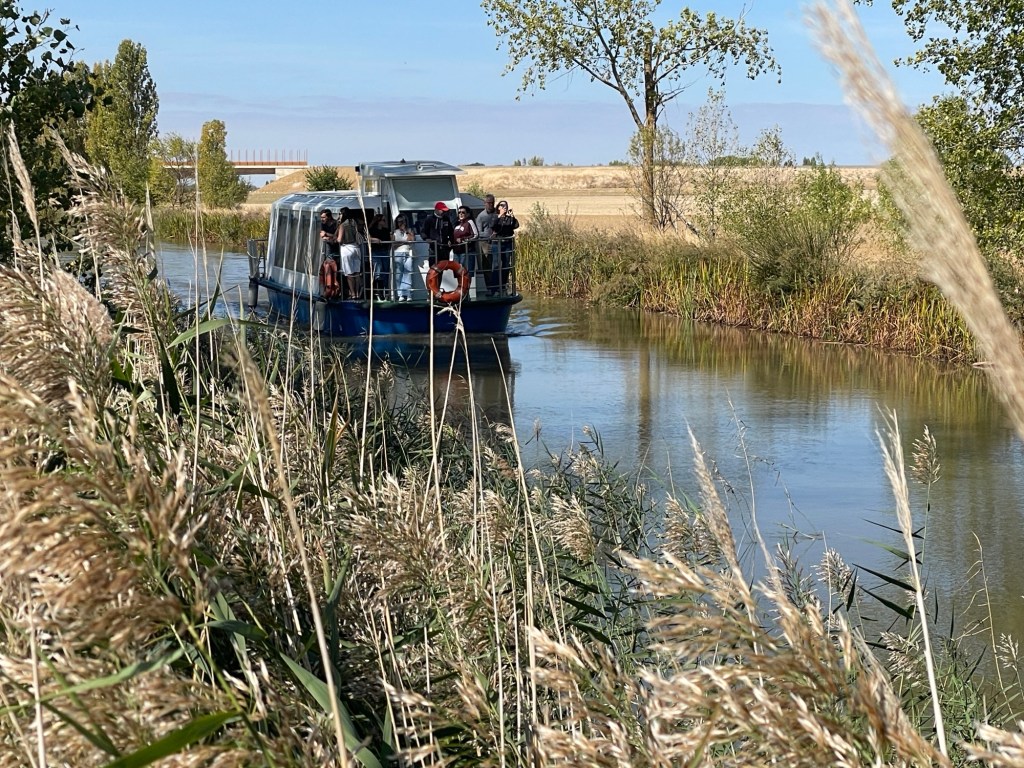
And on the way into Fromista, we walked a tree-lined path beside a canal.
The walk along the canal into Fromista. Who knew you could hire a boat to take you to the edge of town!
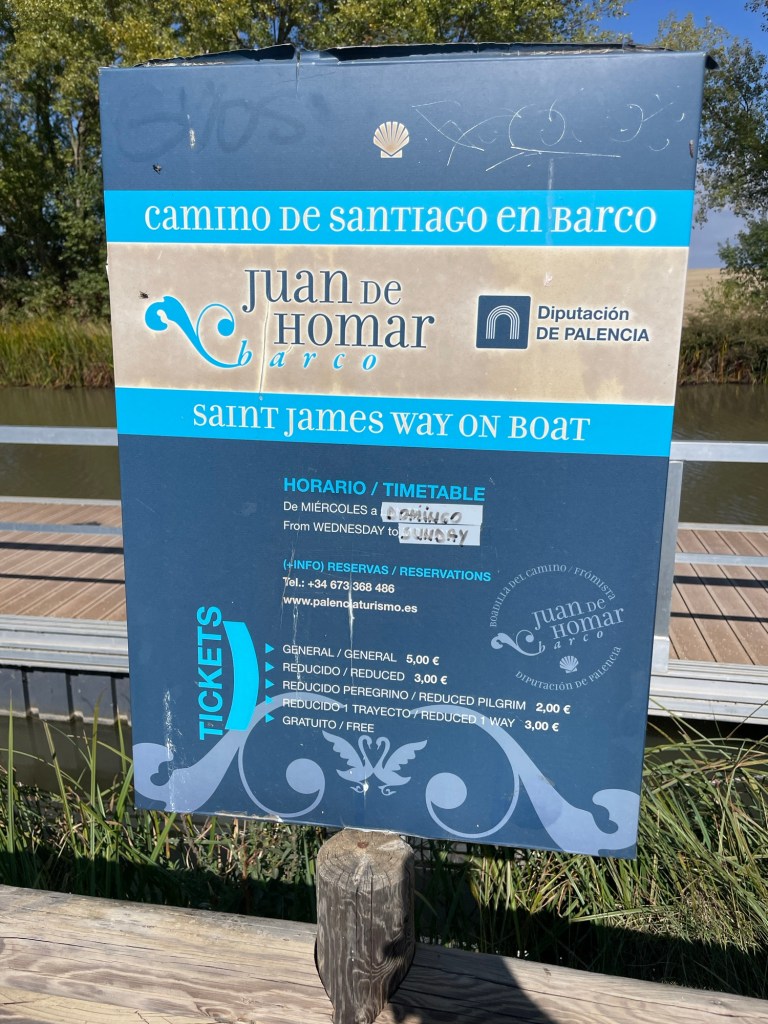
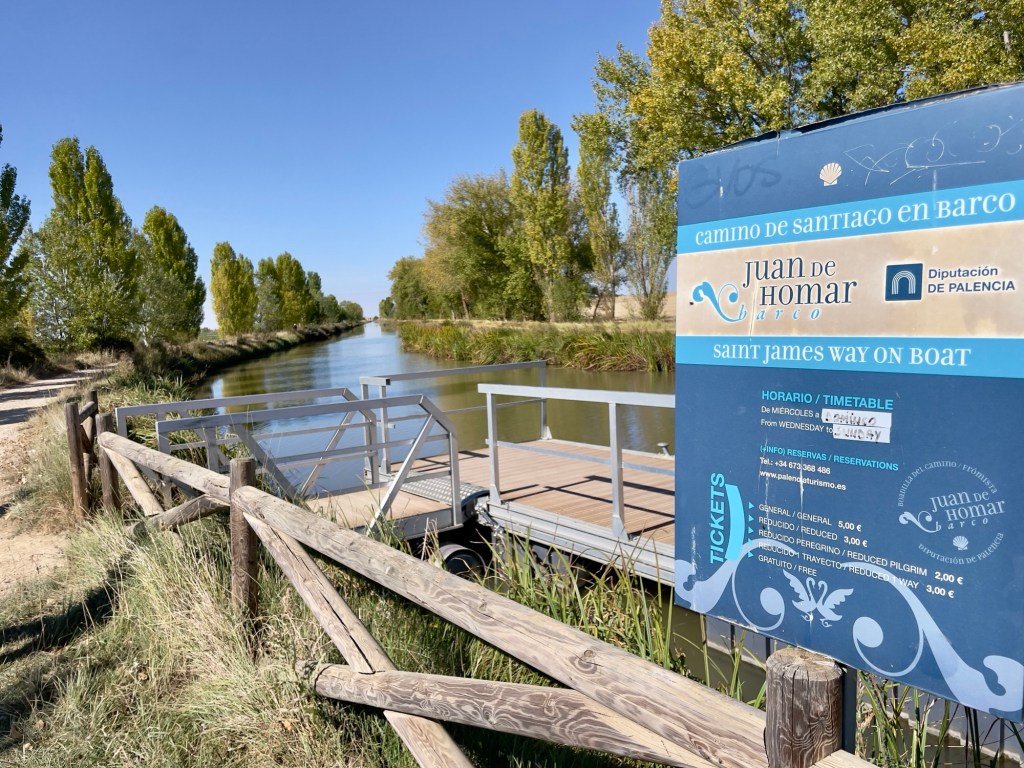
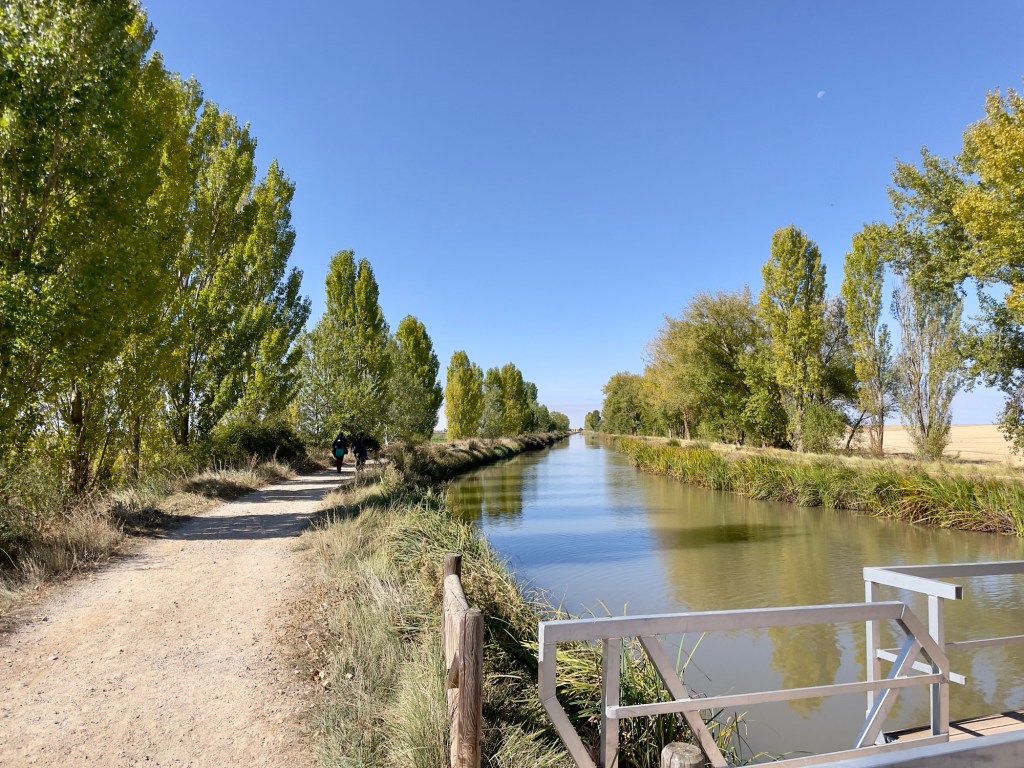
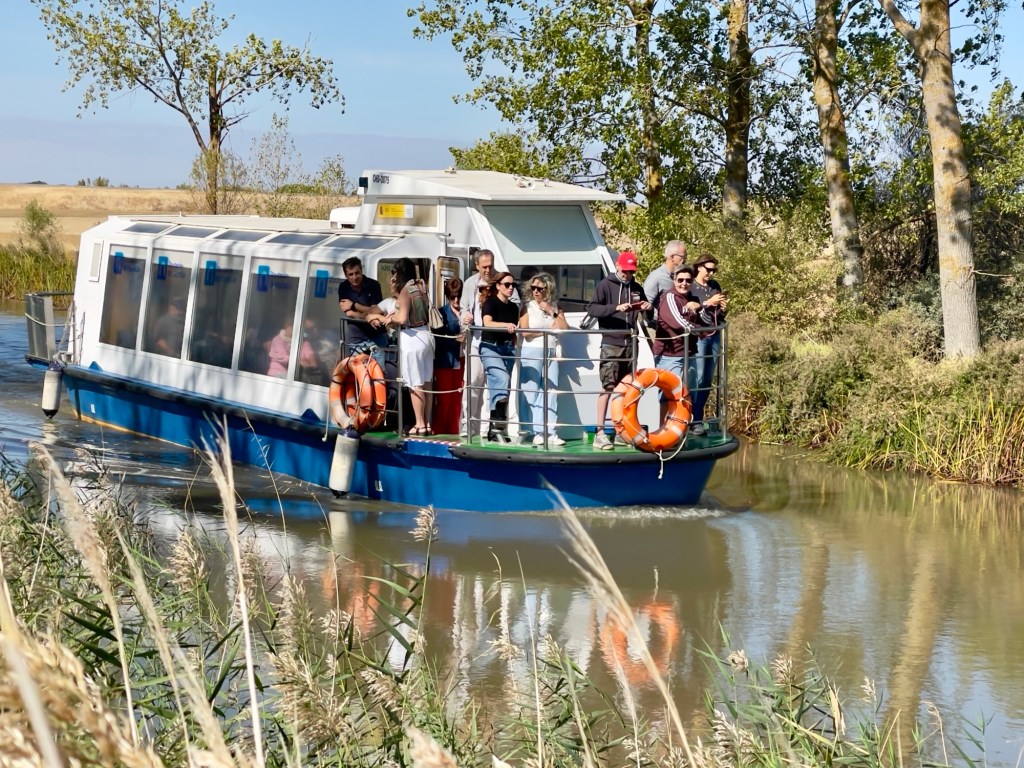
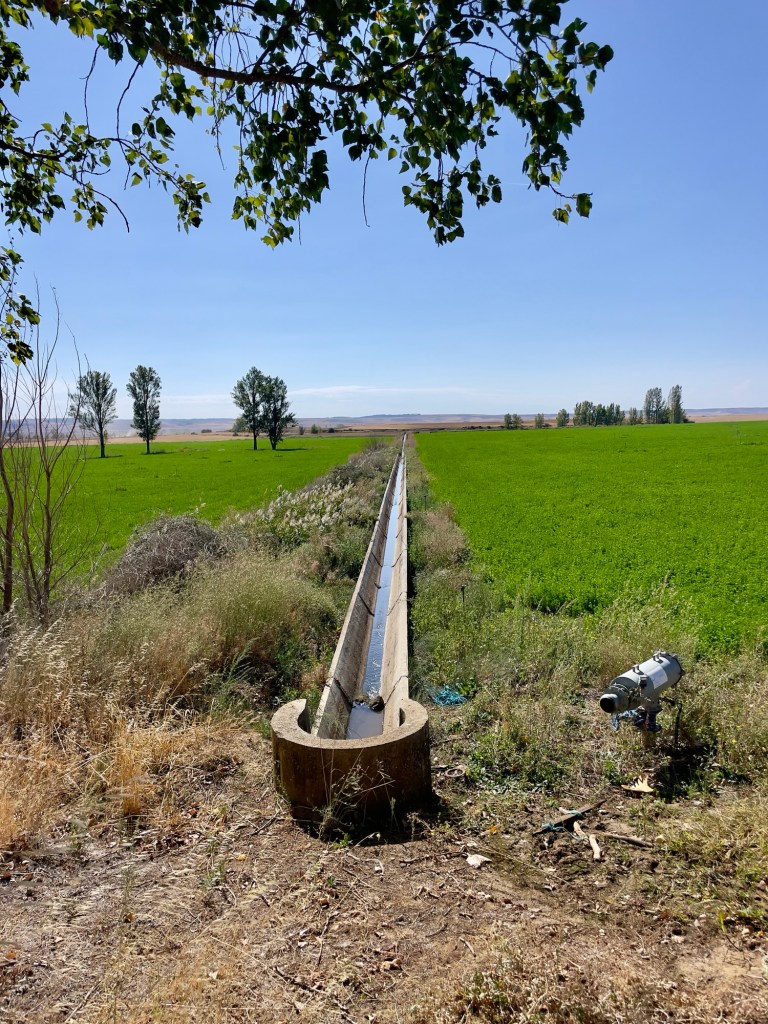
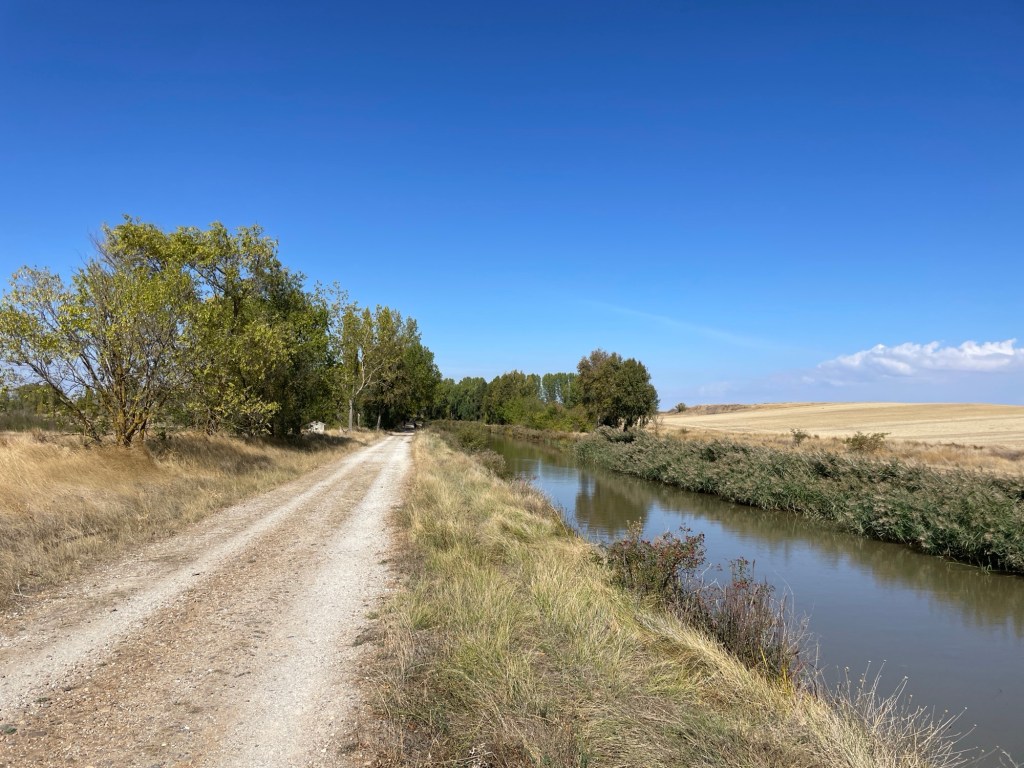
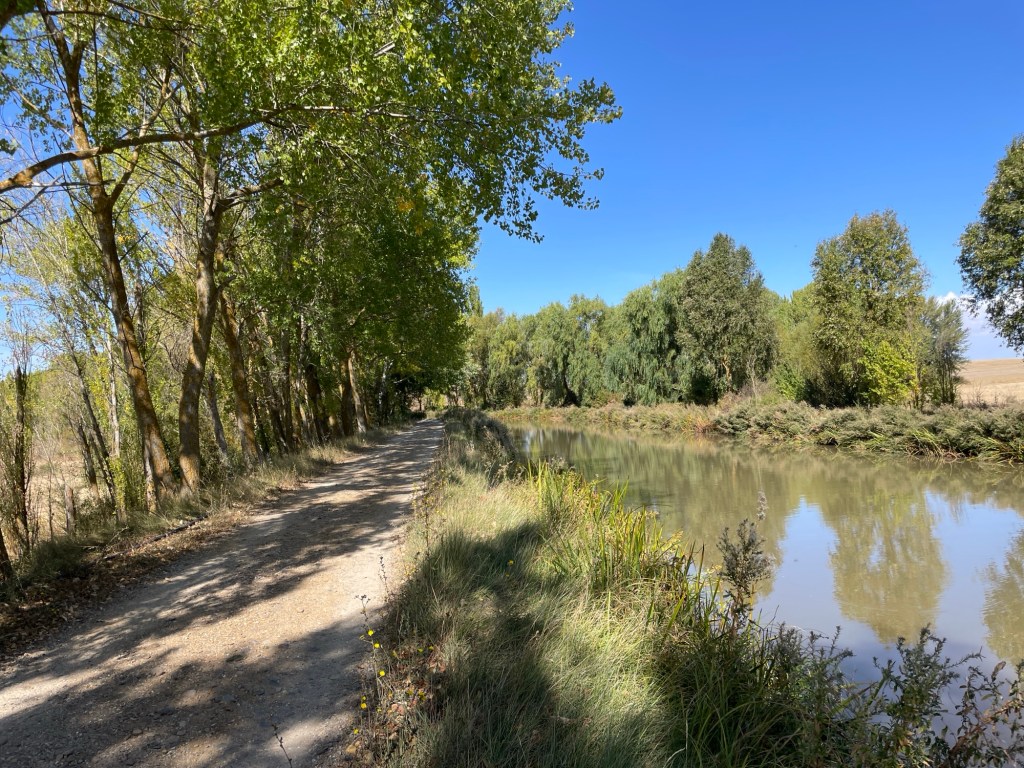
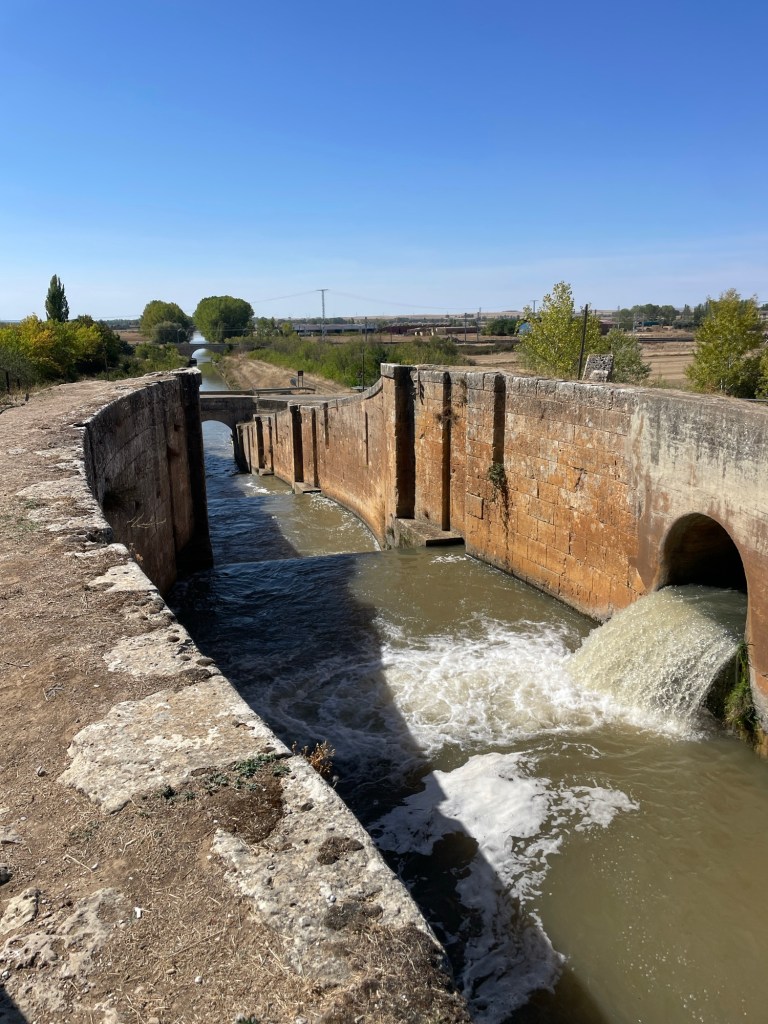
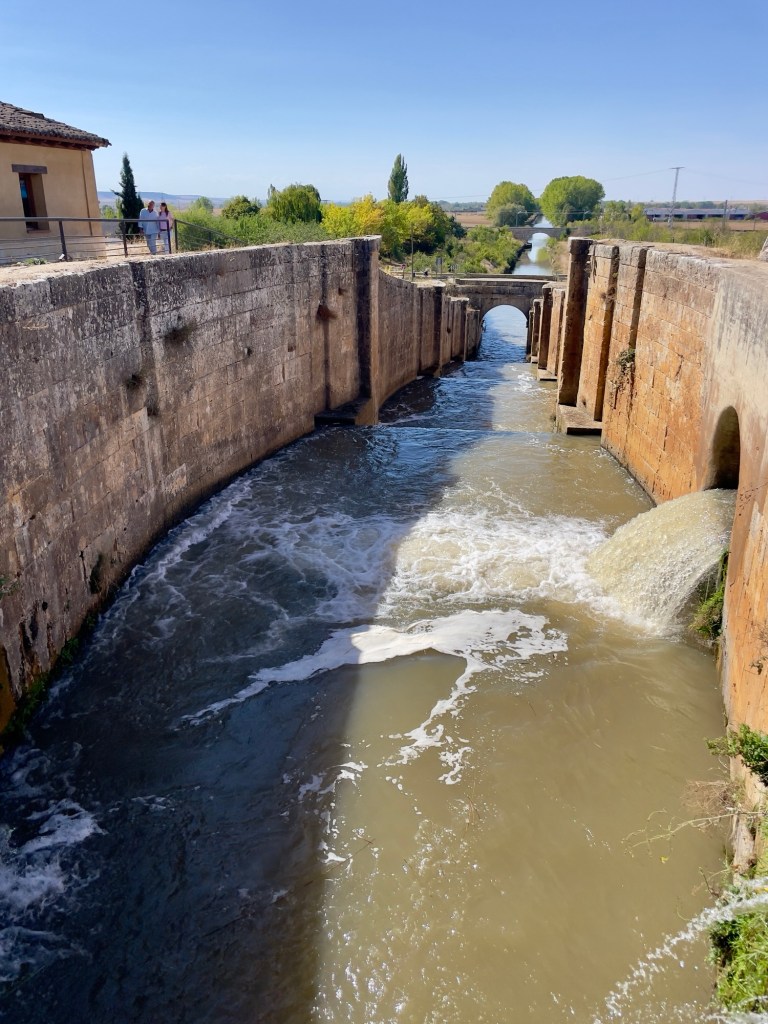
I’ll admit, those last three miles were a struggle, despite the beauty of the waterway. My meager water bottle was down to one sip, with no hope of replenishment. My snacks for the day consisted of half a bag of salted mixed nuts.
I didn’t arrive so much as survive.
But a shower does wonders. My phone is recharged, my laundry is drying, and now I’m off to explore this town, a heritage site, say the books. And find a market and some dinner.
Tomorrow I’m back to a 20-kilometer day, with no hills in site.
Let’s see, I need a box of Digestives, some fruit, granola bars, electrolyte drinks, water ….
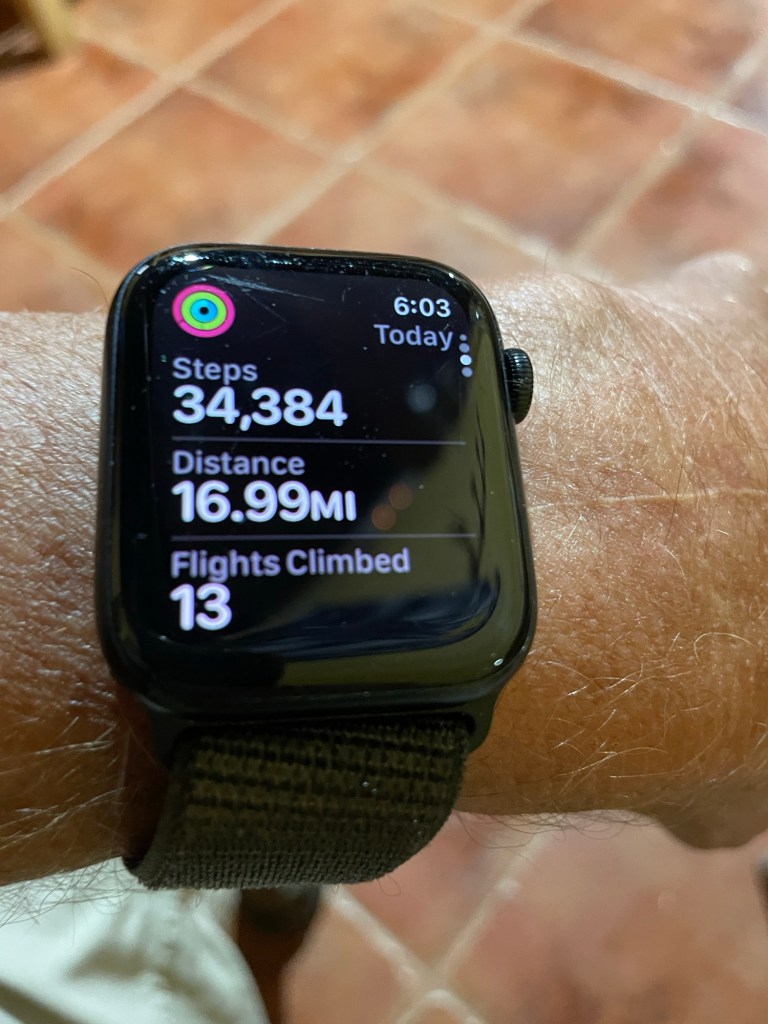


My Goodness that’s a lot of walking!!
I think my maximum steps walked is a about 27k and 10 miles
Your knee has settled down?
LikeLiked by 1 person
Knee is as good as ever! I blame it on the shoes.
LikeLike