

“Once you have tasted flight, you will forever walk the earth with your eyes turned skyward, for there you have been, and there you will always long to return.”
– Leonardo da Vinci
Flying like Superman no longer appeals to me the way it did in my youth. You remember, “faster than a speeding bullet,” – and all that leaping tall buildings with a single bound.
It may be an age thing.
These days, I could use “stronger than a locomotive.” But I’d settle for just a stronger cup of coffee.
The apex of my yearning to fly like Superman came as he streaked around the world counterclockwise until he created enough counterforce to slow its rotation. He did do that, right? I could be conflating my own imagination with some comic book or movie scenario.
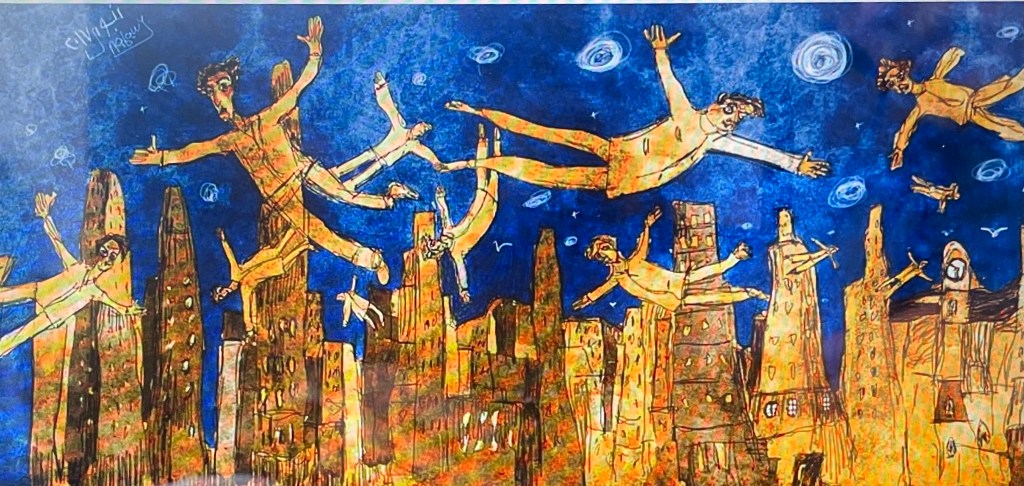
At that point, I am thinking, that all this macho streaking across the sky is a bit much. It was all downhill from there: Get an education, get a job. Get married. Keep your feet on the ground. Leave flying to the dreamers.
Maybe I was just pursuing the wrong kind of unassisted human flight. It can happen.
In my twilight years, I’m inclined to favor the more leisurely, dreamy, flights taken by Arthur Dent and his girlfriend, Fenchurch, in “So Long, And Thanks for All the Fish,” the fourth book in Douglas Adams’s six-book trilogy “Hithchhiker’s Guide to the Galaxy.”
Adams describes this sort of flying in the most gentle of terms, with words like “bobs and swoops,” ”waft,” “drift,” and “float above the treetops.”
Superman streaks around the world so fast his clothes would burn off were they not woven from special fibers gleaned from … someplace. I forget where. His space capsule’s bassinet blankets?
Anyway, Superman’s lifestyle is complicated and seems extremely unrelaxing.
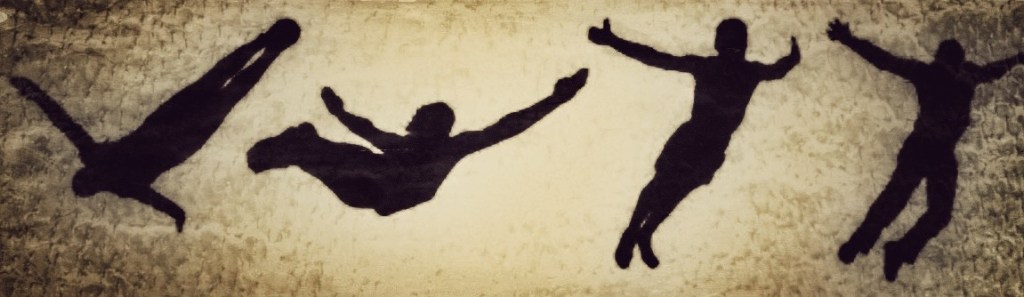
Arthur and Fenchurch float up into the clouds, take off their clothes over London, and make love. I just don’t picture The Man of Steel floating naked in a fluffy cloud over Metropolis with Lois Lane. He’s just so busy saving the world.
Fortunately for Arthur Dent, the world has already been destroyed, at least once. Right in front of his eyes. In the first book, the titular “Hitchhiker’s Guide to the Galaxy.” Been there, realized he can’t save it. On to more pleasurable things.
Do you see the difference?
I’ve been thinking a lot about flying recently. The gently self-propelled sort. The kind in which you simply rise upward, fly over the treetops to the package store, pick up a nice red wine for dinner, then return home by lightly skimming a few feet over the glossy surface of the the lake at dusk.
Nothing macho about that at all, is there?
In 1970, I took up the practice of meditation. One of the more extreme possibilities being held out was harnessing the powers of your brain to fly. You just had to hang in there for a few years, sign up for the advanced program with easy monthly payments, and in no time at all, you’d be fluttering about the compound like the guru Yaga Ben Patooti.

Yes, those were exuberant times. People were trying to harness the powers of their brains and the contents of your wallet for all sorts of things.
In the go-go Dawning of the Age of Aquarius, flying under your own power was right up there with walking through solid walls, reading other people’s thoughts, controlling other people’s thoughts, X-ray vision, and promising your landlord that the rent would be paid on time – just not this month.
Long story short, I never learned to fly. Or any of those other things. For a while, I toyed with projecting thoughts of affection into the mind of a beautiful girl until she walked across the floor and asked me to dance. Didn’t work. I did learn to meditate.
Come to think of it, my teacher wasn’t talking about flying. That was levitation – hovering a few inches to feet off the ground. A party trick for mere yogis.
But you have to wonder, once you get the levitation thing down, what’s to stop you from peeling off up into a cooling cloud on a warm Spring afternoon? Seems that once you’ve broken the unholy bonds of Earth by a few inches, there is little to stop you from moving on to Phase Two, whatever that might be.
How to get there? Start small, I suppose. We might start by emulating acknowledged superstars of levitation, like Theresa of Aula, Catherine of Sienna, Francis of Assisi, and Gautama Buddha. Pretty soon you are up there in the same league as frequent fliers like Peter Pan, Simon Magus, the Flying Nun, and the legion of aerial anime heroes who harness their ki.

Admittedly, those who actually have flown under their own power are the stuff of fiction. Simon Magus is the only real person that I’m aware of. He’s acknowledged in the Bible no less.
Magus was a real over-achiever. And apparently, pretty annoying. He wanted to be an apostle in the worst way. No surprise here, he imagined that being adored as a god was an even cooler gig. There are several different versions of his story. (See “Acts of the Apostles” in the Bible, for one.)
As a power play, Magus soared high above a Forum crowd in Rome. Kind of like the Donald Trump of his times, he felt they would quickly acknowledge his god-like qualities and he could take a seat at the Throne – and usurp the growing authority and power of the Apostles.
Only, the apostle Peter was there and he wasn’t having any of it. Peter prays to God to pull the plug on the interloper. God gets it. Magus comes crashing down and shatters his legs in three places. The previously adoring crowd – an early MAGA prototype – starts stoning him.
Magus either dies at the hands of the mob or in the waiting room at the local hospital. Stories vary.
But that’s not the point.
He was flying. The Bible acknowledges as much. Even the Church in its biographies of the holies tacitly acknowledges that a number of its saints couldn’t keep their feet on the ground.
Saints, mystics, mediums – they can’t all be charlatans. It seems that lots could at least float several feet in the air, under the right circumstances – trances, raptures, holy intervention.
Sounds like a lot of work to get your feet off the ground.
How would one go about learning to fly without divine assistance?
Here is the rather extensive explanation from “The Hitchhiker’s Guide to the Galaxy”:
“There is an art, or, rather, a knack to flying. The knack lies in learning how to throw yourself at the ground and miss. Pick a nice day and try it. All it requires is simply the ability to throw yourself forward with all your weight, and the willingness not to mind that it’s going to hurt.
“That is, it’s going to hurt if you fail to miss the ground. Most people fail to miss the ground, and if they are really trying properly, the likelihood is that they will fail to miss it fairly hard. Clearly, it is the second part, the missing, which presents the difficulties.
One problem is that you have to miss the ground accidentally. It’s no good deliberately intending to miss the ground because you won’t. You have to have your attention suddenly distracted by something else when you’re halfway there so that you are no longer thinking about falling, or about the ground, or about how much it’s going to hurt if you fail to miss it.”
This is my second-favorite excerpt from all of Douglas Adams’s books.
Arthur Dent discovers flying quite by accident. He is trying to outrun a landslide when he trips forward and in all the excitement, quite forgets to hit the ground. He is also distracted by a blue carry-on bag that he lost returning to England from a Greek holiday several years earlier – on Earth. He isn’t on Earth when he spots the bag. Which he finds rather curious and – fortunately for Arthur – just distracting enough to enable him to fly.
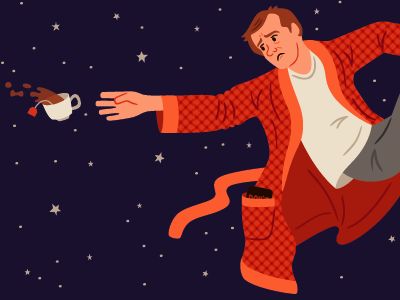
Earth, as I mentioned earlier, had already been destroyed in the first few chapters of “The Hitchhiker’s Guide to the Galaxy.”
Oh, you’ll just have to take my word for it. Or read the “Hitchhiker” books.
It’s not like Douglas Adams came up with the idea of flying (as a literary device). Tons of writers have embraced the idea of unassisted human flight.
In anime and manga alone, the list of characters who inherit Kekke Genkai or Kekke Moura to fly is endless. Others possess the wind-nature chakra. By using a wind-infused chakra, the user pushes the air downward, pushing them off the ground. (For a related discussion, see The Flying Nun later in this essay.)
Some characters get an external assist – be it herbal or material or physical.
The classic herbal assist is found in the inspired writing of Carlos Casteneda, who launched a million headtrips around the universe.
“Birds fly like birds and a man who has taken the devil’s weed flies as such.”
“As birds do?”
“No, he flies as a man who has taken the weed.”
― Carlos Castaneda, The Teachings of Don Juan: A Yaqui Way of Knowledge
Casteneda certainly felt that he was soaring above the Sonoran desert after ingesting “yerba del diablo” under the guidance of the desert sorcerer Don Juan.
Yes and no, Don Juan responds. His consciousness may have taken flight but his mortal body was “in the bushes.”
I can see the long face. But who says flying has to include the extraneous stuff, like flesh and blood?
I’m tempted to talk about Harry Chapin’s not-really-autobiographical taxi driver also named Harry, mainly because I heard the song recently and I can not get it out of my head.
You remember the last verse, right?
And me, I’m flying in my taxi
Taking tips and getting stoned
I go flying so high when I’m stoned
That’s Carlos Castaneda without all the mysticism.
Anyhow, we all figure it out sooner or later: Who needs weed to fly?
There are plenty of other modes.
Let’s review some: Magic carpets, broomsticks, umbrellas, angel wings, man-made wings, magic feathers, fairy dust.
What do they have in common? They all beat sitting in economy class in a Boeing 737 Max.
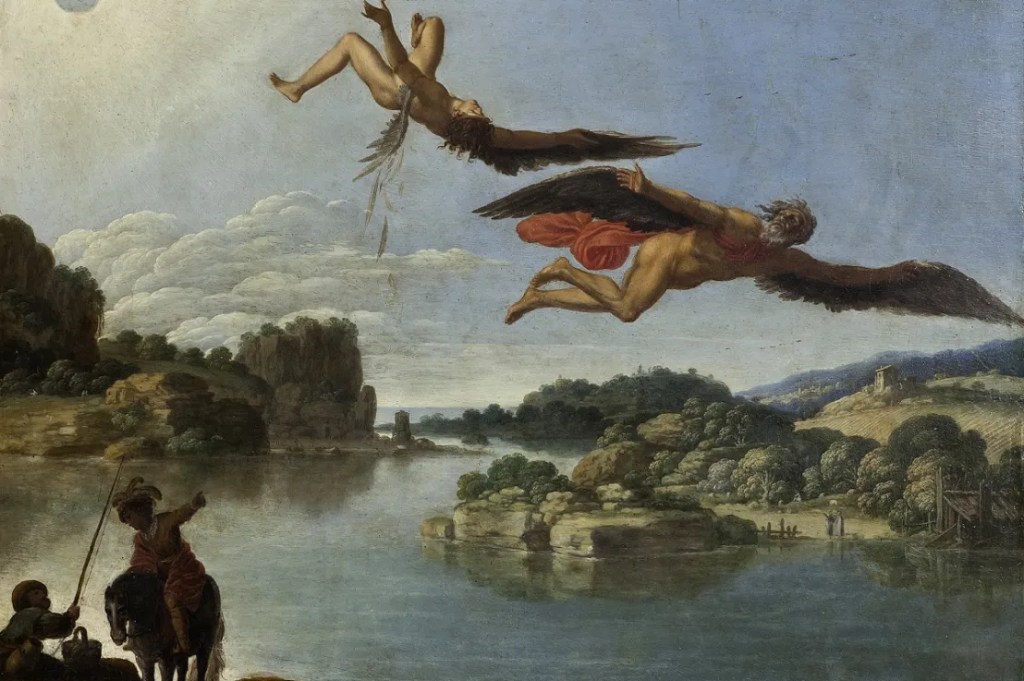
Daedalus fashioned perfectly useable wings from wax and feathers. Was it his fault that Icarus flew too close to the sun? Mary Poppins did fine with an umbrella. Peter Pan got by on a little fairy dust. Harry Potter adapted quickly to the broomstick.
In “One Hundred Years of Solitude” children casually fly by a window on a magic carpet, barely garnering the author’s or the readers’ attention. Dumbo is tricked into flying with a “magic feather” until he learns to use his ears. Spiderman doesn’t fly, per se, but slings himself through the air with the greatest of ease.
The Flying Nun got into the habit of getting airborne through a sly miracle and the wind beneath her wingy wimple and cornette. In the 1960’s sitcom, Sister Bertrille (Sally Fields) explains her ability to fly this way: “When lift plus thrust is greater than load plus drag, anything can fly.”
Ah, physics. I wondered when that would enter the discussion.
Carlos Castaneda “flew” by altering perceptions to create an out-of-body experience. Arthur Dent chose to embrace an alternate reality, of which author Douglas Adams offers many to choose from. In his case, Arthur chose to miss the ground when he fell. And thus flew.
Sister Bertrille toys with actual physics and mathematics. Lift plus thrust equals the wind-gathering force in the sail created by her winged cornette headgear. Opposing it is the load and drag – drag being gravity and the load is the petite nun. Did I mention that the writers say Sister Bertrille weighs a mere 90 pounds? No adult weighs 90 pounds these days.

But wait a moment. Seeing the petite Sally Fields on the Oscars broadcast recently, perhaps playing a 90-pound nun wasn’t a stretch.
Some day maybe we’ll all be light enough to fly like Sister Bertrille. Let’s call it the Ozempec Era of Flight; we’ll all weigh 90 pounds and among thrust, lift, load, and drag, the least of our worries will be load. Of course, in Sister Bertrille’s case, we can’t discount divine intervention as the variable.
Gods and ghosts need no such assistance.
Nor does Antoine de Saint-Exupéry’s Little Prince as he travels from planet to planet.
“I fly because it releases my mind from the tyranny of petty things.”
– Antoine de Saint-Exupéry
The rest of us do. Except maybe in dreams.
I dream a lot about flying. When I do, the dreams are very specific and memorable. I can recall the feeling of lifting off from the gentle slope of an open field and then soaring through gullies, along ridges, beside cliff walls, over dunes and valleys, swerving among pines through deep forests, up into leafy trees, over the ocean, across the plains. It is usually summertime in my dreams, and moving toward dusk.
I don’t think I’ve ever flown through city streets.
Like Saint-Exupéry, when I fly in my dreams, I am slipping away “from the tyranny of petty things.” It is always gentle, light, never violent, never buffeted by wind or storms. Rising up and landing are utterly effortless.
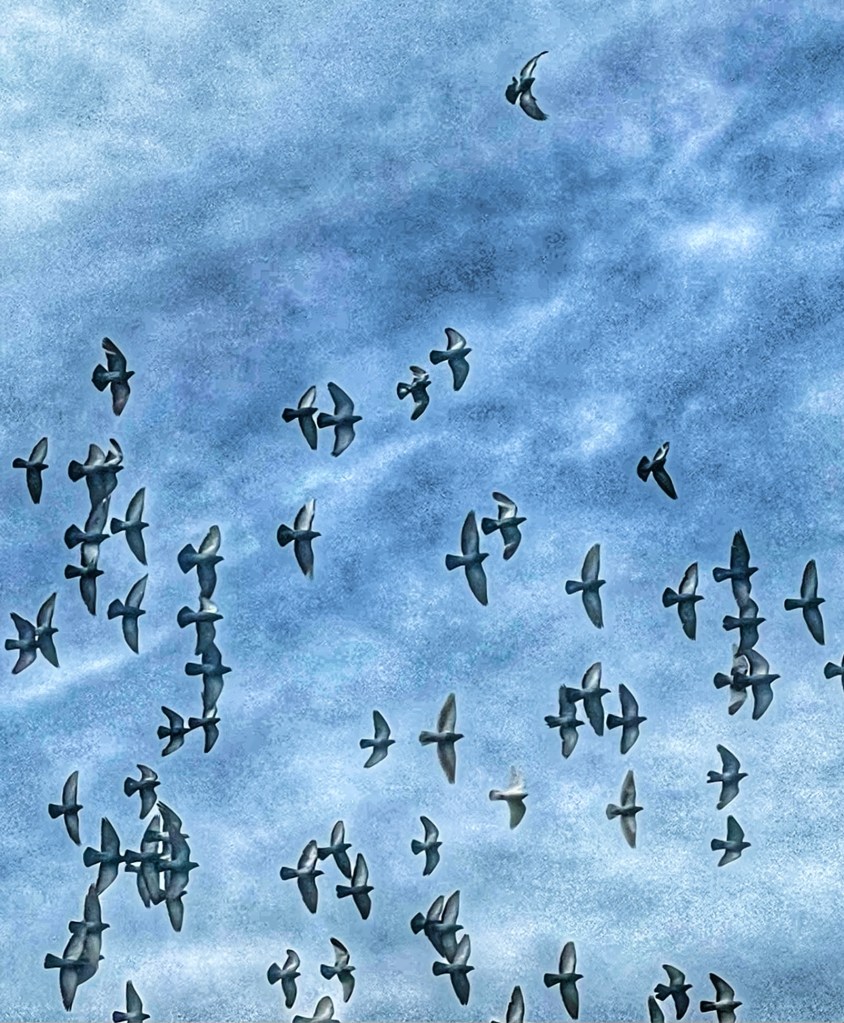
I wake up feeling as though I’ve experienced something very real.
During meditation, I often convinced myself that I was 30 seconds away from slipping the restraints of gravity. So very close. Never happened.
Perhaps after my dreams grew to at least feel more realistic, the idea of levitating through meditation seemed less important. It was something I ceded more to the aspirational desires of ersatz swamiis and pay-to-play mystics.
And novelists.
I can get into a good science fiction novel about people who routinely fly. Wouldn’t you be curious about the impact unassisted flying would have on fashion, government, transportation, relationships, roads and highways, vacations, education, health, and industry?
There is probably no aspect of our lives that would go unchanged if only we knew how to fly under our own power.
Oh sure, the government would try to regulate such flying. But how? Tell you that you have to wear a helmet? Borders would become useless. Traffic control would become unnecessary unless you were soaring around airports and in flight paths – which would eventually go away. Who needs planes?
Clothing would probably become more streamlined and fabrics more weather-resistant.
Who needs a car? Who needs a boat? Who needs a plane? Who needs roads or highways? Not in a world in which everyone could fly.
People like me could visit with their grandkids more often. You could pretty much live anywhere you wanted – in a tree for instance. In a 56-story condo building? Maybe. Maybe not so much.
Would human flight burn calories? I imagine so.
Like flocks of birds, society would be reordered into communities of interest. There would be highland people, tropic people, coastal people, rural people. The first piece of human flight-inspired art would likely be called “A Murmuration of Darlings.” Don’t ask me what it will look like but I suspect it will be memorable.
Like flocks of birds in constant flight and migration, humans will learn to sort it all out. When is the last time you heard of an avian traffic jam? Probably never. People are smart. They will figure out when and where to soar.
Certainly, unassisted human flight could eventually become utilitarian. A tool like any other, that helps get us from point A to point B. But there will always be the poets and children for whom the wonderment of flight never grows old.
I want to be among those.
Until we figure out teleportation, time travel, and parallel universes.
I want a piece of that action. I think those will be fun times.
 Musings, Magic, San Miguel and More